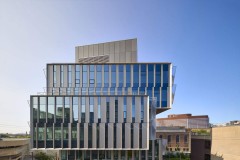
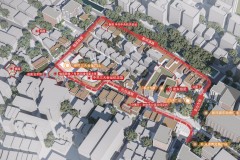
跨学科融合的催化剂:马拉乔夫斯基大楼成功地将工程、医学和药学等不同学院聚焦于数据科学和人工智能的研究力量汇聚一堂,其核心价值在于创造了一个促进跨学科协作与知识共享的物理环境。建筑通过策略性的空间布局,尤其是贯穿所有楼层的采光中庭和划分的“学术村落”,有意地打破了传统院系壁垒,鼓励了不同学科师生之间的“偶遇”与思想碰撞。这种设计不仅服务于当前的数据驱动型研究需求,更为未来新兴交叉领域的发展奠定了坚实的物理基础,是实现大学战略目标的重要基础设施。
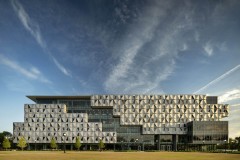
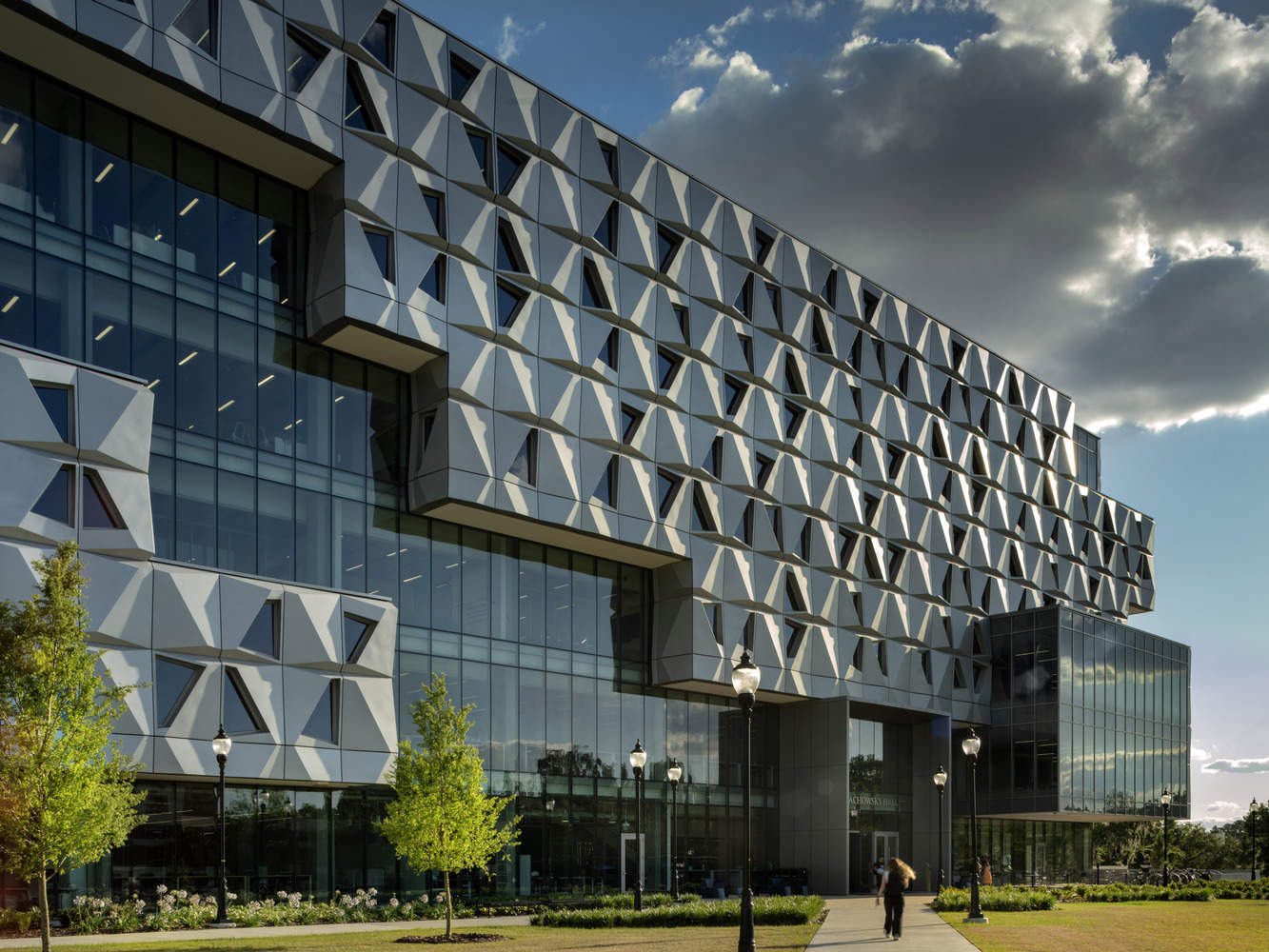
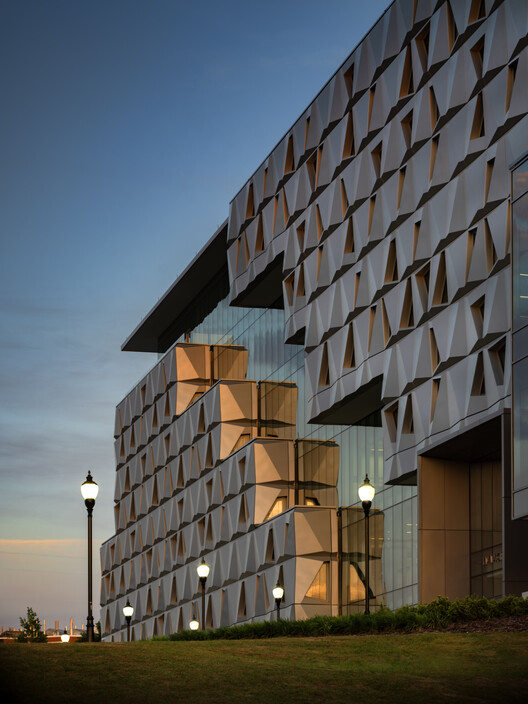
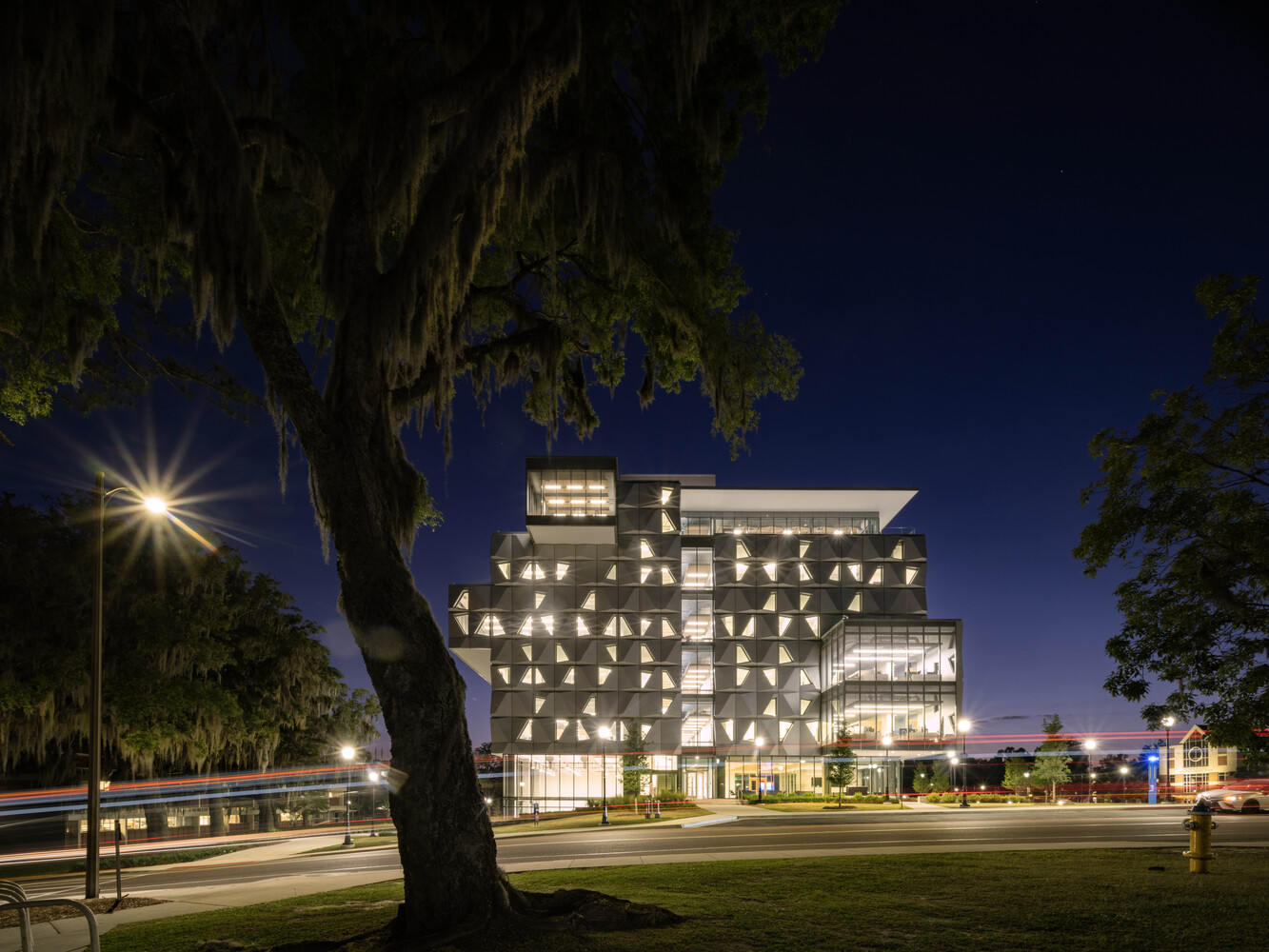
高性能与可持续性的立面创新:建筑外立面的设计是其最具辨识度的亮点之一。项目摒弃了校园常见的砖砌风格,采用了由 1500 块定制折边铝板构成的动态幕墙系统。这种预制面板的工厂化生产不仅保证了施工效率和质量,更通过几何造型的旋转与镜像处理,赋予建筑随日光变化而产生的视觉韵律感。结合使用电致变色玻璃这一高科技元素,立面实现了对环境的智能响应,有效地平衡了建筑的美学表达、能耗控制(LEED 白金认证的支持)与用户体验(眩光控制),是先进建筑技术与审美表达的完美结合。
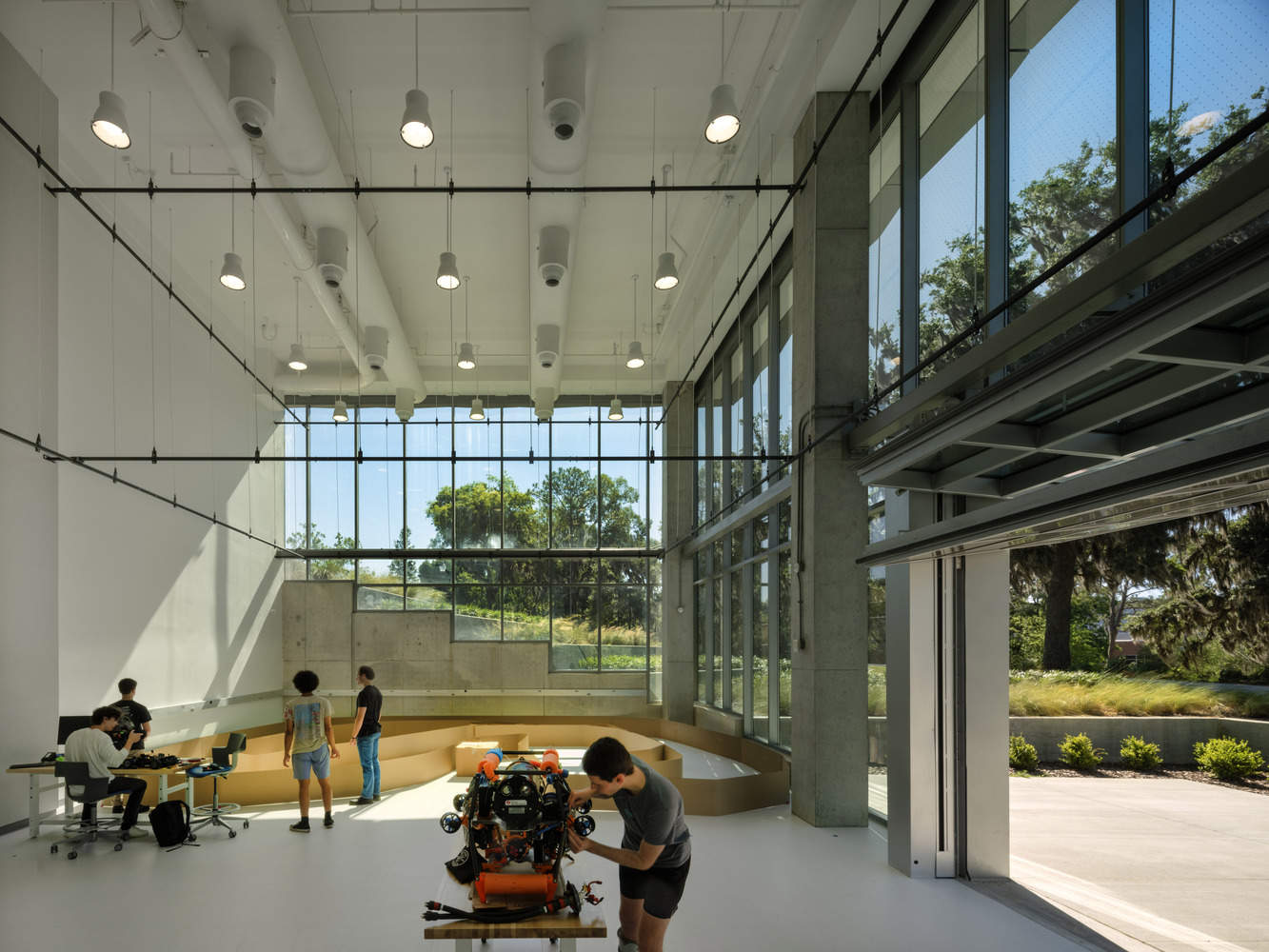
面向未来的灵活性与适应性空间:针对数据科学和技术迭代迅速的特性,建筑内部空间设计极具前瞻性。通过借鉴创客空间理念,大型实验室(如机器人实验室)被设计为高度灵活、易于重新配置的模块化单元,使用户能够根据最新的研究需求和技术发展自主调整空间布局。这种“可适应性”的策略超越了传统功能固定的学术建筑模式,确保了大楼在未来数十年内仍能高效支持前沿研究的演变,体现了对建筑生命周期和功能弹性的深刻理解。
Malachowsky Hall serves as the central hub for data and artificial intelligence (AI) focused academic and research endeavors across the Herbert Wertheim College of Engineering, the College of Medicine, and the College of Pharmacy. Faculty and students from these and other UF colleges gather here to apply data analytics and AI to improve health outcomes; develop next-generation robotics, autonomous vehicles, and communication systems; and ensure the ethical and equitable use of AI technology. Located prominently near the Reitz student union, the LEED Platinum certified building is designed to foster broad campus engagement and exploration in these fields.
马拉乔夫斯基大楼是赫伯特·韦特海姆工程学院(Herbert Wertheim College of Engineering)、医学院(College of Medicine)和药学院(College of Pharmacy)聚焦数据与人工智能(AI)的学术与研究项目的核心枢纽。佛罗里达大学这些学院及其他学院的师生齐聚于此,共同运用数据分析和人工智能技术改善健康状况;研发新一代机器人、无人驾驶车辆和通信系统;并确保人工智能技术的使用符合伦理且公平公正。该建筑获 LEED 白金级认证,选址于赖茨学生中心(Reitz student union)附近的显要位置,旨在鼓励全校师生广泛参与并探索相关领域。
© Nic Lehoux
© Nic Lehoux
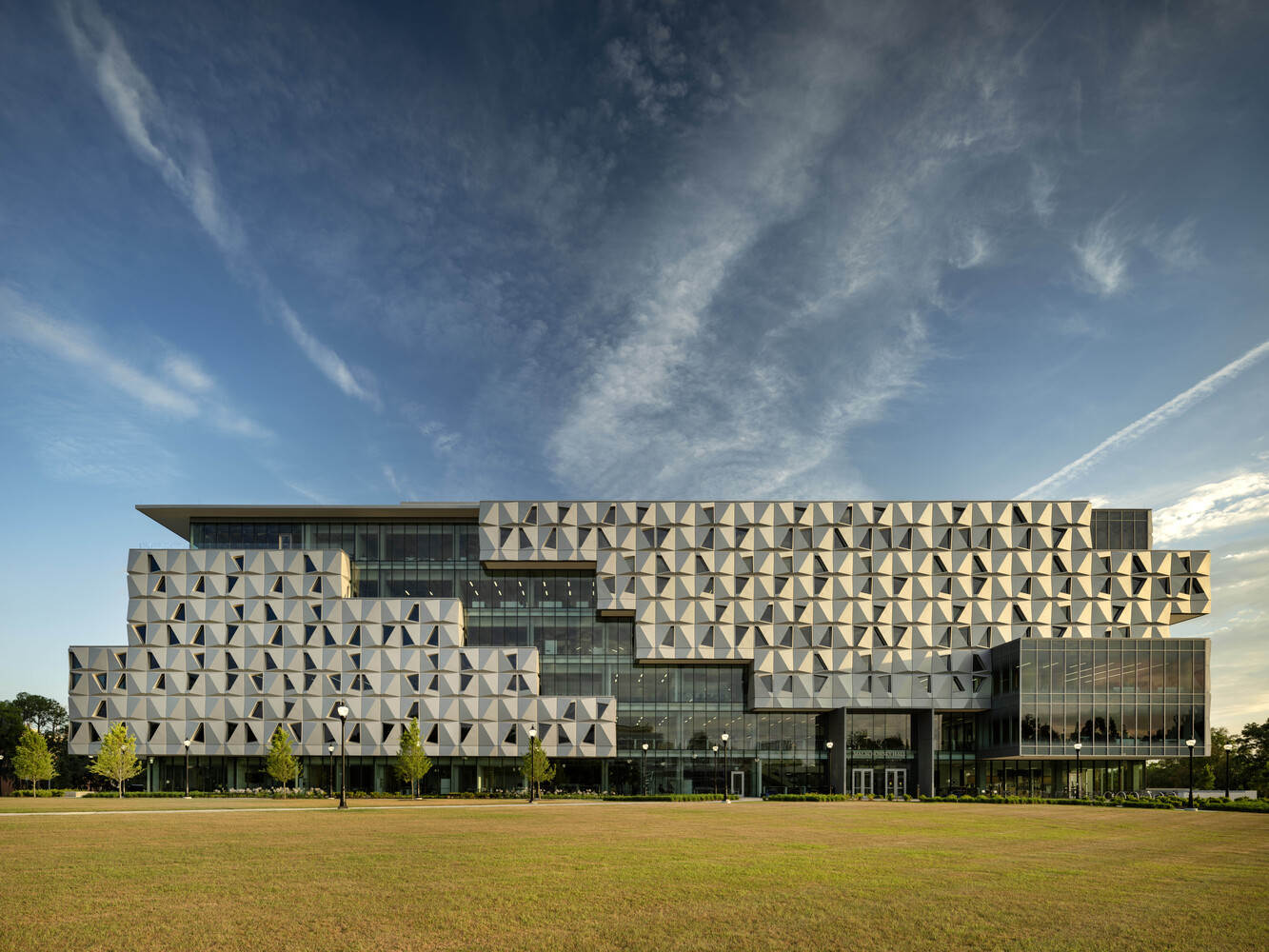
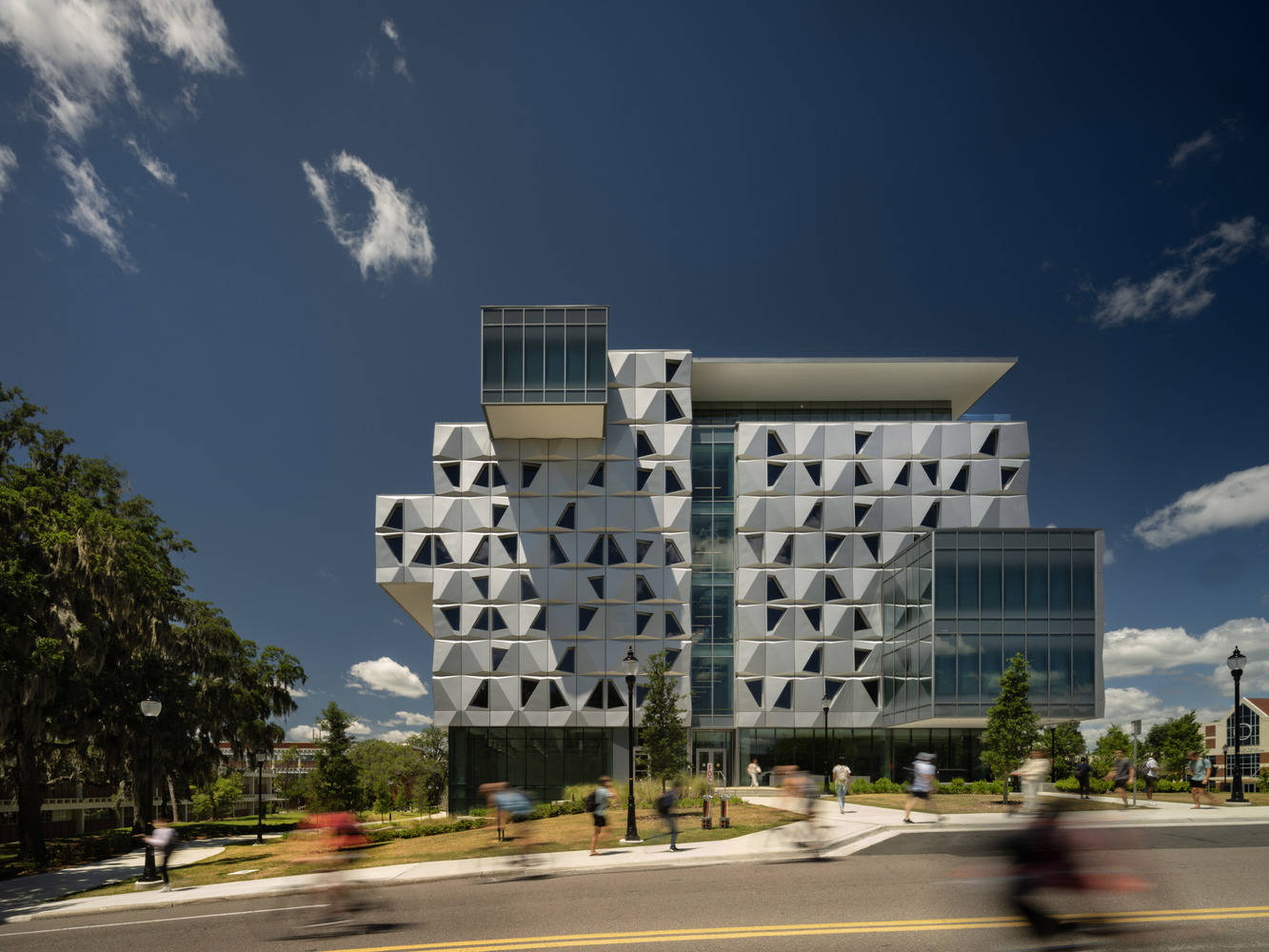
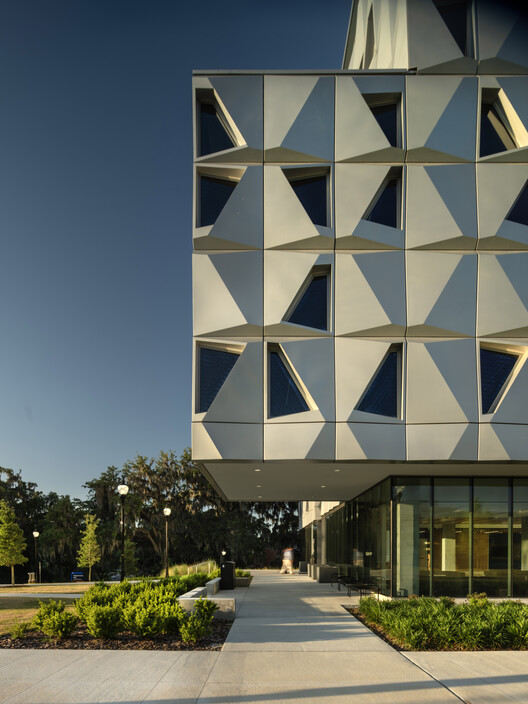
The building’s facade departs from the common campus brick style, featuring 1,500 custom metal panel units. These prefabricated panels meet budget and sustainability goals while creating a unique exterior that shifts visually as the sun moves. The typical rainscreen module consists of 6’ x 7.5’ folded aluminum plates, which are rotated and mirrored to form a single, unique geometric shape, lending the building a dynamic aesthetic.
大楼外立面采用 1500 块定制金属板单元,与校园内普遍使用的砖砌建筑风格截然不同。这些预制面板在实现预算和可持续发展目标的同时,营造出随日照变化而呈现不同视觉效果的独特外观。典型的雨幕面板模块采用 6 英尺 × 7.5 英尺的折边铝板,通过旋转和镜像处理形成单一独特几何造型,赋予建筑动态美感。
© Nic Lehoux
© Nic Lehoux
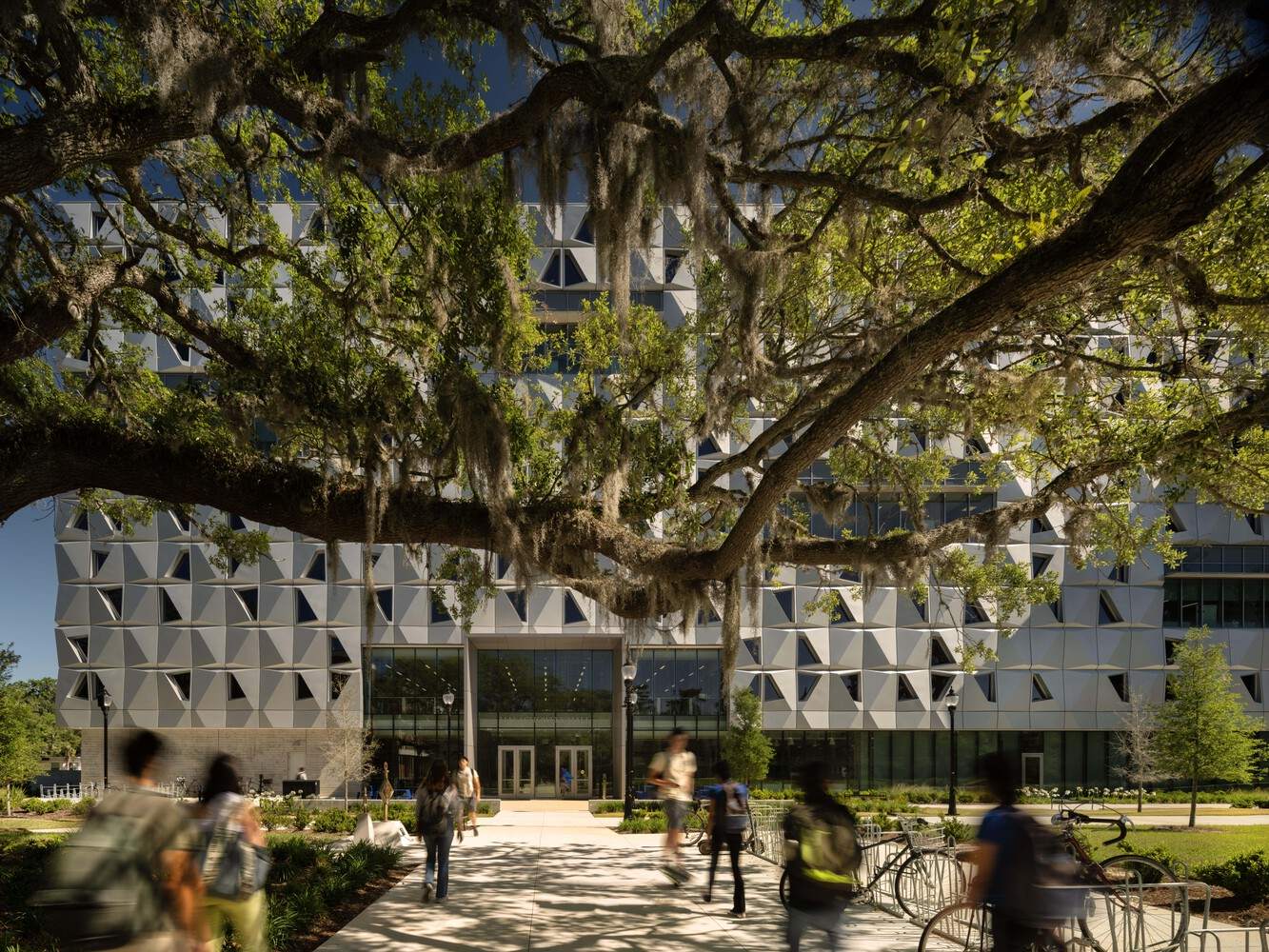
The factory-fabricated panels accelerated the project schedule and ensured higher quality standards. Windows within the paneled facade utilize electrochromic glass that automatically adjusts its tint based on the sun’s path, mitigating interior glare. All glazing, including the electrochromic windows, features bird-safe etching patterns.
工厂制造的面板助力项目高效推进,并确保了更高质量标准。面板化立面中的窗户采用电致变色玻璃,可根据太阳轨迹自动调节色度,减少室内眩光。包括电致变色窗在内的所有玻璃均采用防鸟撞蚀刻图案。
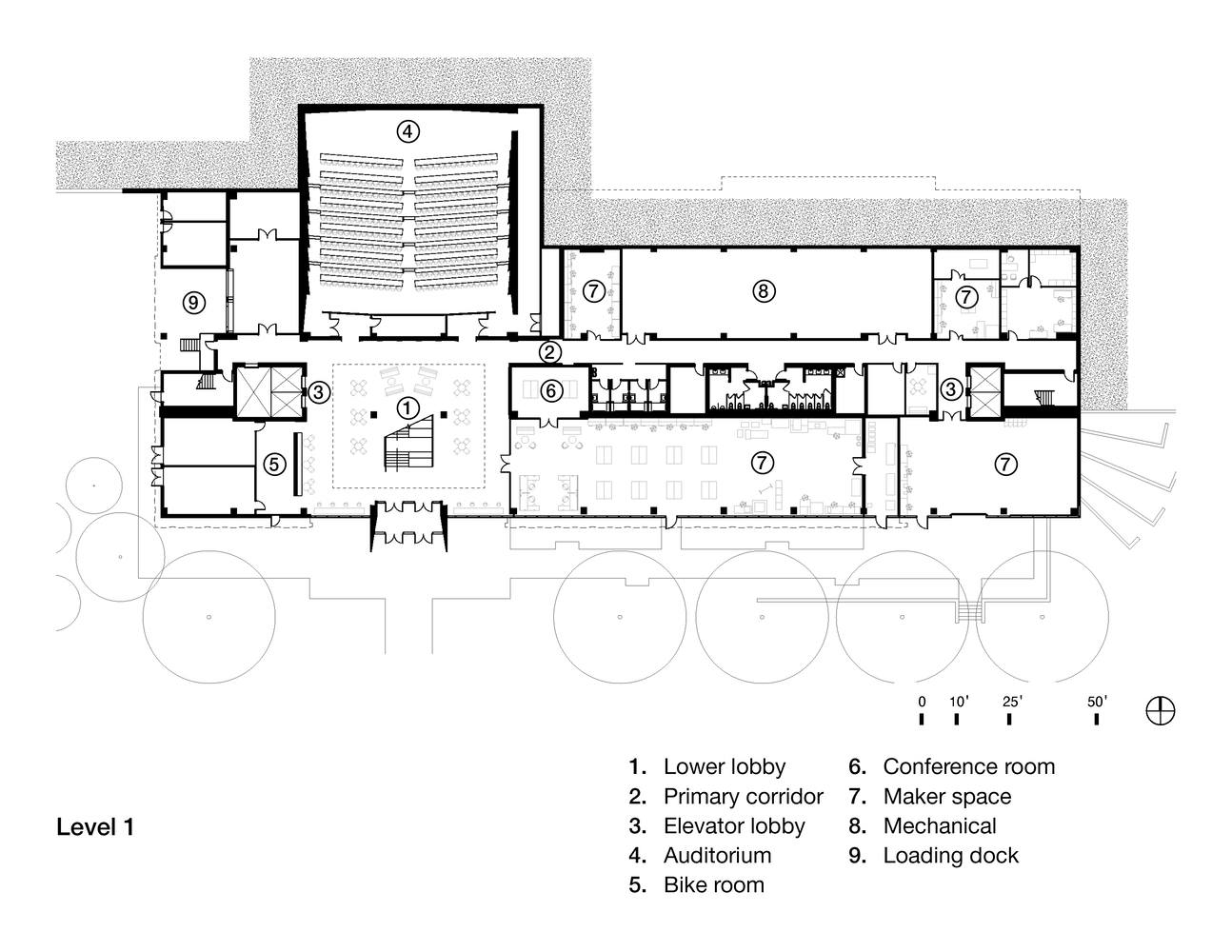
一层平面图
Spatial planning goals included providing areas for focused work and team collaboration; enhancing flexibility across departments and throughout the building; equitably distributing daylight and views; and breaking down disciplinary barriers by creating opportunities for spontaneous encounters. While some departmental work requires privacy, the design strategically positions spaces to encourage cross-disciplinary exchange of ideas and research.
空间规划目标包括:提供专注工作与团队协作区域;增强部门间及建筑整体的灵活性;公平分配自然采光与景观视野;通过创造偶遇机会打破学科壁垒。尽管部分部门工作需要私密性,设计团队仍通过策略性布局促进跨领域思想与研究交流。
© Nic Lehoux
© Nic Lehoux
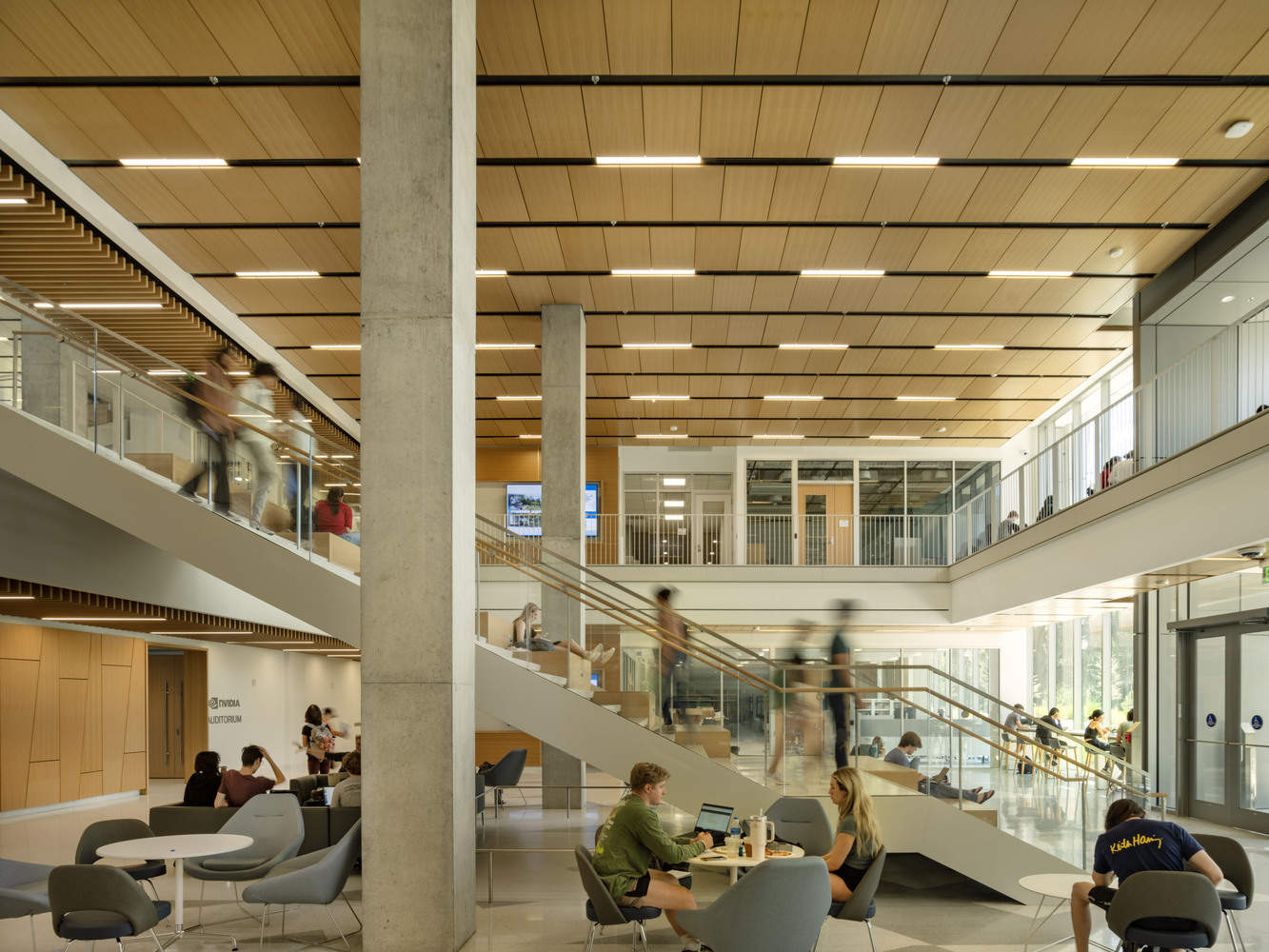
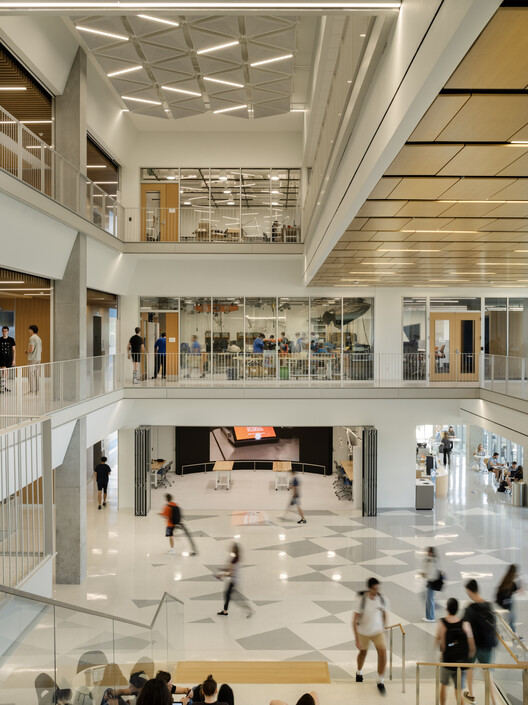
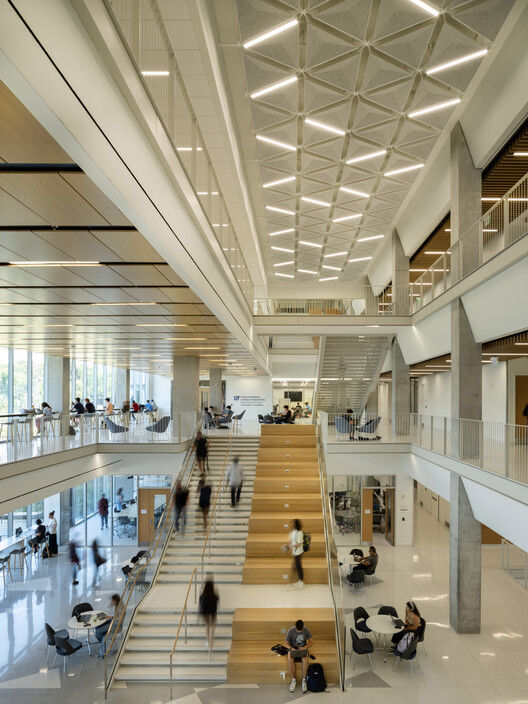
A light-filled atrium public space connects the different colleges and spans all floors of the building. Each floor is organized into multiple "academic villages," comprising shared gathering spaces, offices, conference rooms, maker spaces, and departmental headquarters. This layout encourages interaction among students in various research labs and accommodates diverse work styles.
采光充足的中庭公共空间串联各院系,并贯通建筑所有楼层。每层划分为多个“学术村落”,包含交流空间、办公室、会议室、创客空间及院系总部。这种布局促进了不同研究实验室学生间的互动,并适应多样化工作模式需求。
© Nic Lehoux
© Nic Lehoux
In Malachowsky Hall, faculty and students experience a variety of specialized, one-stop environments, including high-bay robotics labs, dedicated maker spaces for cybersecurity and AI, and easily reconfigurable classrooms. Given the diversity of research and the rapid pace of technological iteration, the lab designs borrow from the maker-space concept, allowing users to adapt the environment based on evolving needs, technologies, and personnel.
在马拉乔夫斯基大楼,师生可体验多种罕见的一站式环境,包括高挑空机器人实验室、网络安全与人工智能专用创客空间,以及易于重新配置的教室。鉴于研究工作的多样性和技术迭代的快速性,实验室设计借鉴创客空间理念,允许用户根据需求、技术和人员变化自主调整环境。
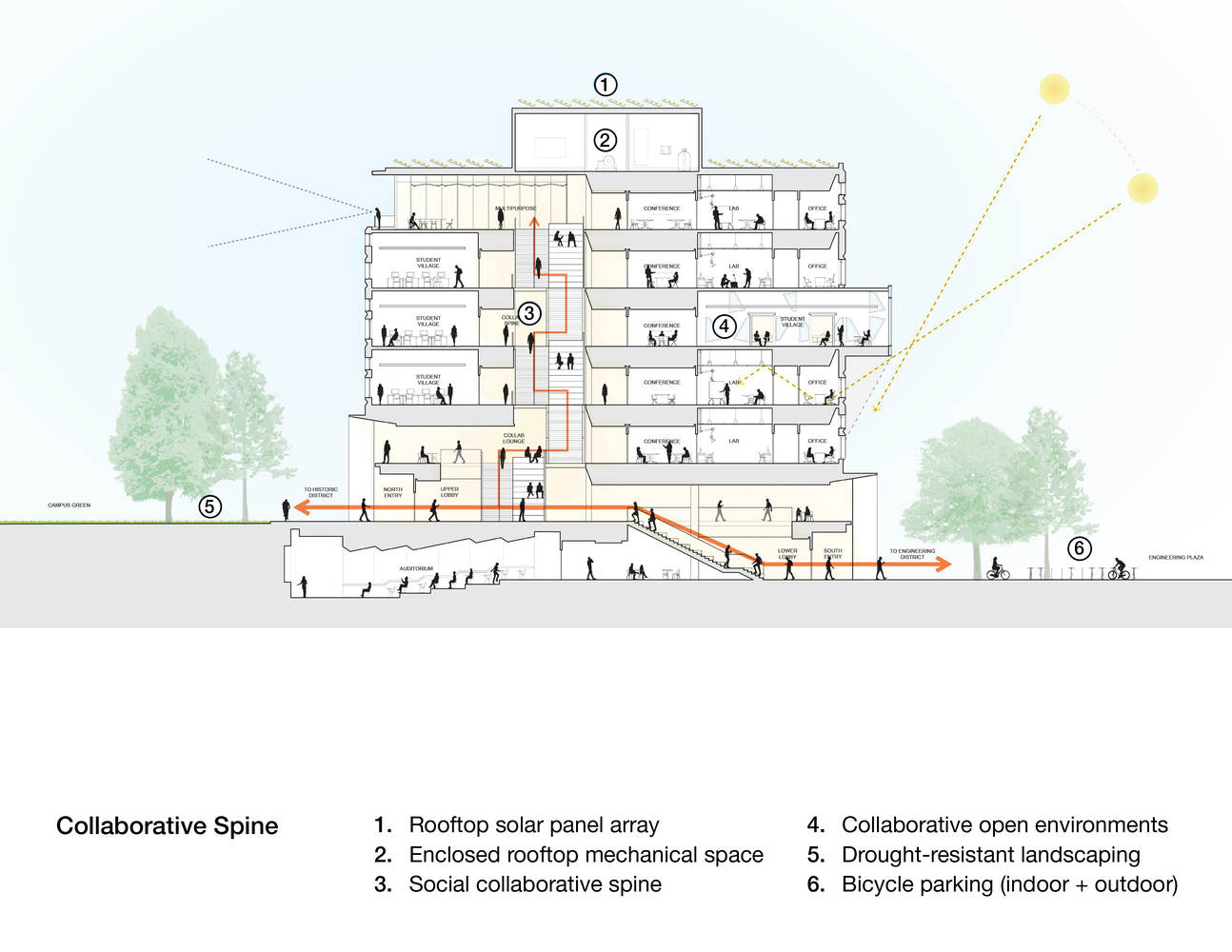
单元 - 协作脊柱中心
To balance the need for transparency in research with the necessity of privacy, most laboratories are situated around the atrium, showcasing research vitality while ensuring independence for sensitive work. The building also includes a 300-seat auditorium and a 150-person flexible forum space, providing new venues for the University of Florida to host events and lectures of various scales.
为平衡科研工作的透明性与私密性需求,多数实验室围绕中庭布局,既展示科研活力,又保障敏感工作的独立性。大楼内设 300 席礼堂和 150 人多功能论坛空间,为佛罗里达大学举办各类规模活动与讲座提供了全新场所。
© Nic Lehoux
© Nic Lehoux
© Nic Lehoux