理念驱动的叙事性设计:本项目最精髓之处在于其高度概念化的设计叙事——“饥饿的毛毛虫”。建筑师成功地将一个充满童趣和生态寓意的形象,转化为一个功能性的美食街空间。从概念的诞生到最终呈现的“茧蛹”结构,整个设计语言围绕着“蜕变”、“滋养”和“庇护”展开,为使用者,尤其是儿童,创造了一个沉浸式的、富有教育意义的体验场所。这种将深刻的自然意象转化为建筑形态和空间氛围的能力,体现了高水平的叙事性设计功力,使其超越了普通餐饮设施的功能性。
前沿技术与天然材料的深度融合:项目在材料与构造上的选择体现了前瞻性的可持续策略。厨房采用 3D 打印混凝土模块化单元,实现了高效、低浪费的建造过程,同时利用墙体空腔实现隔热。更令人印象深刻的是,巨大的遮阳结构采用了竹材这一可再生资源,通过复杂的双曲面几何构造和多层交错排列,实现了轻量化和高跨度的结构要求。这种将增材制造的精度与天然材料的韧性结合,并由结构专家团队(Atelier One)深化设计,是当代建筑创新实践的典范。
全链条的可持续生态闭环:该项目体现了对可持续性从宏观理念到微观实践的全面承诺。除了采用 3D 打印和竹材结构外,家具均由回收塑料废料制成,直接回应了减少垃圾填埋和海洋污染的紧迫性。这种“从摇篮到摇篮”的思维贯穿于建造、使用和材料回收的每一个环节。最终,美食街不仅提供了“滋养”食物的空间,更通过其构建方式本身,践行了对环境的“滋养”和尊重,实现了功能、美学与生态责任的完美统一。
Today, embracing a sustainable lifestyle is crucial for reducing our environmental footprint and conserving resources for future generations, whether in the design field or in daily life. In design, this translates to using eco-friendly materials, adopting energy-efficient technologies, and creating spaces that harmonize with the natural environment. In daily life, sustainability is reflected in rational consumption, waste reduction, conserving water and electricity, and supporting locally produced, ethically sourced products. In essence, sustainable design and sustainable living complement each other, forming a holistic approach that not only benefits the environment but also enhances health, promotes well-being, and strengthens long-term resilience.
如今,无论是在设计领域还是日常生活中,践行可持续生活方式对于减少我们的环境足迹、为子孙后代保留资源而言都至关重要。在设计方面,这意味着要使用环保材料、采用节能技术,并打造与自然环境相协调的空间。在日常生活中,可持续性则体现在理性消费、减少浪费、节约水电以及支持本地生产的、符合道德标准的产品上。总之,可持续设计与可持续生活相辅相成,构成了一种整体性方法,这种方法不仅有益于环境,还能提升健康水平、增进福祉并增强长期韧性。
© Avesh Gaur and Sohaib Ilyas
© Avesh Gaur and Sohaib Ilyas
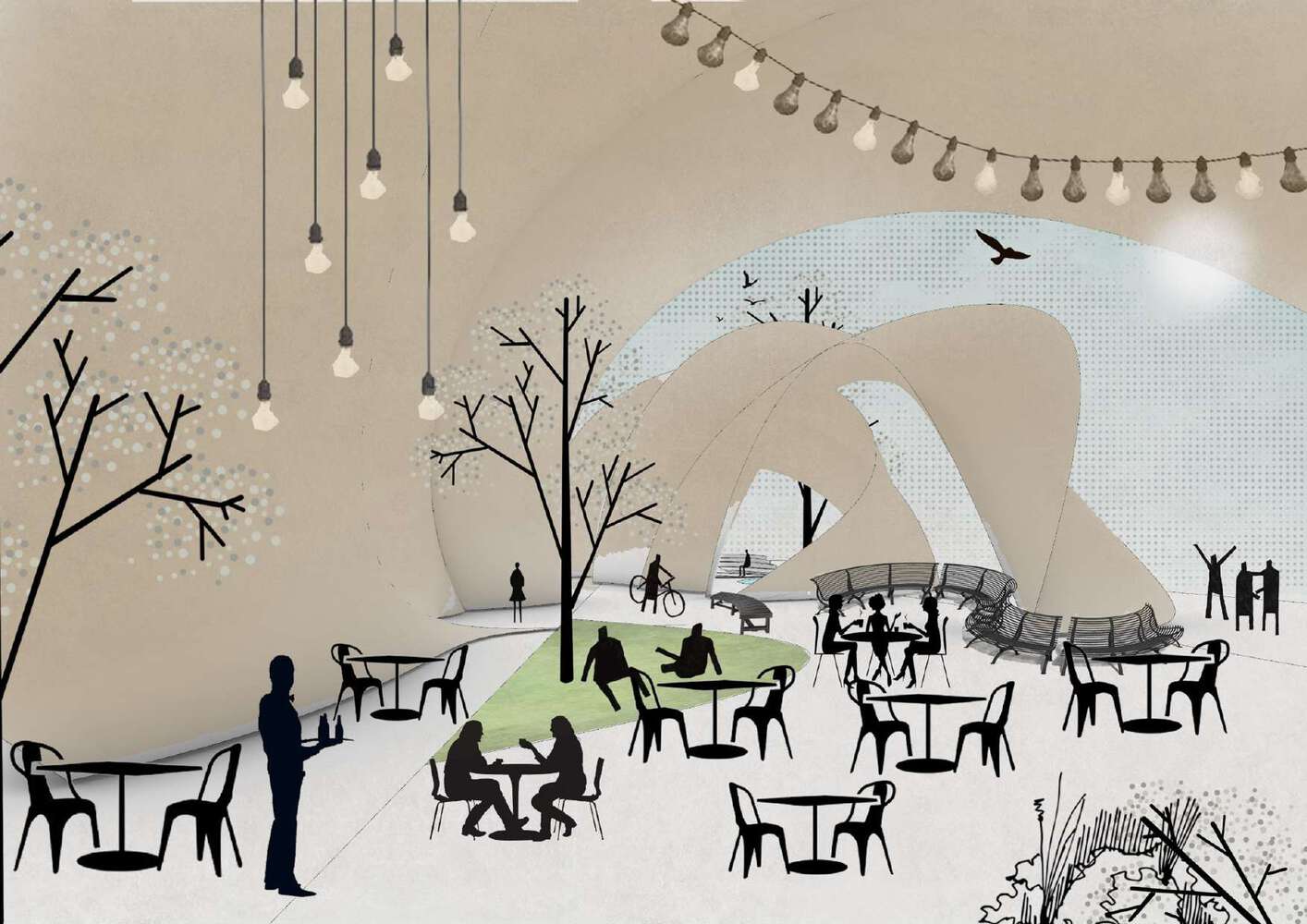
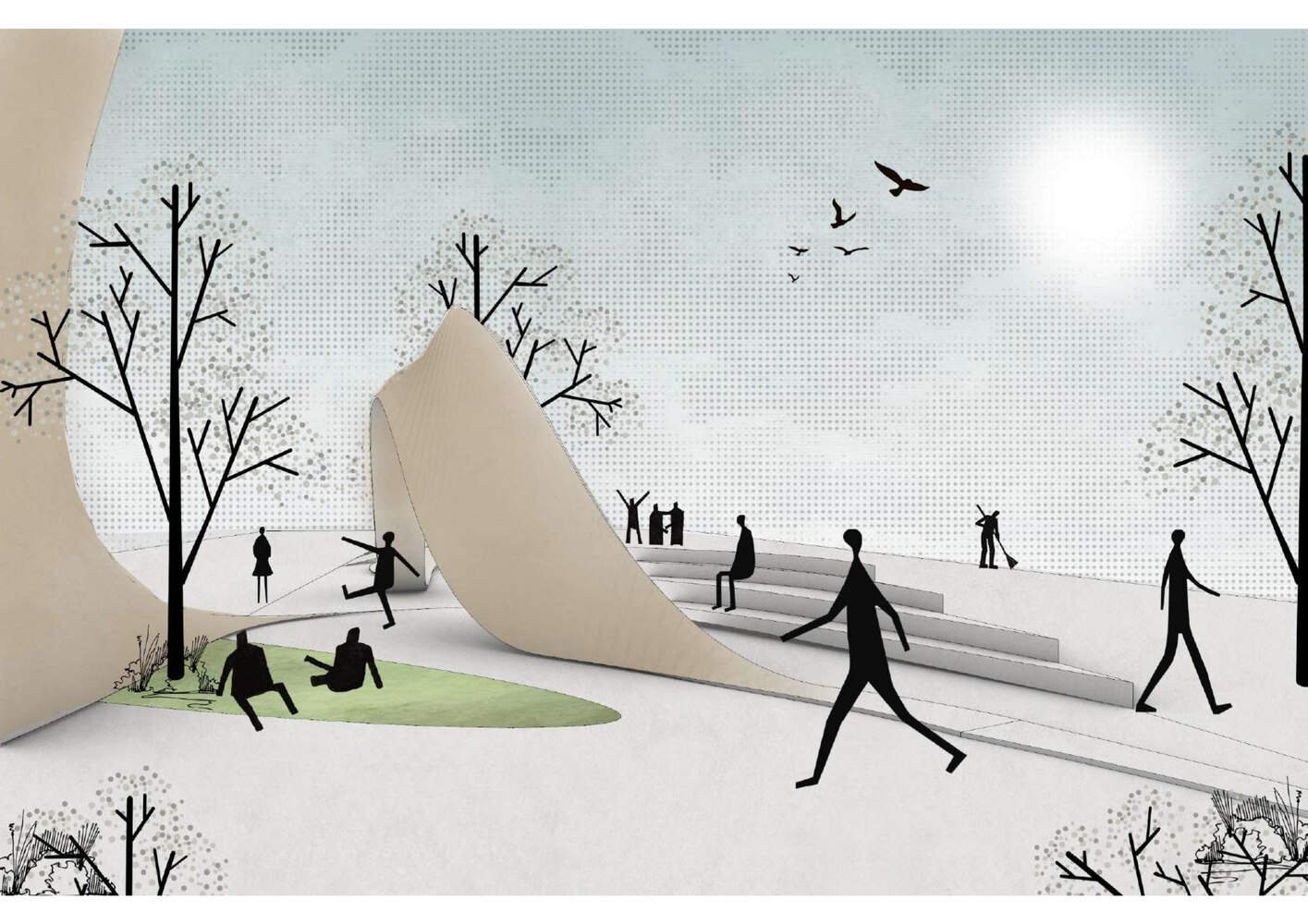
The design brief was to create a distinctive food street—a space that encourages children to linger and explore rather than merely grabbing a quick bite. During a site visit, an image immediately formed in the architect’s mind: a chrysalis tucked away in a lush tree canopy, a caterpillar contentedly feeding, feeling safe and at home. However, today's world demands more than just beautiful concepts; it calls for responsible and conscious design. The resulting food street, made special by its unique attributes, saw this vision realized through the effort and belief of many.
设计要求是打造一条独具特色的美食街,一个能让孩子们流连忘返、而不仅仅是匆匆填饱肚子的空间。实地考察一次后,建筑师脑海中立刻浮现出一幅画面:一个茧蛹隐匿在郁郁葱葱的树冠之中,一只毛毛虫悠然自得地进食,倍感安全,仿佛置身家中。然而,如今这个世界所追求的,远不止是美丽的构想,它呼唤的是负责任、有意识的设计。最终呈现的美食街,因其多重独特之处而显得格外特别,这一愿景在众多人的努力与信念中得以实现。
© Avesh Gaur and Sohaib Ilyas
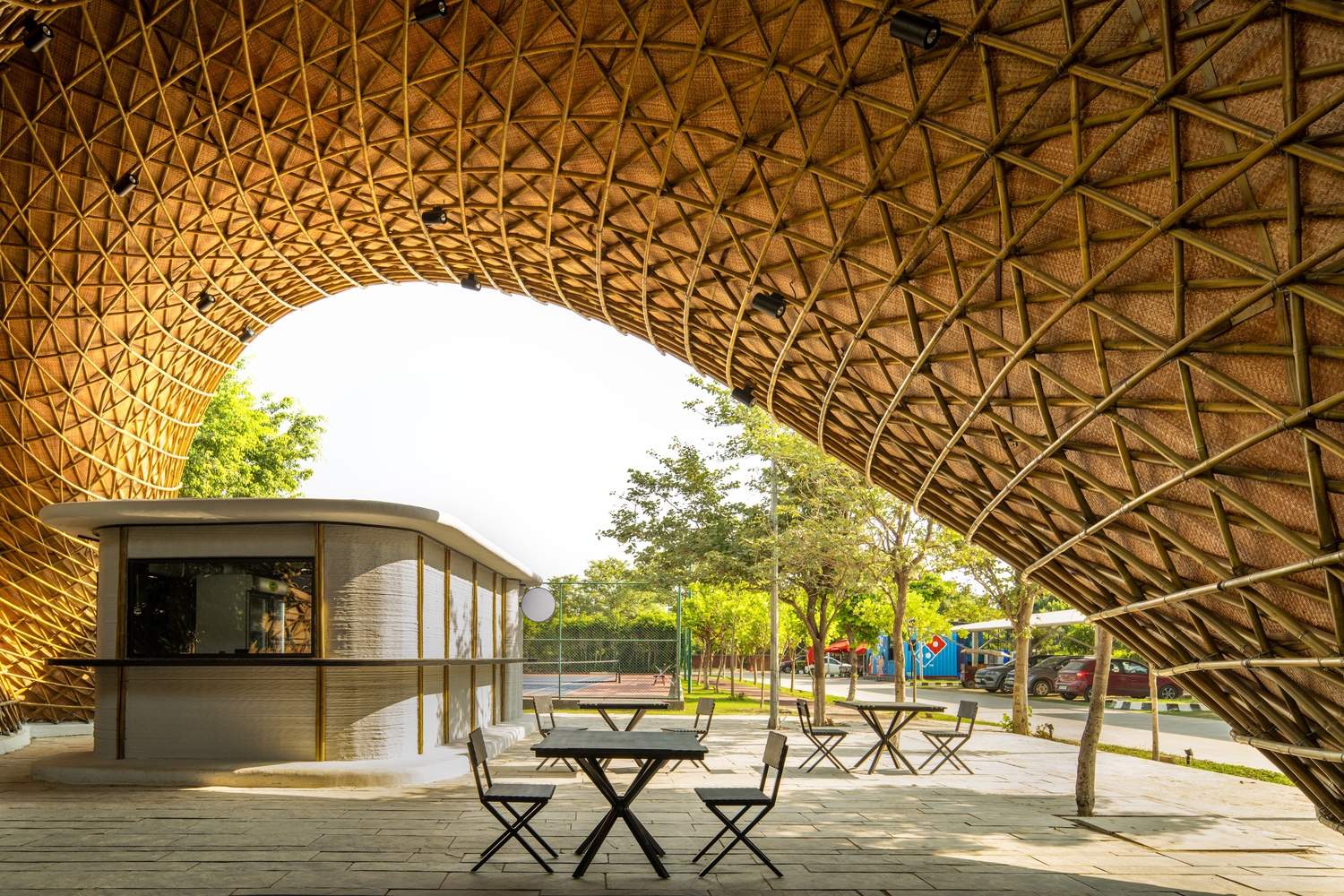
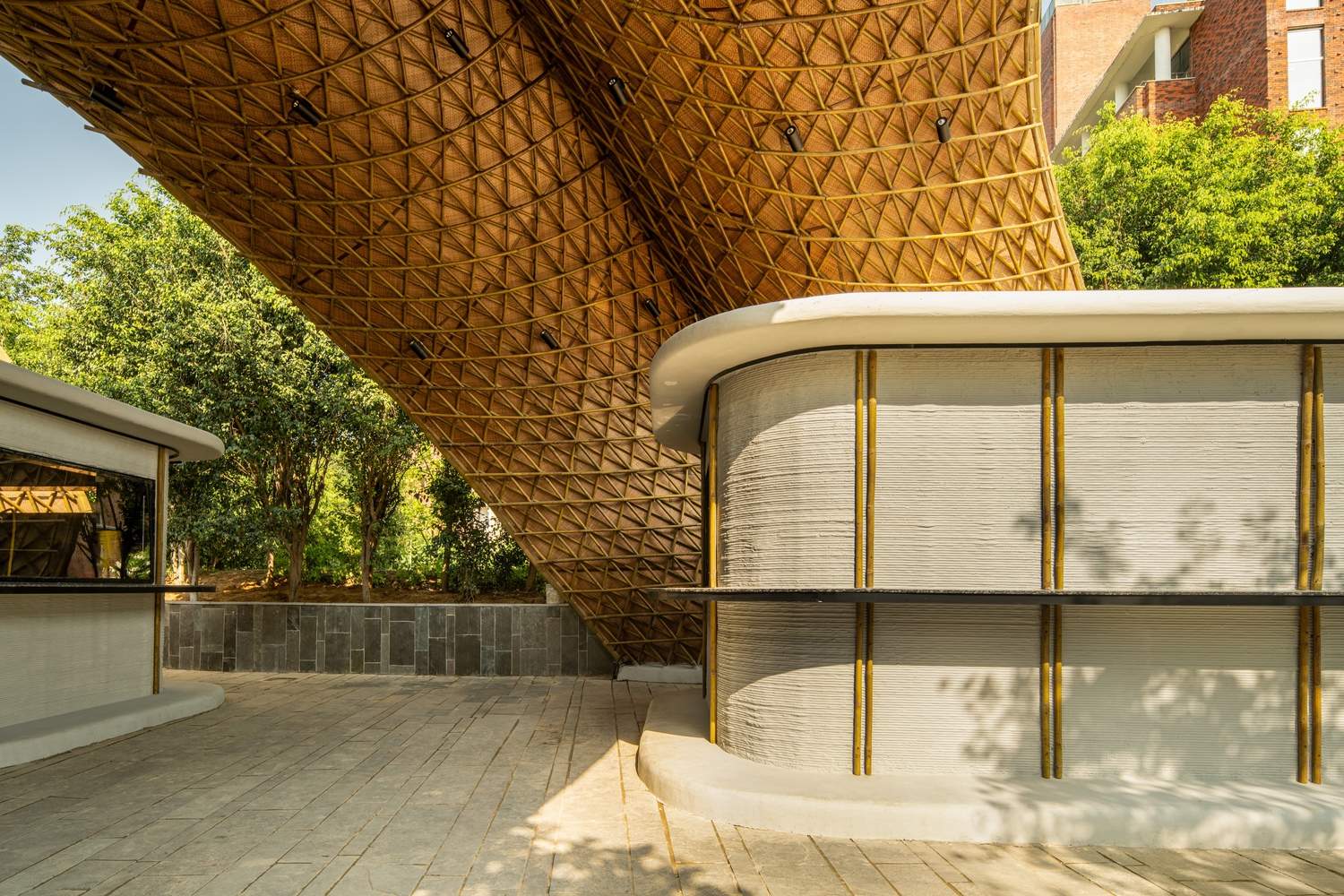
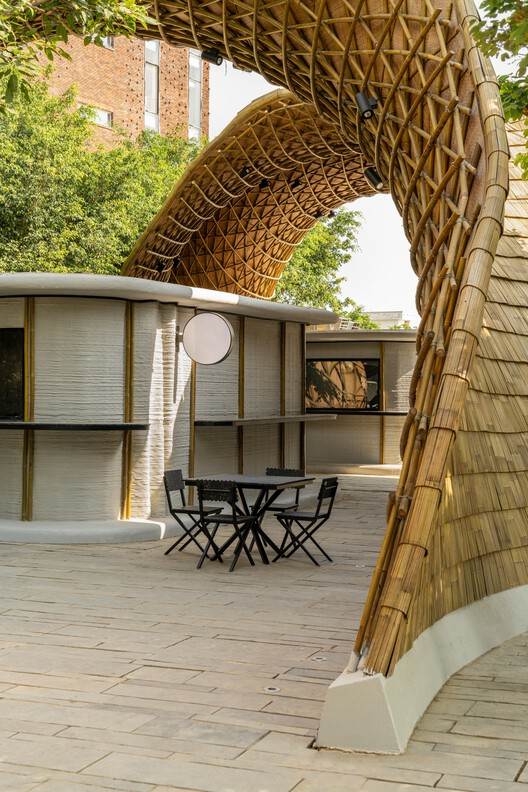
The kitchen for the food street takes inspiration from the concept of a food truck, constructed using 3D-printed concrete. These modular units were printed by Micob Private Limited in Ahmedabad and assembled on campus. 3D printing, an additive manufacturing process, deposits only the required material, drastically reducing waste compared to traditional methods. Its automated nature speeds up construction while lowering energy consumption and overall environmental impact. Furthermore, the cavities between the 3D-printed walls offer insulation, minimizing heat transfer and enhancing energy efficiency.
美食街厨房的设计灵感源自餐车概念,采用混凝土 3D 打印技术制成。这些模块化单元由位于艾哈迈达巴德的 Micob 私人有限公司打印完成,并在校园内组装。3D 打印是一种精确的增材制造工艺,仅沉积所需材料,与传统方法相比,大幅减少了浪费。其自动化特性加快了施工进度,同时降低了能源消耗和整体环境影响。此外,3D 打印墙体之间的空腔还具备隔热功能,可减少热量传递,提升能源利用效率。
© Avesh Gaur and Sohaib Ilyas
© Avesh Gaur and Sohaib Ilyas
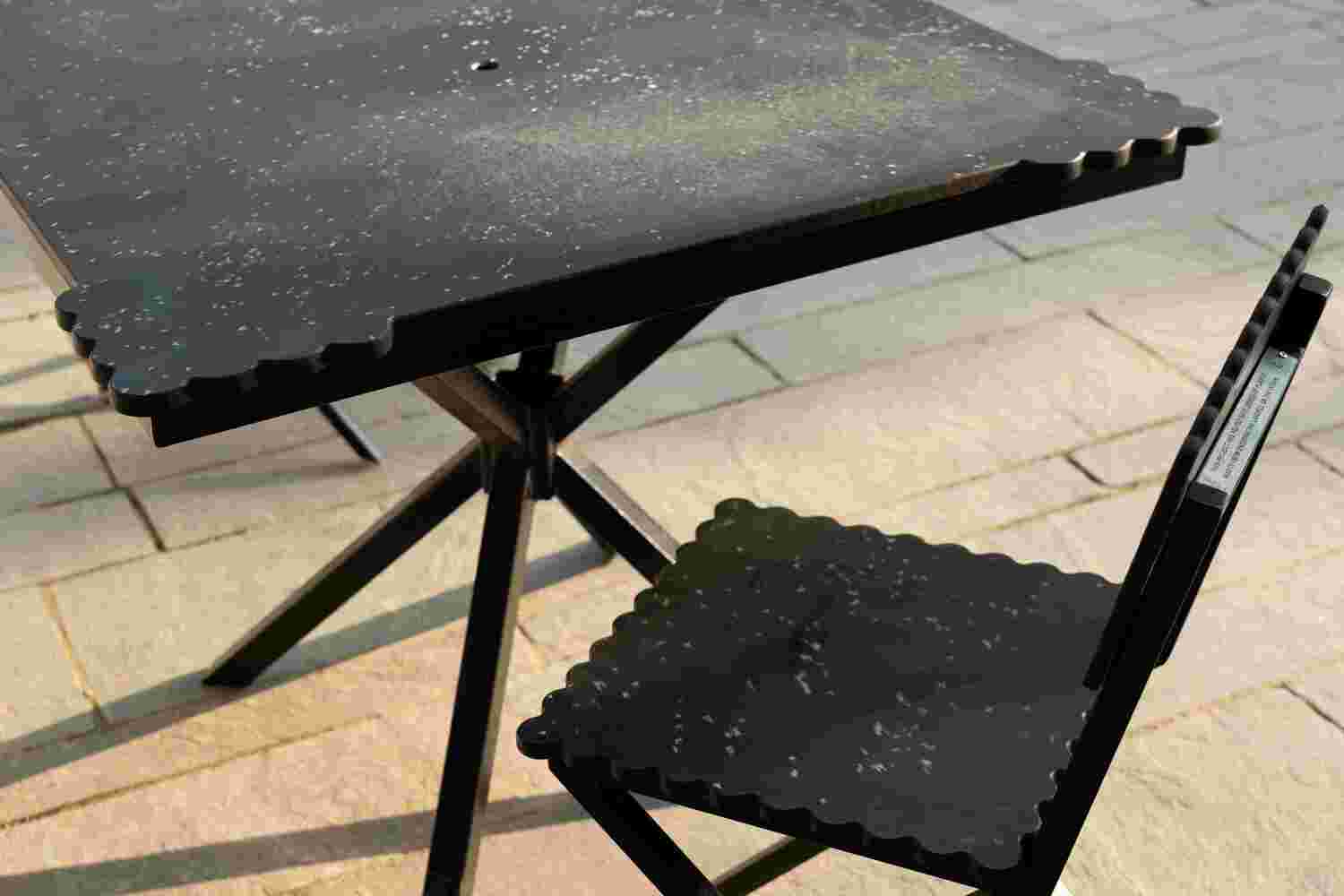
Crafted by Placyle, these furniture pieces are made from recycled plastic waste. By transforming discarded plastic into durable and weather-resistant seating, a conscious choice was made to mitigate landfill accumulation and ocean pollution, integrating sustainability directly into the daily design experience.
这些家具由 Placyle 公司打造,采用回收塑料废料制成。通过将废弃塑料转化为耐用且抗风雨的座椅,做出了一个明智选择——减少垃圾填埋场的过度堆积和海洋污染,将可持续理念融入日常设计之中。
Concept Sketch
Concept Sketch
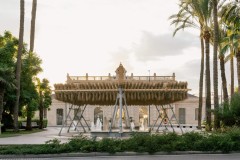
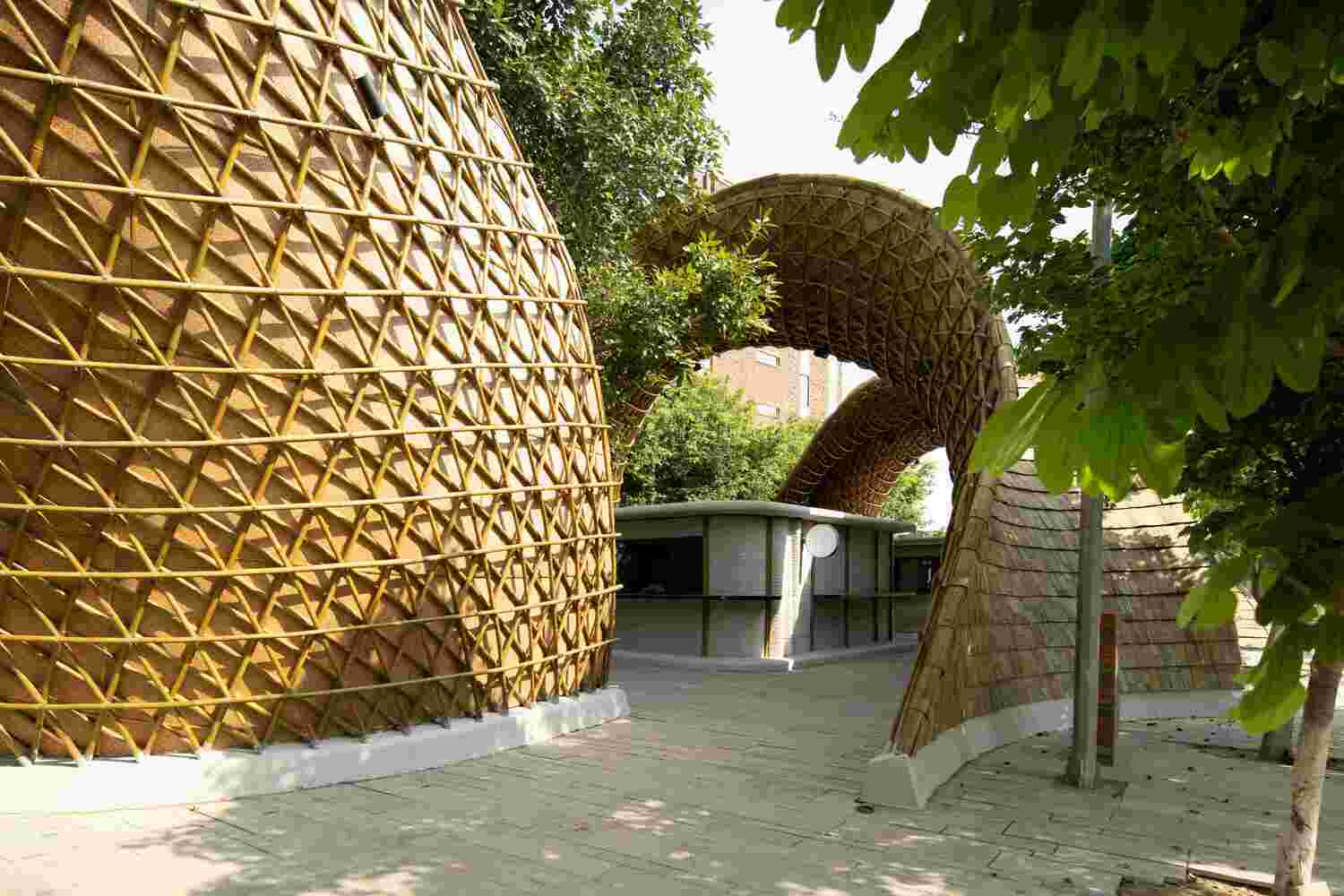
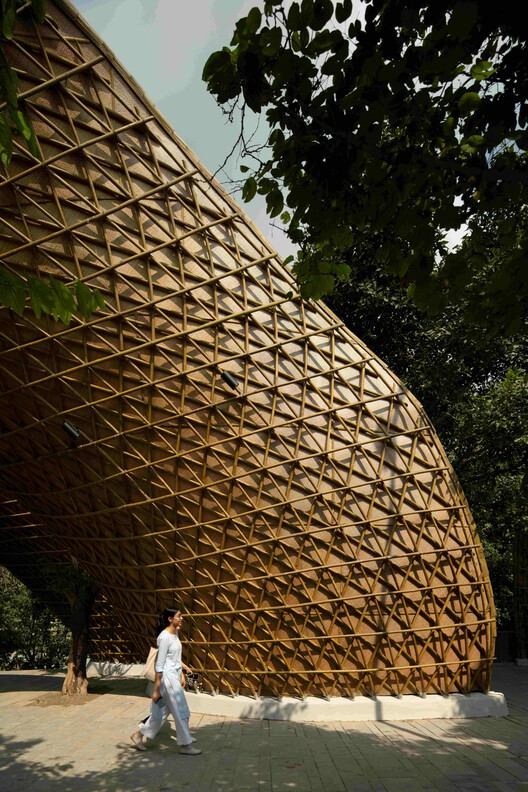
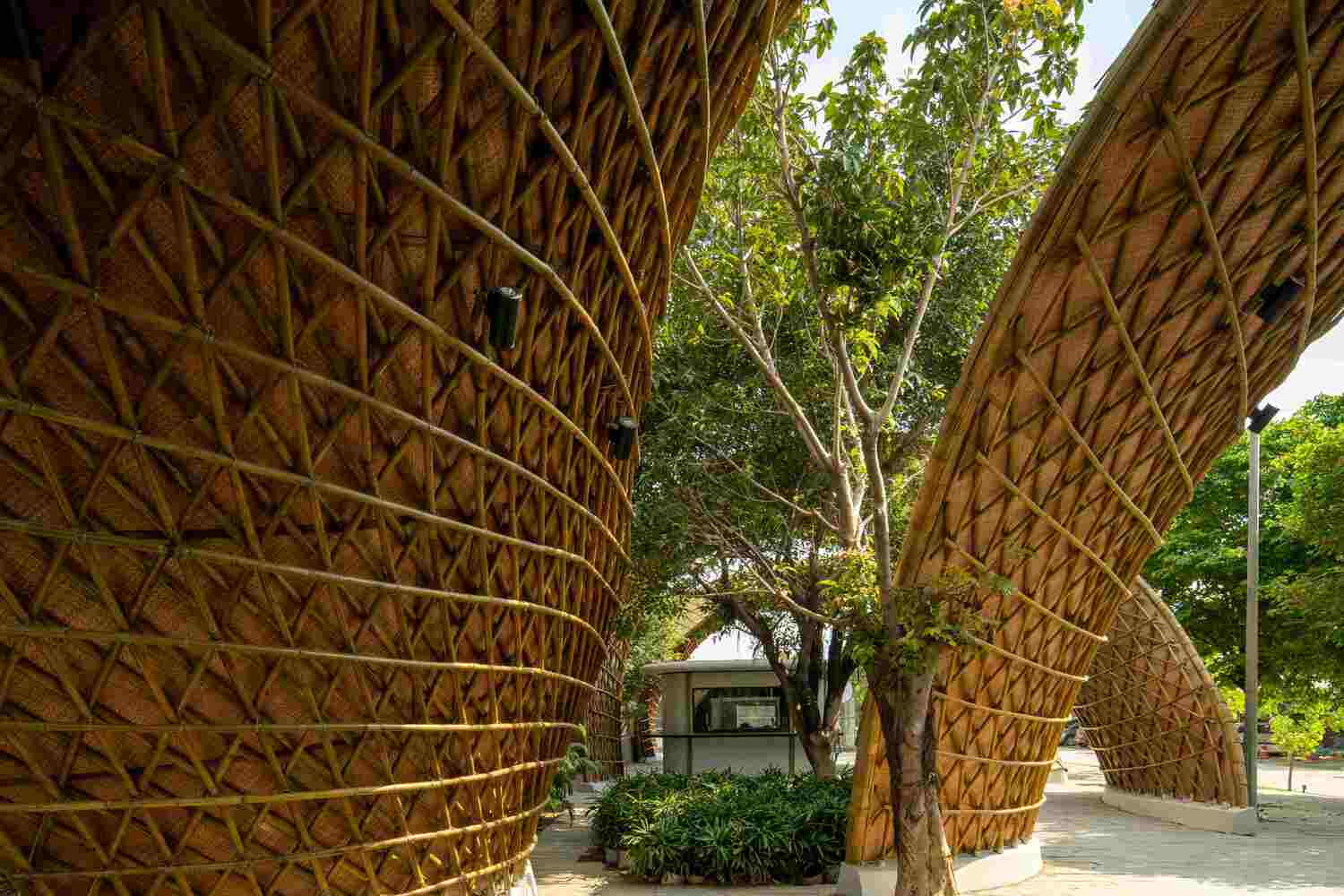
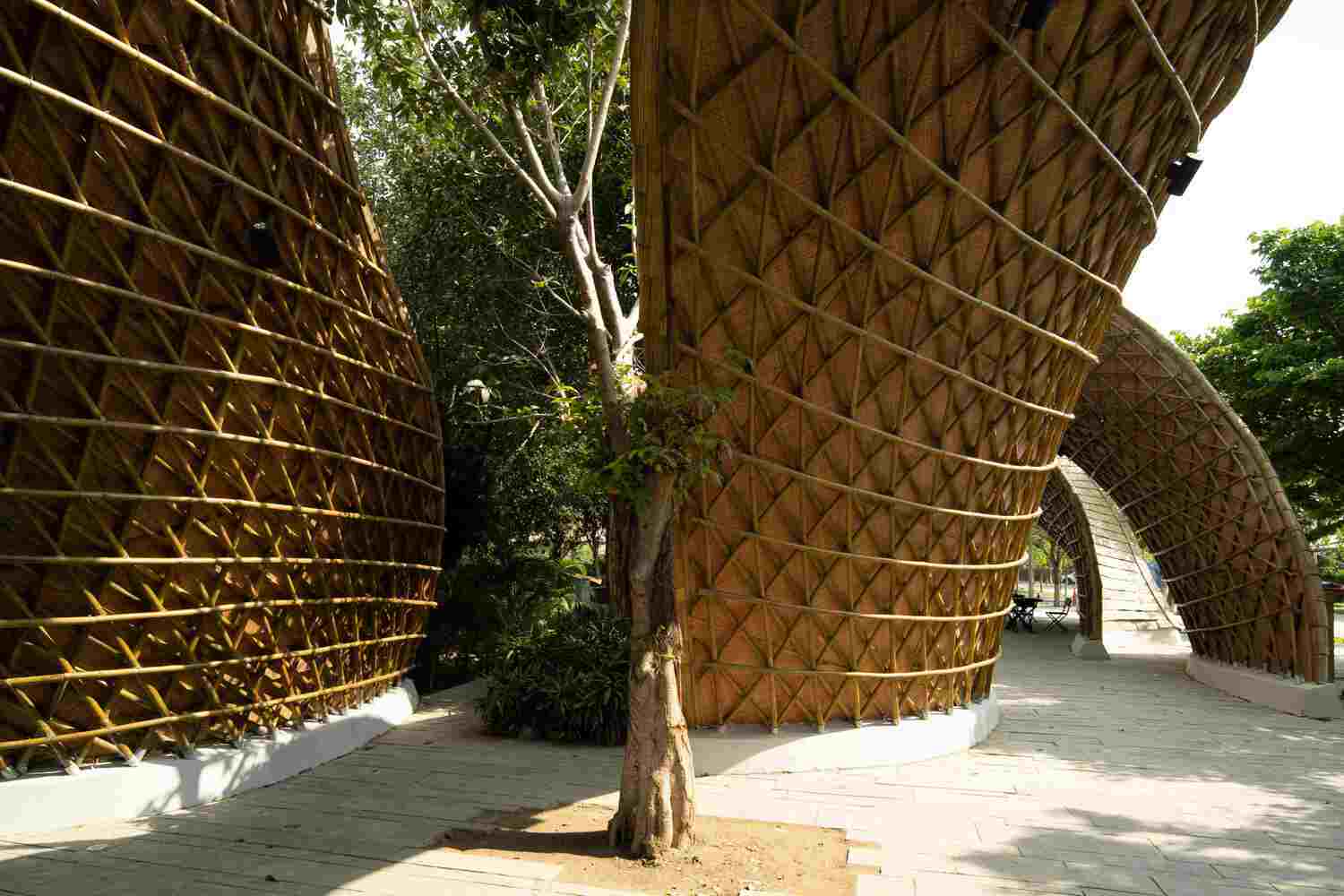
The shading structure, resembling a curled-up caterpillar, draws inspiration from the geometric forms found in nature. Just as leaves naturally curve to minimize material use while maximizing sun exposure, these bamboo shells curve in two directions, creating a structure that is both light and robust. The longest grid-shell dome spans 19 meters, constructed using four layers of bamboo poles, ranging from 30 to 50 mm in diameter, with each layer interlaced at a 45-degree angle, topped by a layer of crushed bamboo matting. The use of slender bamboo sections enabled the complex double-curved geometry, resulting in a highly unique sunshade that is material-efficient and low in environmental impact. The overall structure's concept was led by Atelier One in London, with architectural detailing handled by Jurian Sustainability, and fabrication by Jans Bamboo, transforming the "caterpillar" concept into reality. The project was designed by Apoorva Shroff, an architect from Lyth Design.
这片遮阳结构宛如蜷伏的毛毛虫,其设计灵感源自自然的几何形态。就如同叶片为减少材料消耗、更好地向阳生长而自然卷曲,这些竹制外壳在两个方向上弯曲,形成了一种既轻盈又坚固的结构。最长的网格穹顶跨度达19米,采用四层直径30至50毫米的竹子构建,每层竹子均以45度角交错排列,顶部再覆盖一层压碎的竹席。使用纤细的竹段使得复杂的双曲面造型成为可能,最终打造出这款造型独特、材料利用率高且环境影响低的遮阳装置。该结构的整体设计由伦敦的 Atelier One 事务所主导,建筑细节处理则由 Jurian Sustainability 事务所完成,并由 Jans Bamboo 公司负责建造,共同将“毛毛虫”这一创意变为现实。本项目由 Lyth Design 事务所的建筑师阿普尔瓦·施罗夫(Apoorva Shroff)设计。
© Avesh Gaur and Sohaib Ilyas
© Avesh Gaur and Sohaib Ilyas
Ultimately, this space is not just a place to eat, but a venue that sparks curiosity, fosters dialogue, and encourages contemplation. Here, design merges with ecology, and technology coexists with tradition. This caterpillar-inspired food street is more than a metaphor; it vividly demonstrates how thoughtful design can nourish not only people but also nurture the planet.
最终,这里不仅仅是一个用餐之地,更是一个激发好奇心、促进交流与沉思的空间。在这里,设计与生态相融,科技与传统共存。这条以毛毛虫为灵感的美食街,并非只是一个比喻,它生动展现了深思熟虑的设计如何不仅能滋养人类,同样也能呵护地球。
© Avesh Gaur and Sohaib Ilyas