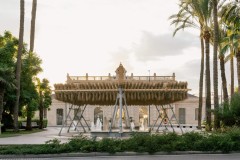
历史文脉的抢救性延续与空间重构:本项目最精髓之处在于对安仁古镇历史基因——廖维公馆的“抢救性落架大修保护”,体现了对历史建筑的尊重与责任。设计师巧妙地在既有宅院结构旁,采用钢结构与轻质构造进行扩建,实现了新旧建筑在形制上的对话与共生。通过对原始三进院落向五进院落的格局延续和空间激活,既保留了历史建筑的构件,又注入了现代功能,成功地将一个濒临荒废的历史建筑转化为富有活力的游客中心与社区活动中心,成为新城镇发展研究的范例。
“林盘”精神的在地化空间演绎:设计深度理解了安仁古镇“林盘”的空间基因,并将其融入到游客中心的设计语言中。通过向西增建低矮扁院和向东加建高宽庭院,不仅丰富了原有的“小林盘”形态,更通过坡屋顶建筑群的连续性,强化了场地的地域特色。特别是东扩部分,以歇山制式环绕庭院渐次抬升,形成多面体量,兼具传统坡顶的亲切感和现代抽象感,成功地在地性语境下创造了富有层次和叙事性的空间体验,实现了新旧交融的整体景观。
流线设计与观景体验的场所营造:建筑的功能性与场所感通过精心设计的内部流线得以升华。首进院落作为文化初体验的展示空间,而二、三进院落则通过保留构架塑造的灰空间檐廊,连接庭院,服务于社区活动。最富匠心的部分是坡屋顶下的流线组织,引导游客拾级而上,在不同空间尺度(高敞或狭闭)中穿行,最终到达制高点的观景亭。这一流线设计不仅满足了功能需求,更让使用者在登高望远中,实现了对廖维公馆屋顶肌理、周边“林盘”场景以及古镇文脉的视线串联,将建筑本身变成了观赏和体验历史文脉的媒介。
The Anren Tourist Center is an expansion and renovation project of the Liao Wei Mansion, located on the edge of Anren Ancient Town in the southwest of Chengdu. The Liao Wei Mansion was originally a private residence, later used as a winery, farmers' houses, and then fell into disrepair. It was listed as a historical building and cultural heritage protection unit in Chengdu in 2018, and has now been transformed into a tourist center and community activity center. As the historical gene of the old town, the project serves as the starting point for the newly built blocks, forming a new cluster of "Linpan" spaces and becoming a research sample for new town development in China.
安仁古镇游客中心是廖维公馆的改扩建工程,位于成都西南部安仁古镇的边缘。廖维公馆原为私人宅邸,后曾成为酿酒厂、农民宅屋等,再后一度荒废,2018 年获评成都市历史建筑及文保单位,现改造为游客中心及社区活动中心。作为老镇的历史基因,项目成为新建街区的起初点,并形成新的林盘空间族群,成为中国新城镇发展的研究性样本。
© 田方方
© 田方方
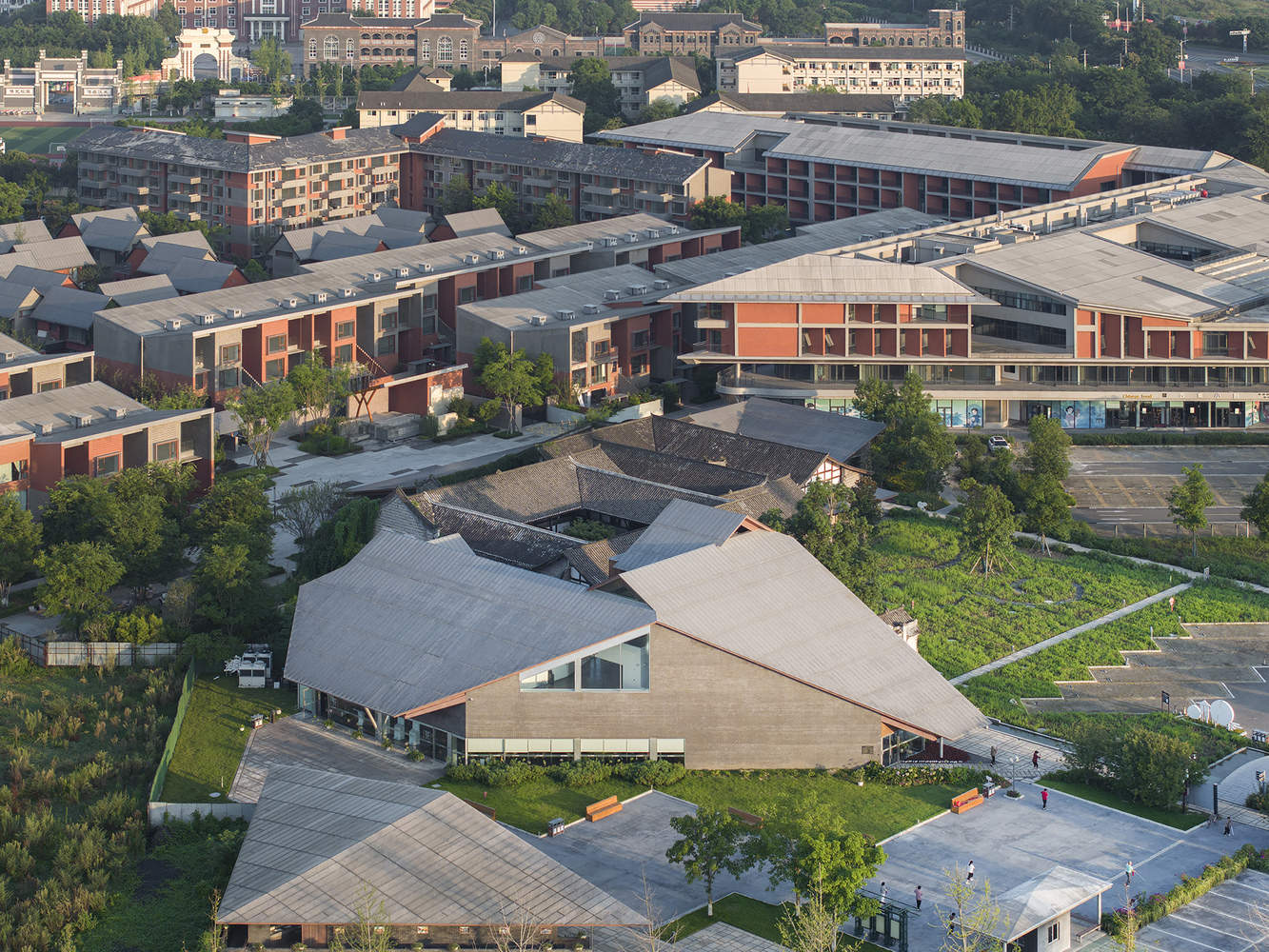
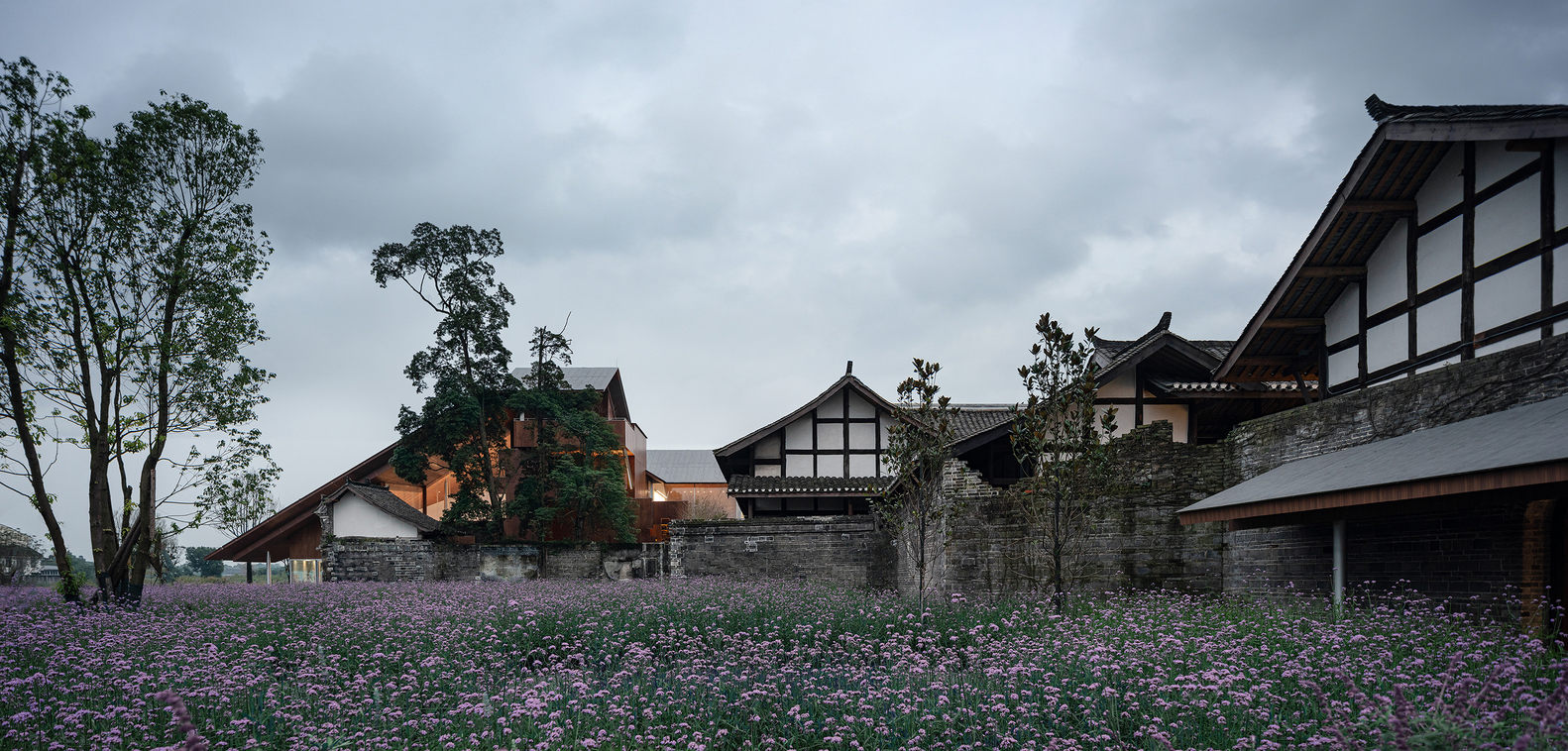
The project site is situated on the outer edge of the ancient town, about 1-2 kilometers from the central plaza area, bordering the main road to the north and facing the bus station across the road, occupying the location of the ancient town's outer living room. To the north of the site is a relatively dense area of self-built residential houses by villagers; to the west are large-scale middle schools and universities; and to the east, south, and within the plot itself are vast expanses of farmland. The existing Liao Wei Mansion within the plot, together with the surrounding trees and shrubs, forms a small "Linpan" (a traditional rural settlement cluster protected by trees and water).
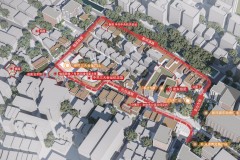
项目用地位于古镇的外围边缘,距中心坝子片区 1-2 公里,北临主干道,与客运站隔路相望,可谓古镇外围客厅的位置。用地北侧是较为密集的村民自建住区,西侧是大尺度的中学和高校,东侧、南侧和地块本身的原状是大片的农田。地块中现存的廖维公馆,与周边的乔灌共同形成了一个小林盘。
© 田方方
© 苏圣亮
© 苏圣亮
生成分析
© 苏圣亮
As a typical mansion architecture in Anren, the Liao Wei Mansion was originally a three-courtyard residence, with high walls and large courtyards dotted with trees and a water tower. Due to its distance from the core area of the ancient town and lack of maintenance, the courtyard walls had collapsed, the gate structure was damaged, and some roof trusses were on the verge of collapse before the renovation. The design adopted a rescue-oriented deconstruction and major repair to protect the cultural relics. The expansion part used steel structures and lightweight construction. Although adjacent to the old walls and residence, it maximized the protection of existing building components during implementation and after completion.
作为安仁当地典型的公馆建筑,廖维公馆原为三进宅院,高墙大院间点缀乔木与水塔。因远离古镇核心区,缺乏维护,改造前院墙垮塌、门头残损,部分屋架濒临倒塌。设计采用抢救性落架大修保护文物,扩建部分采用了钢结构和轻质构造,虽与老墙、老宅贴邻,但在实施过程中和完成后都尽最大限度保护了既有建筑构件。
© 田方方
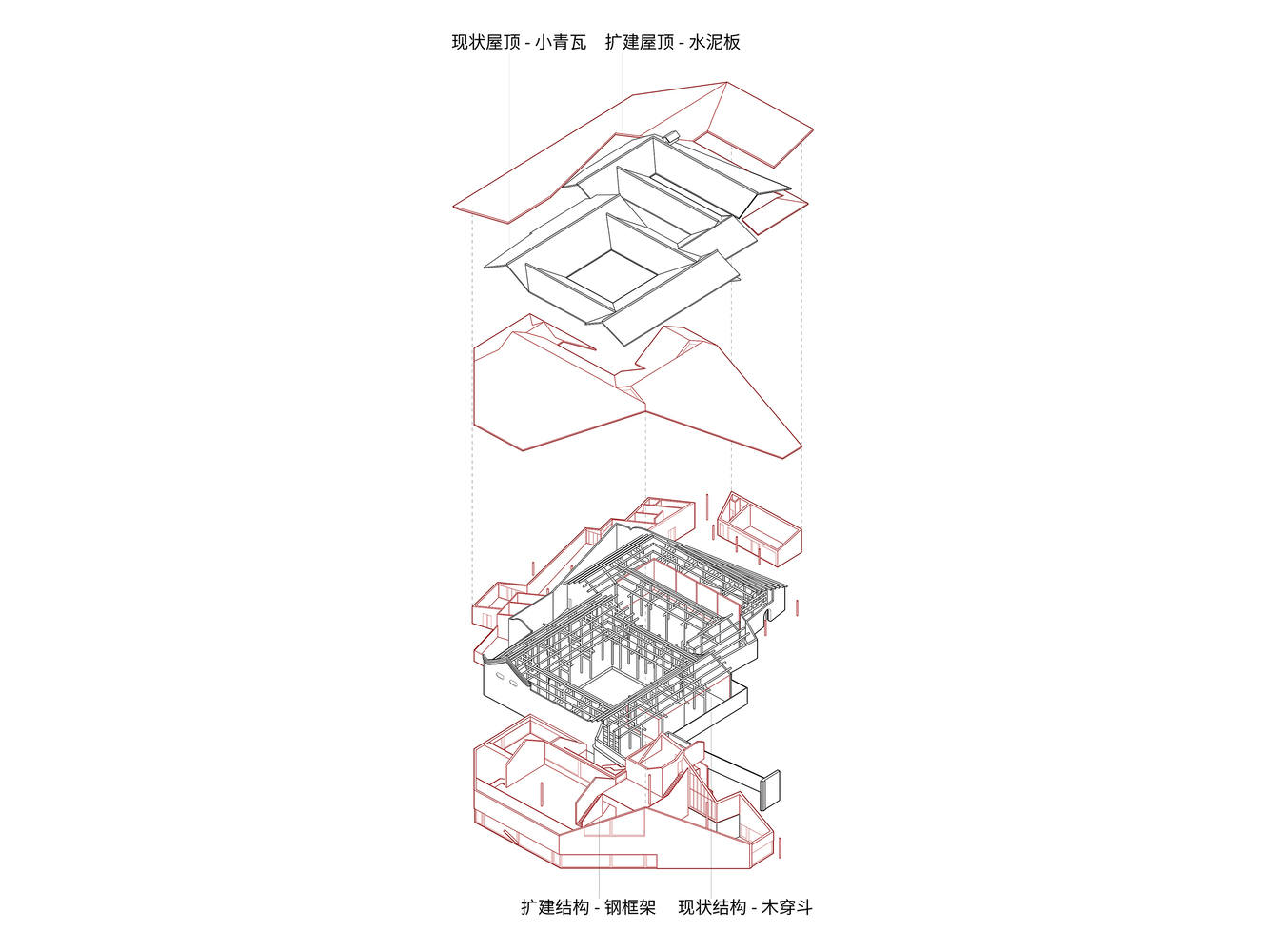
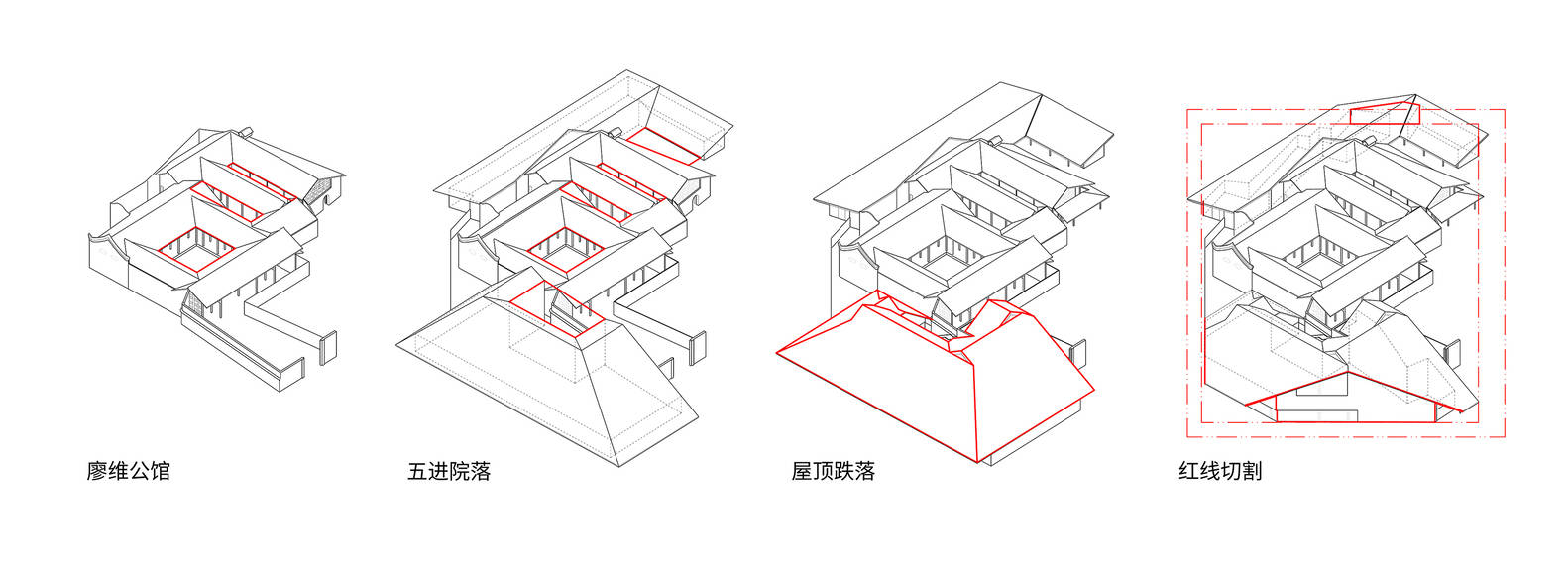
轴测爆炸图
© 苏圣亮
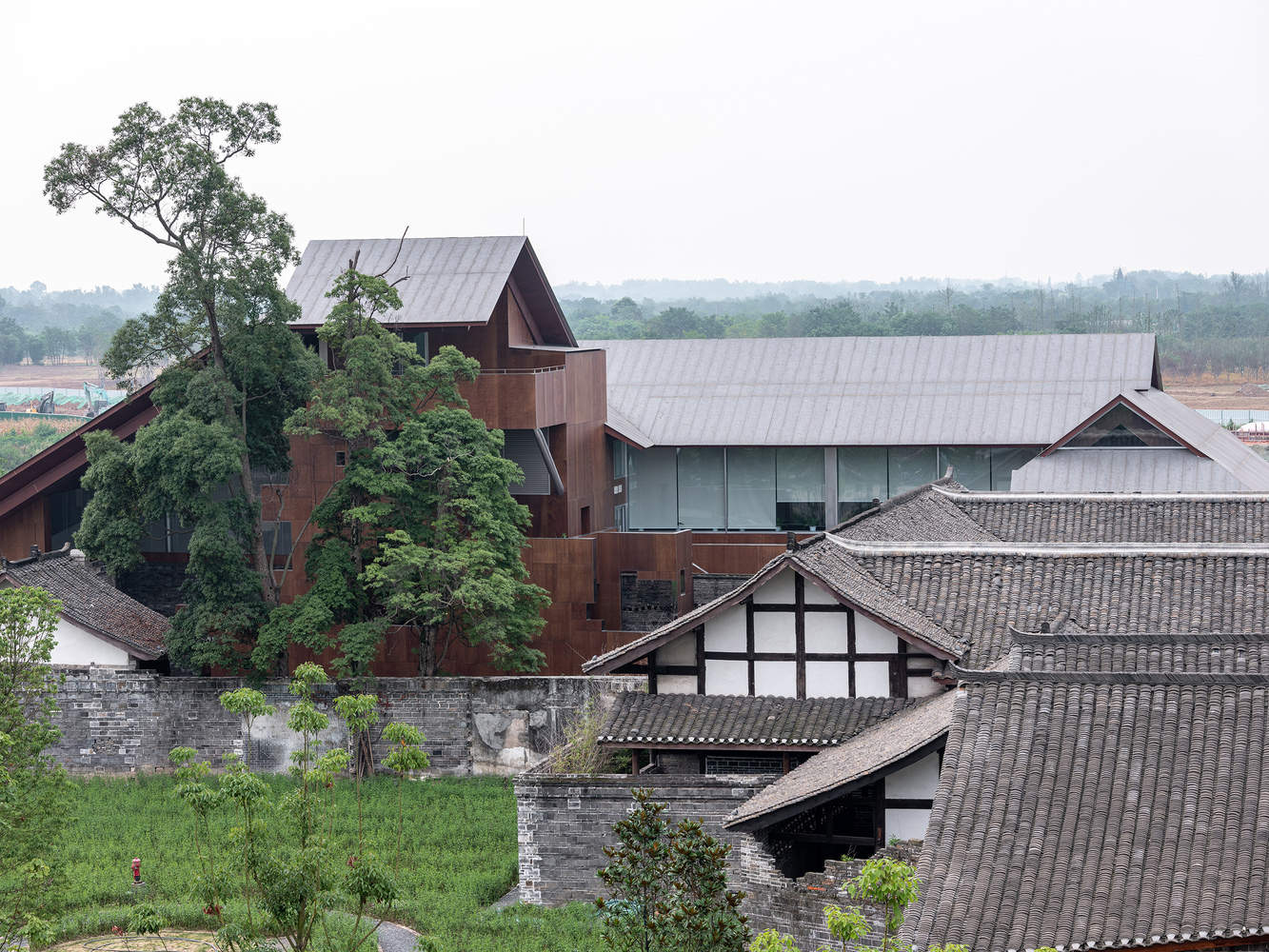
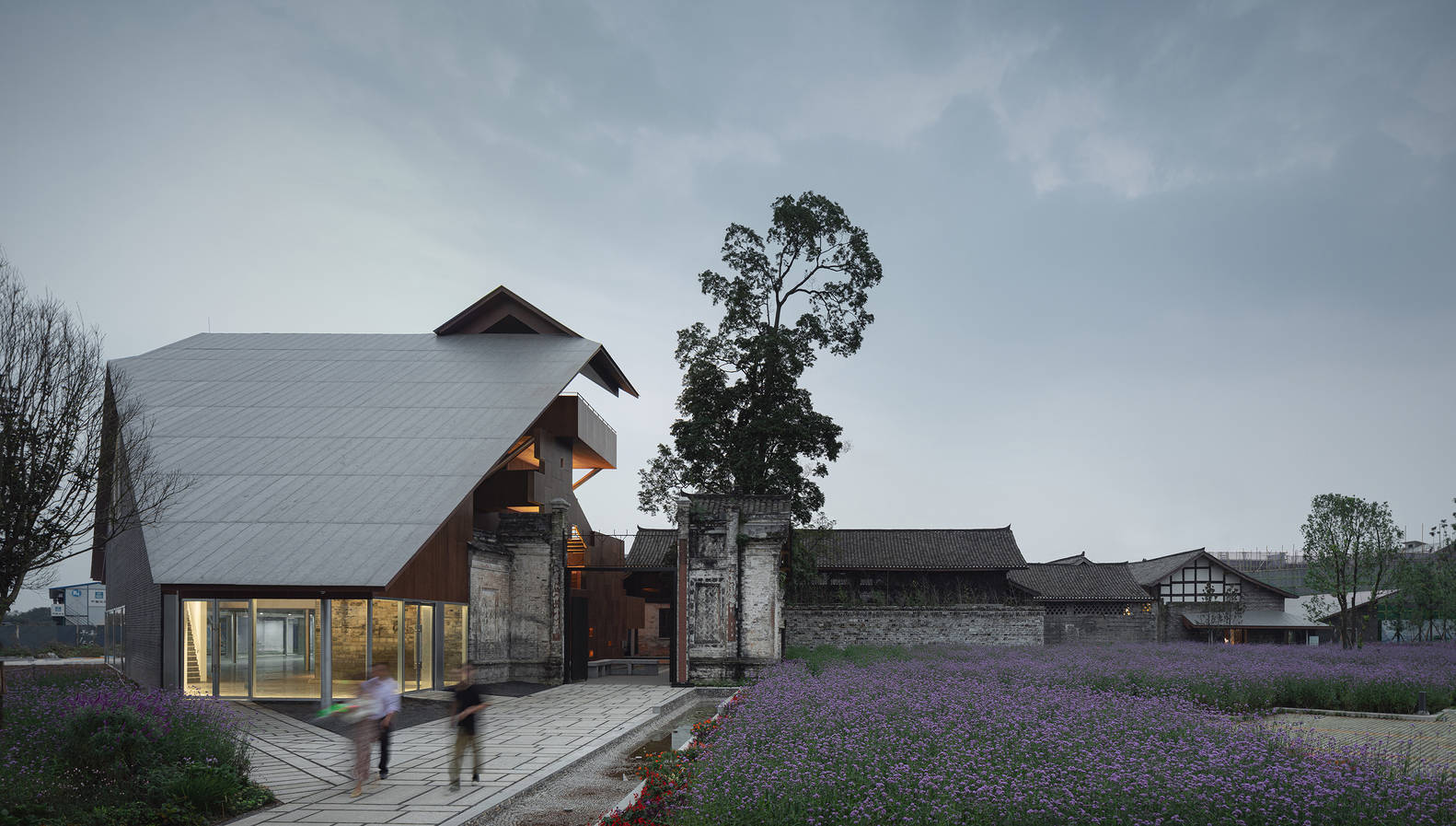
Based on the original layout that gradually expanded and elevated from northwest to southeast, the design added a low, shallow courtyard to the west and a high, wide courtyard to the east on the existing mansion complex. This expanded the three-courtyard residence into a five-courtyard structure, continuing and reinforcing the spatial characteristics and architectural personality of the pitched-roof building complex, creating an integrated whole where old and new blend.
基于自西北向东南逐进扩大抬升的原始格局,设计在原有宅院群落的格局上,向西增建低矮扁院,向东加建高宽庭院,将三进宅院扩建为五进,延续并强化了坡屋顶建筑群的空间特征和建筑性格,形成新旧交融的整体。
© 苏圣亮
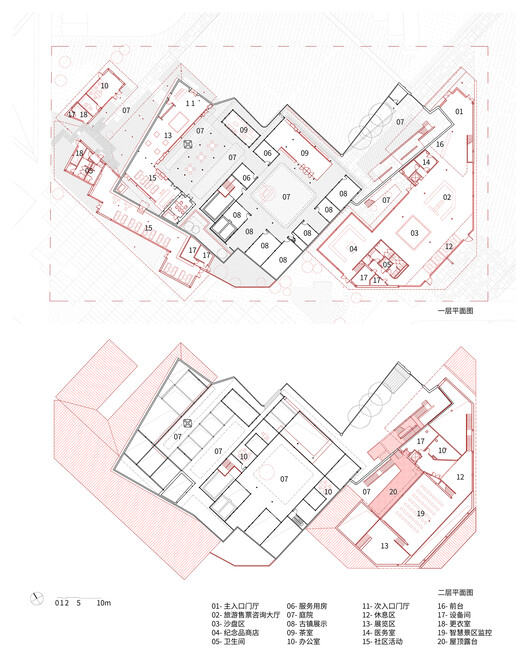
平面图
© 苏圣亮
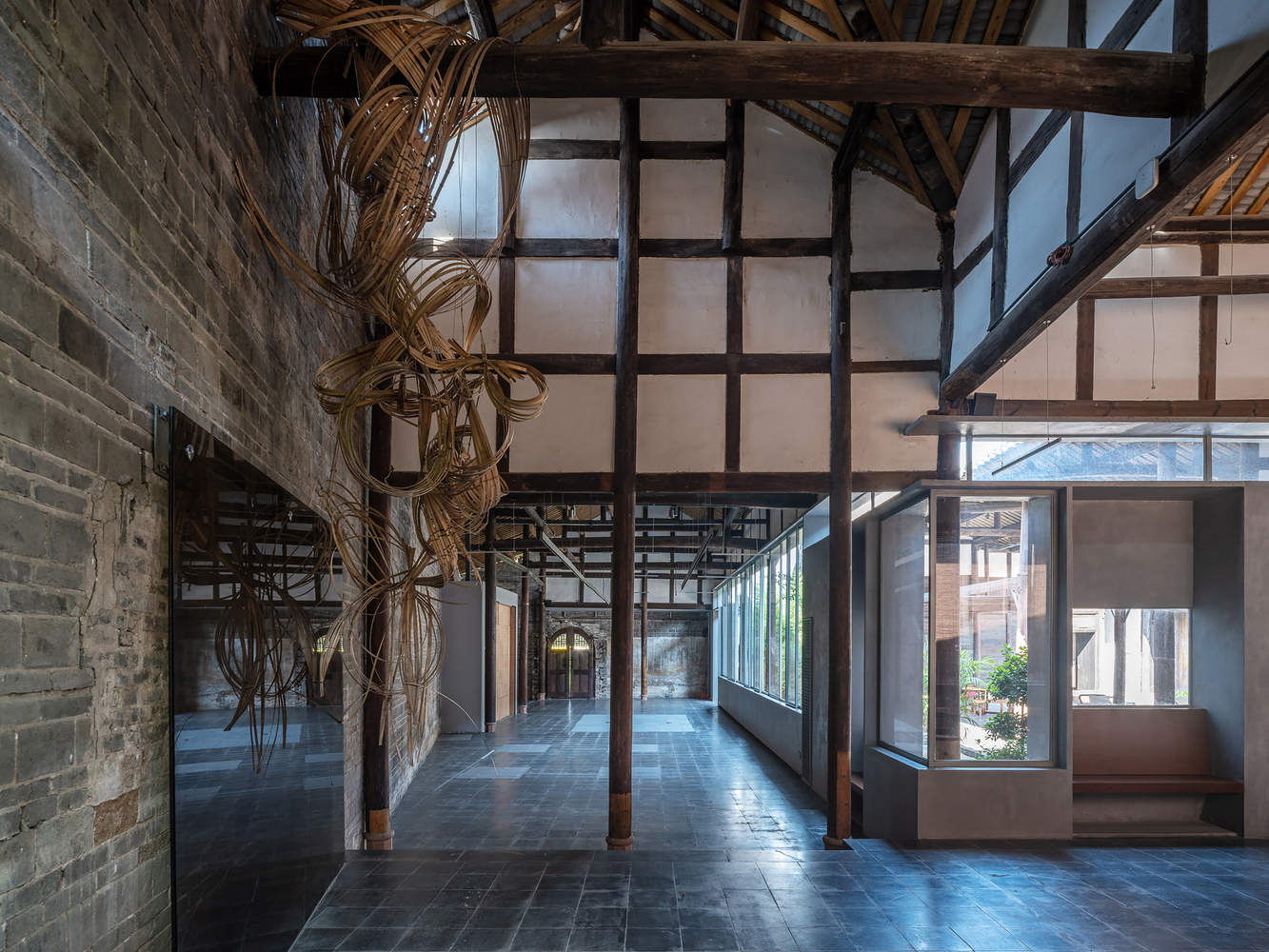
The first courtyard of the old residence displays the results of the repair and renewal of various Anren mansions, including the Liao Wei Mansion. The space itself is a rich outcome of the ancient town's cultural relics, allowing visitors to have an initial experience of the town's culture. Newly constructed lightweight timber structures connect with the old buildings, providing indoor and outdoor rest spaces.
老宅首进院落空间内展示包括廖维公馆在内的安仁各公馆修缮更新成果,其场所本身亦是古镇文物的丰硕成果,游客可初体验古镇文化。新建小木作围护结构以轻质构造衔接旧建筑,提供室内外休憩空间。
© 苏圣亮
© 田方方
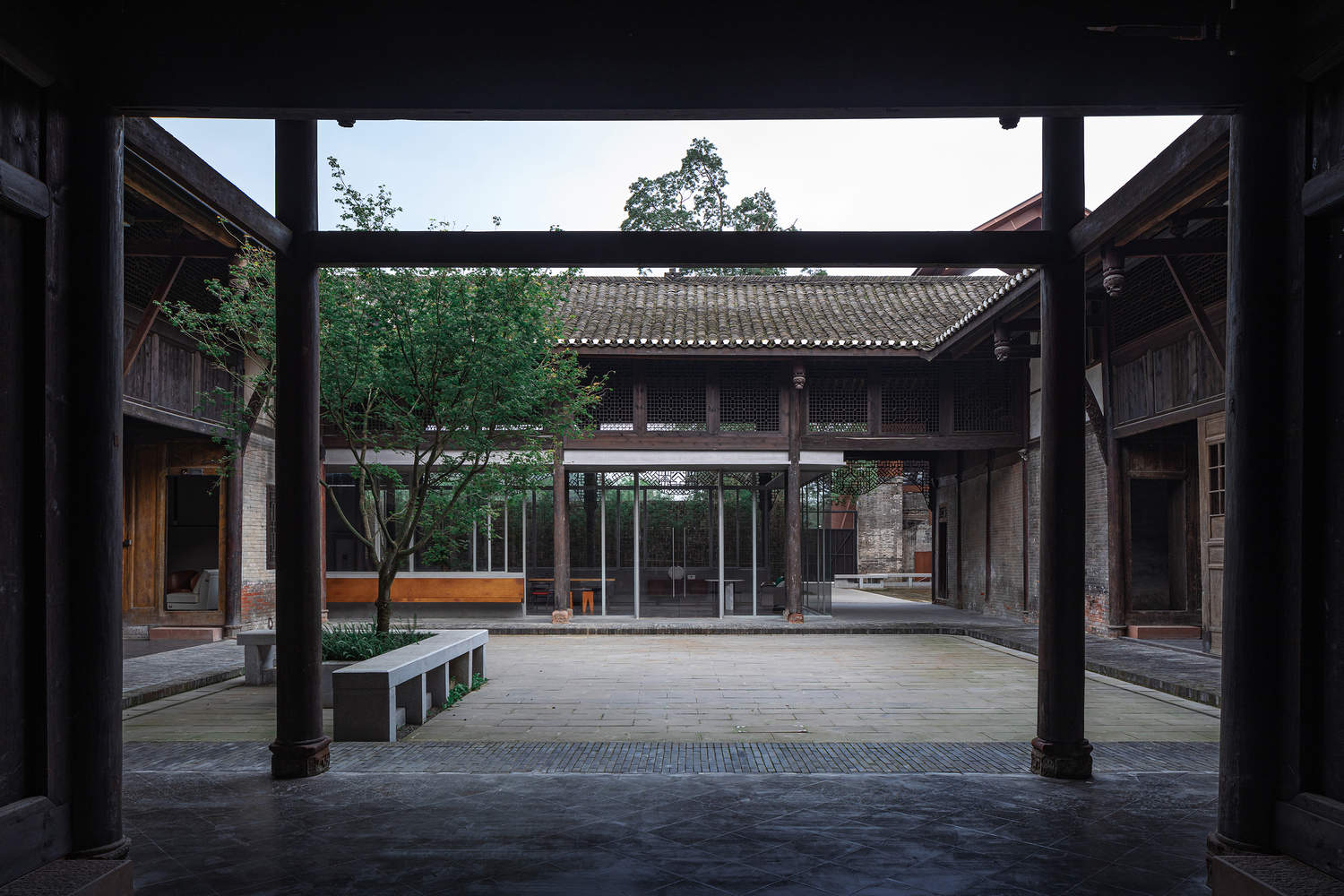
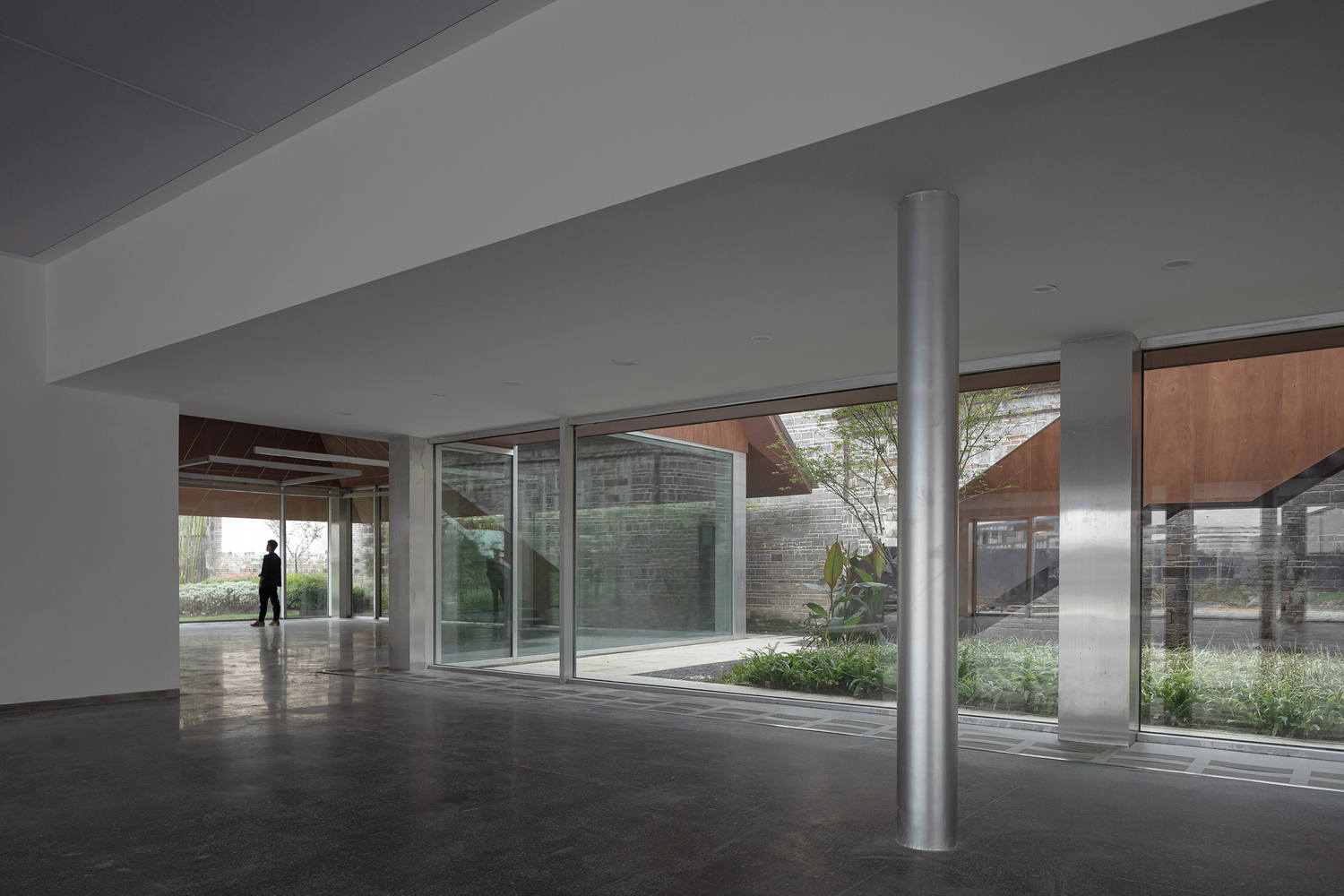
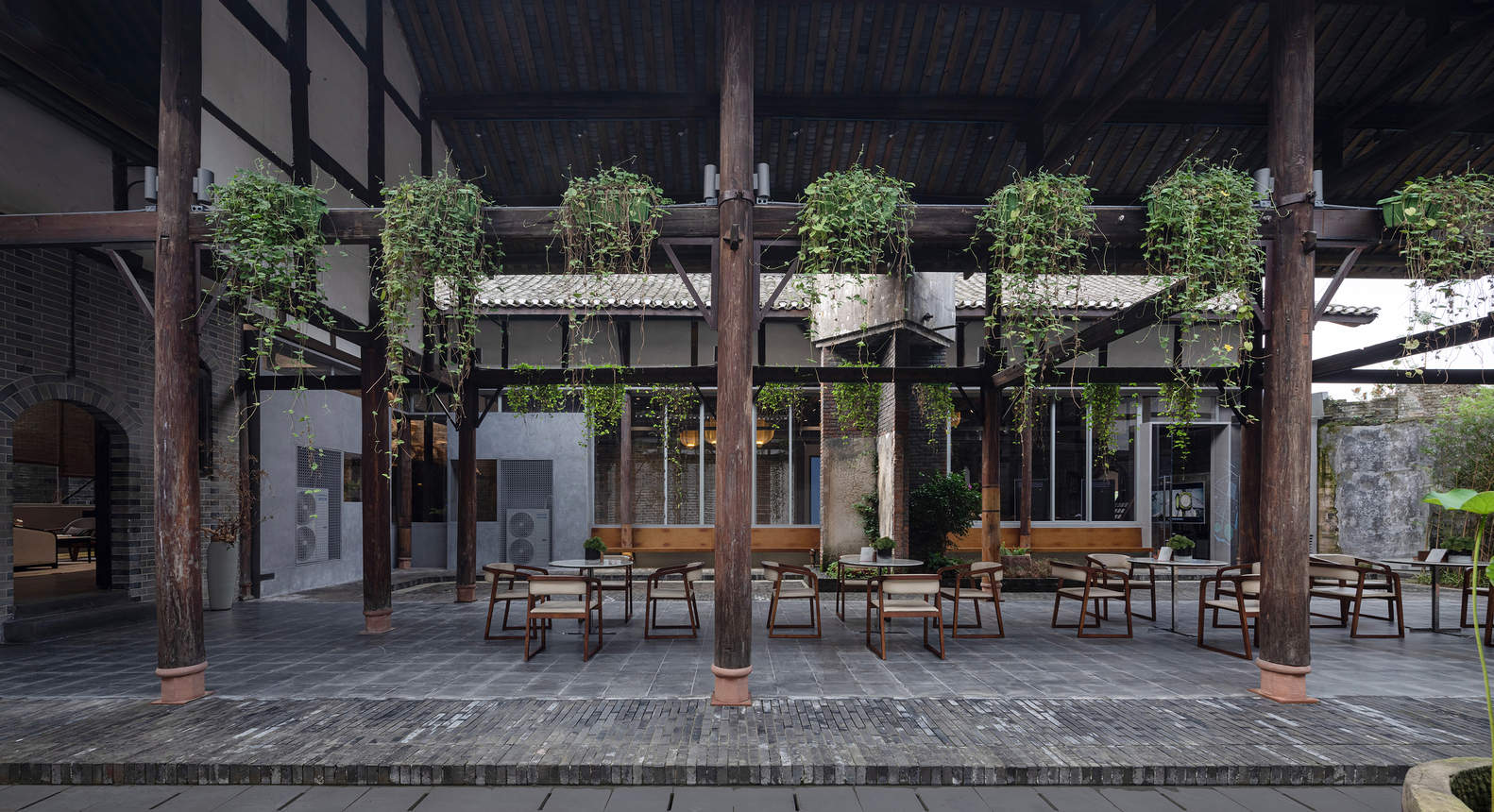
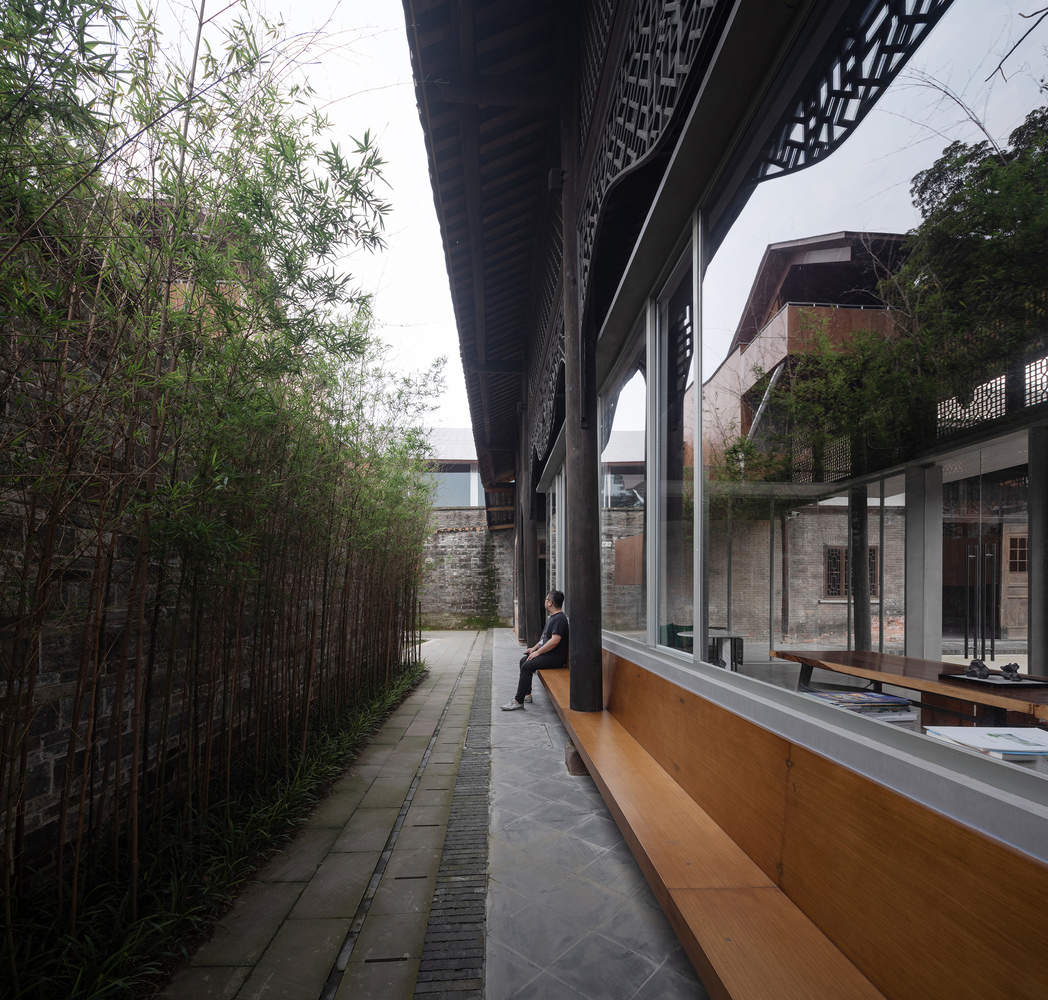
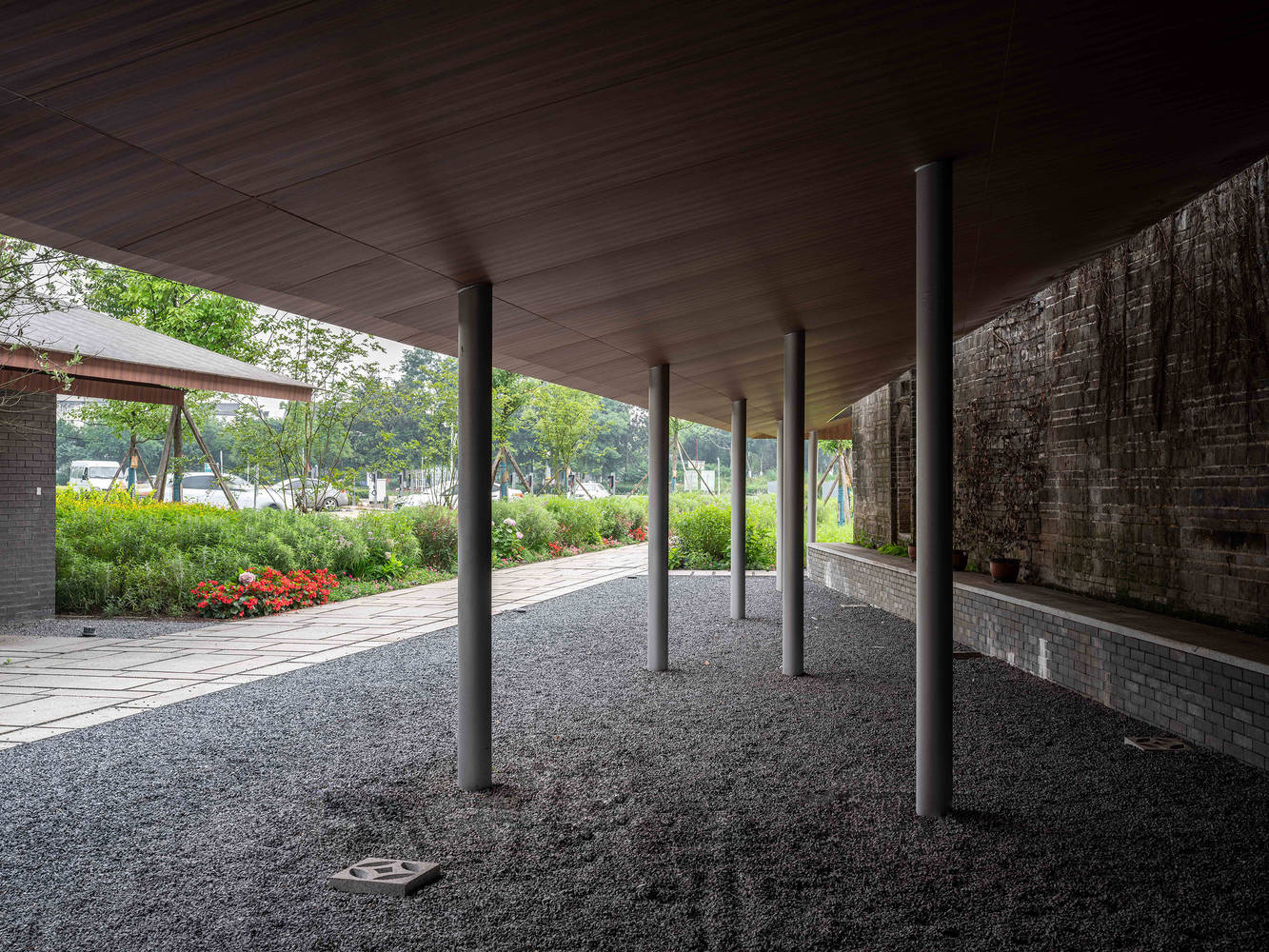
The second and third courtyards are smaller in scale with damaged walls. The design did not restore the original layout of the residence but instead preserved the framework to shape covered corridors (gray spaces) connecting the courtyards, forming multi-functional community activity areas.
二三进院落尺度较小,墙体损毁。设计并未恢复原宅院格局,而是保留构架塑造灰空间檐廊,联通庭院构成多功能社区活动场所。
© 苏圣亮
© 苏圣亮
© 苏圣亮
The western expansion volume leans against the old wall, extending with a gently sloping single-pitch roof towards the community square, facing the secondary entrance of the "Linpan" town, forming an interface with a friendly scale.
西扩体量背靠老墙,以低缓单坡屋顶延伸至社区广场,与“林盘”小镇次入口相对,形成尺度亲切的界面。
© 苏圣亮
© 苏圣亮
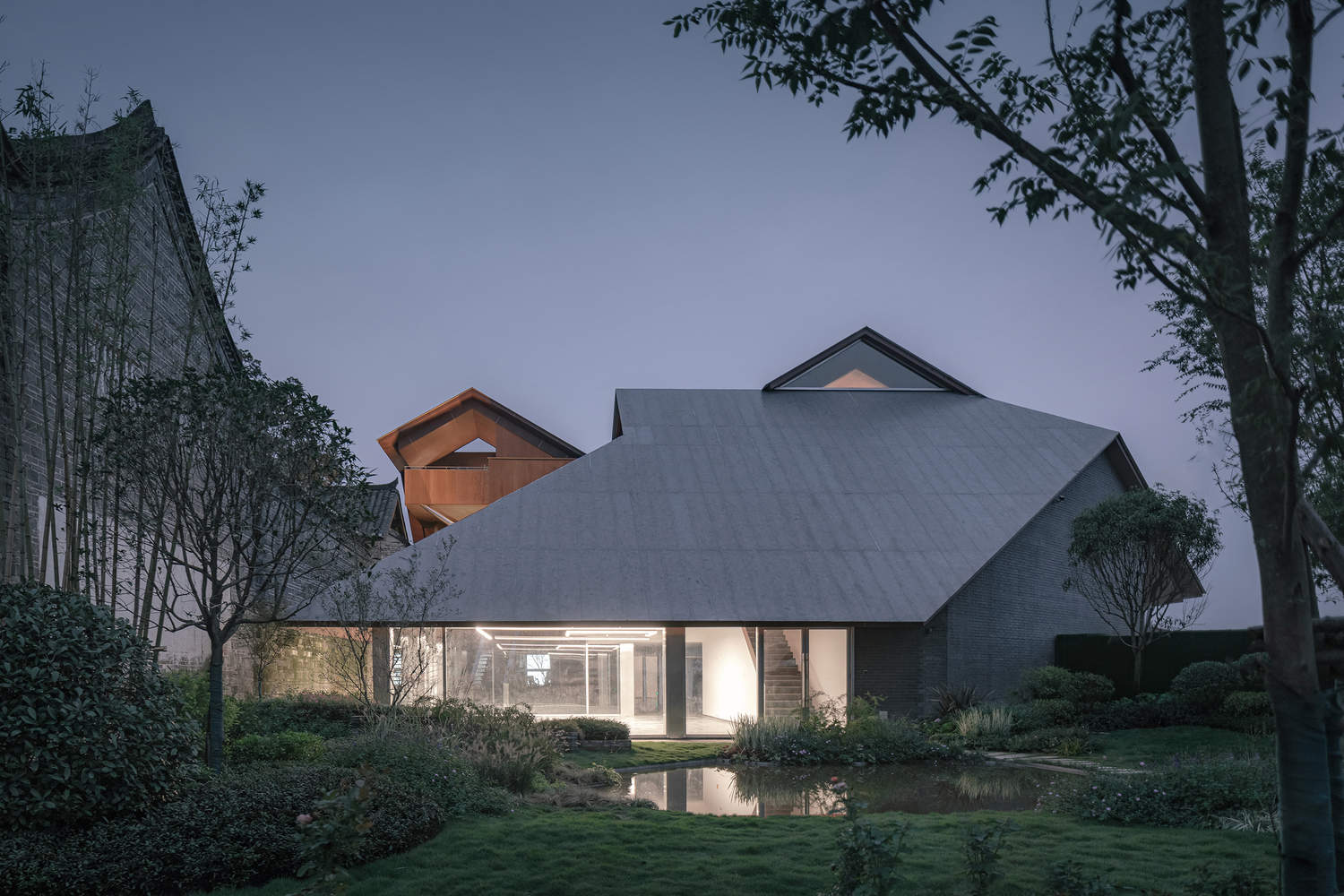
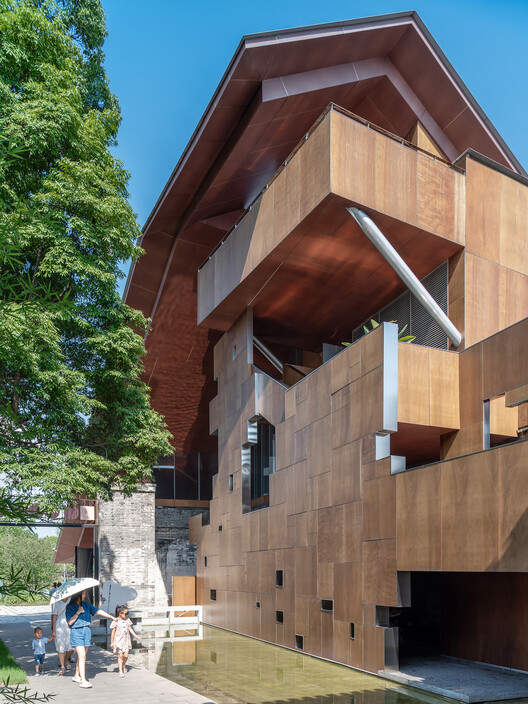
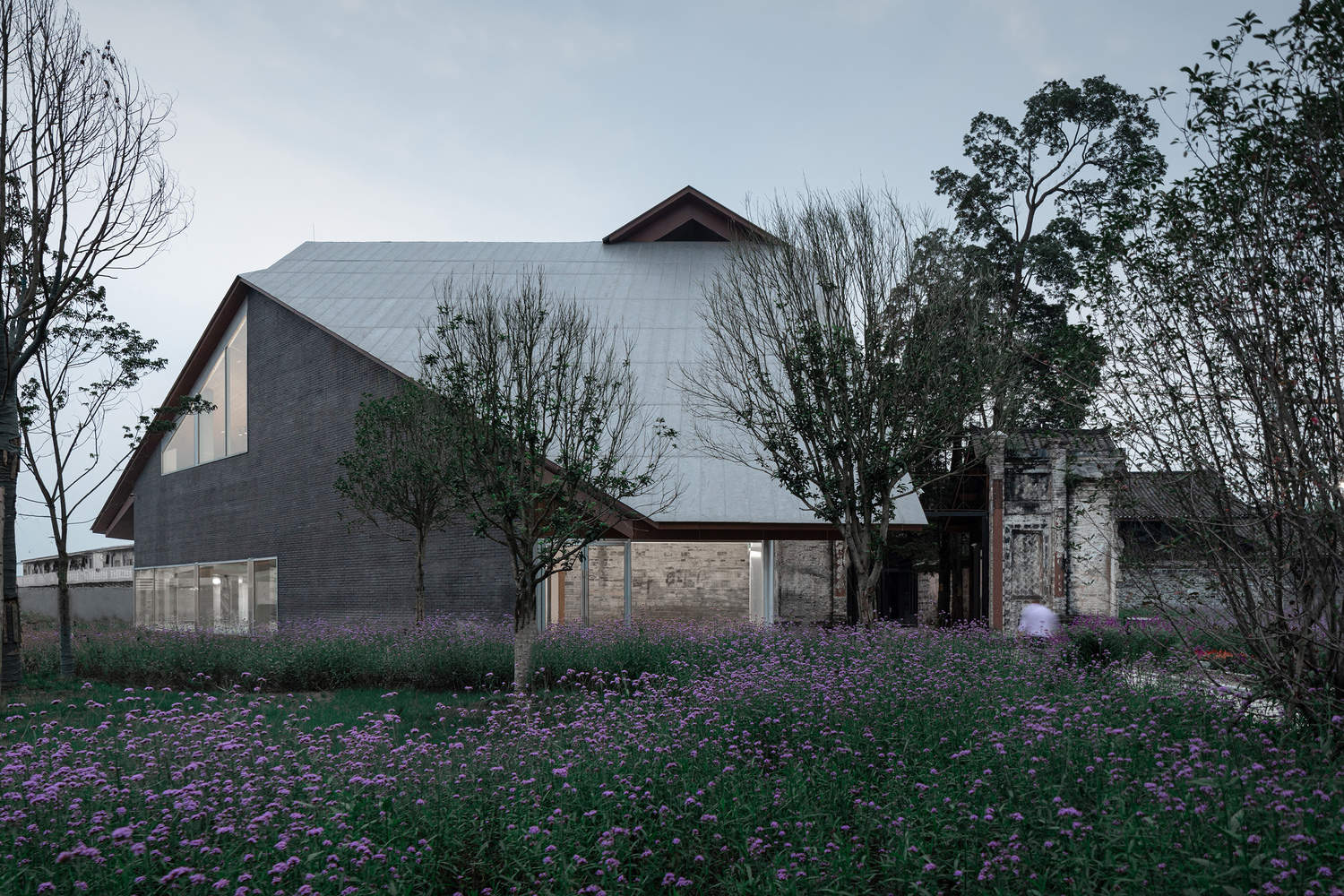
In the eastern expansion section, the pitched roof starts from the side of the old building, gradually rising around the courtyard in a hip-and-gable style (Xieshan style). The square volume is obliquely cut by the site boundary: the main entrance presents a giant single-pitch roof form, creating a towering gable facade on the street and plaza sides, while the side adjacent to the old building maintains a modest, low scale to preserve an appropriate sense of distance. The final result is a multifaceted volume that combines the traditional pitched roof form with contemporary abstraction.
东扩部分,坡屋顶自老建筑侧始,以歇山制式环绕庭院渐次抬升,方正体量被用地红线斜切:主入口呈巨型单坡形象,街道与广场侧形成山墙式高耸立面,老建筑一侧则以低矮谦逊的尺度保持适度的距离感。最终形成传统坡顶形制与当代抽象感兼具的多面体量。终形成传统坡顶形制与当代抽象感兼具的多面体量。
© 苏圣亮
© 田方方
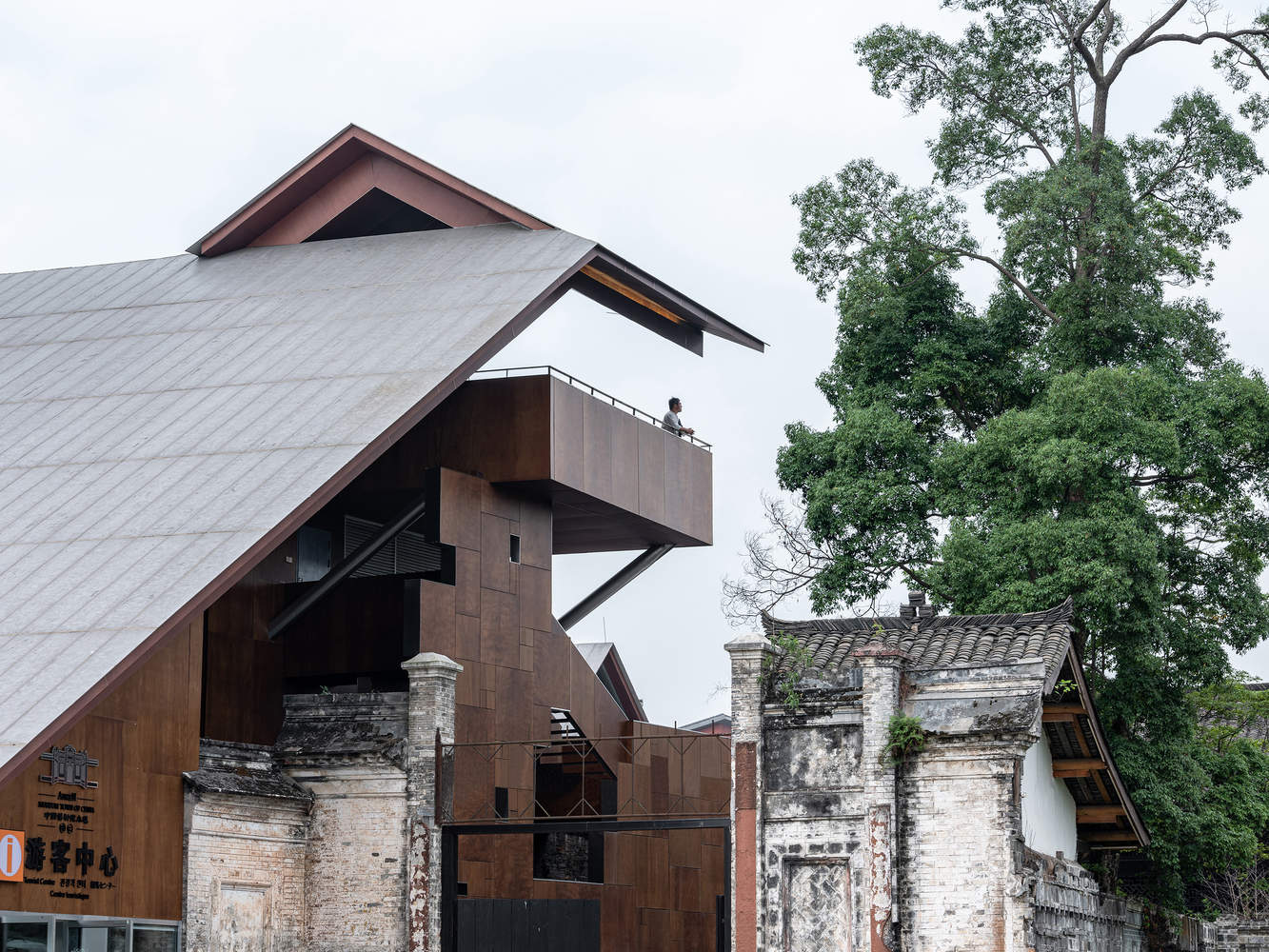
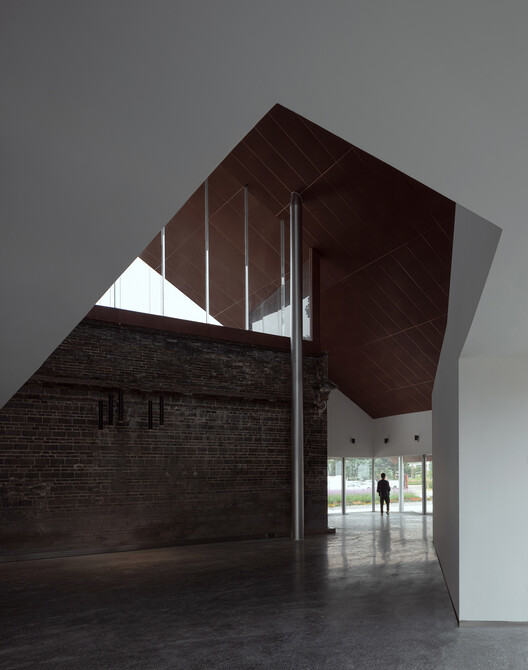
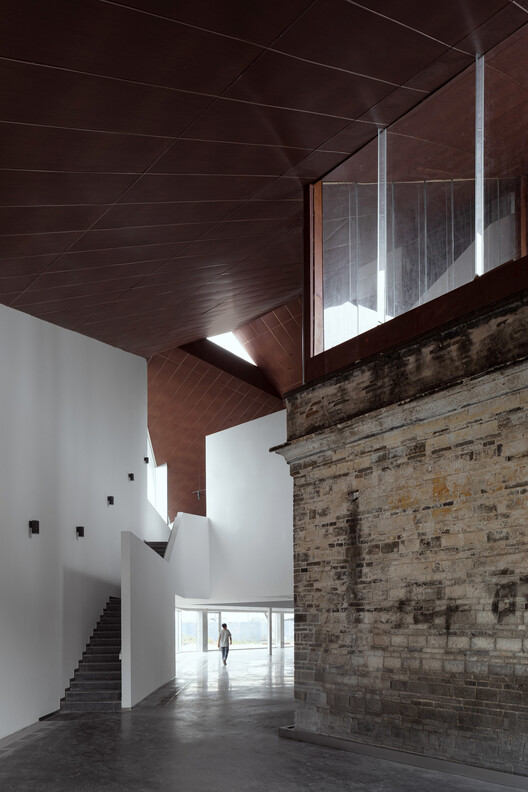
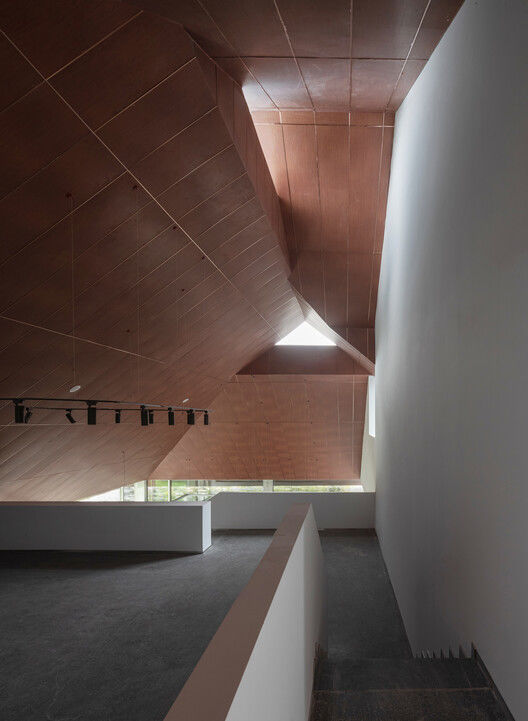
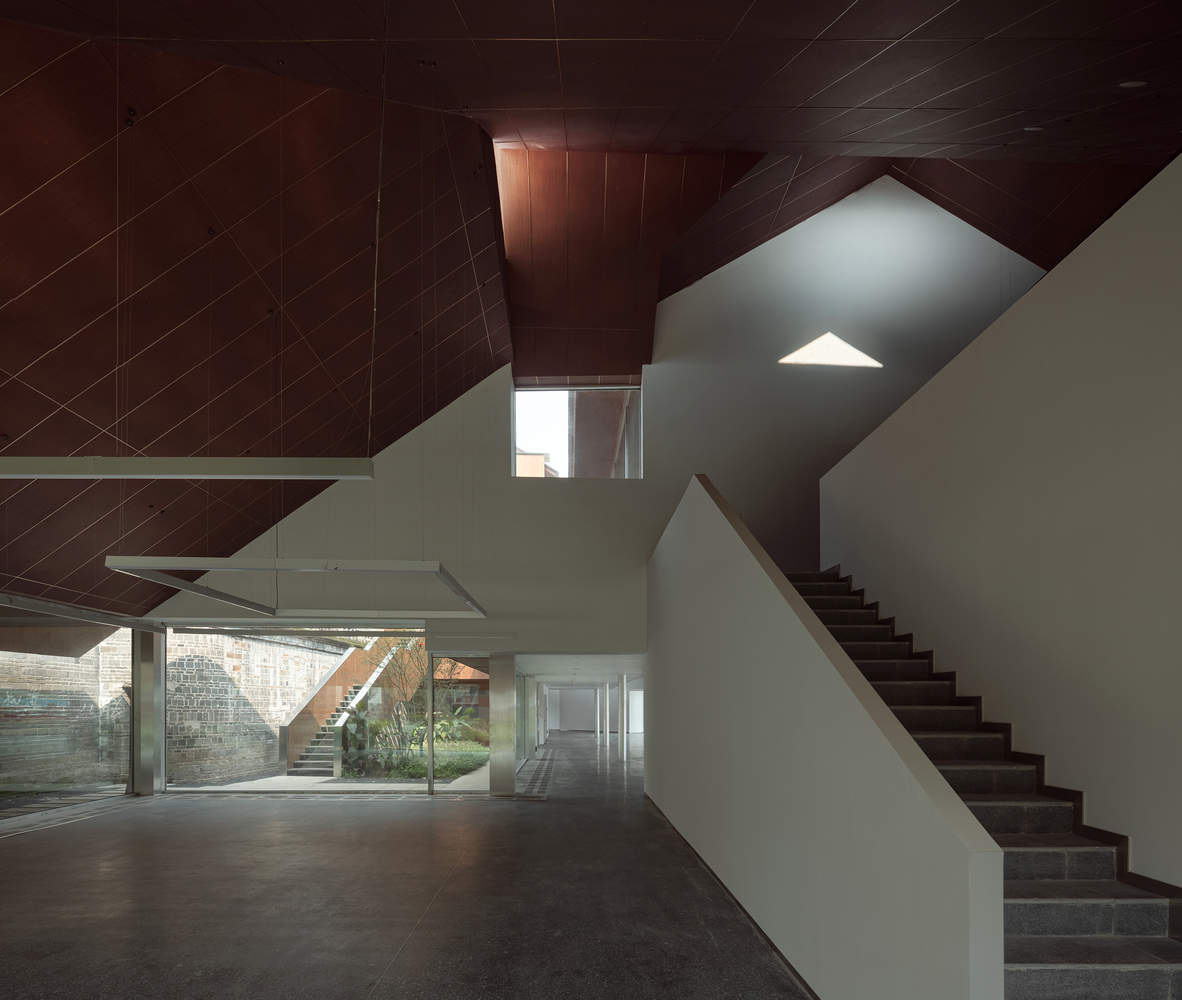
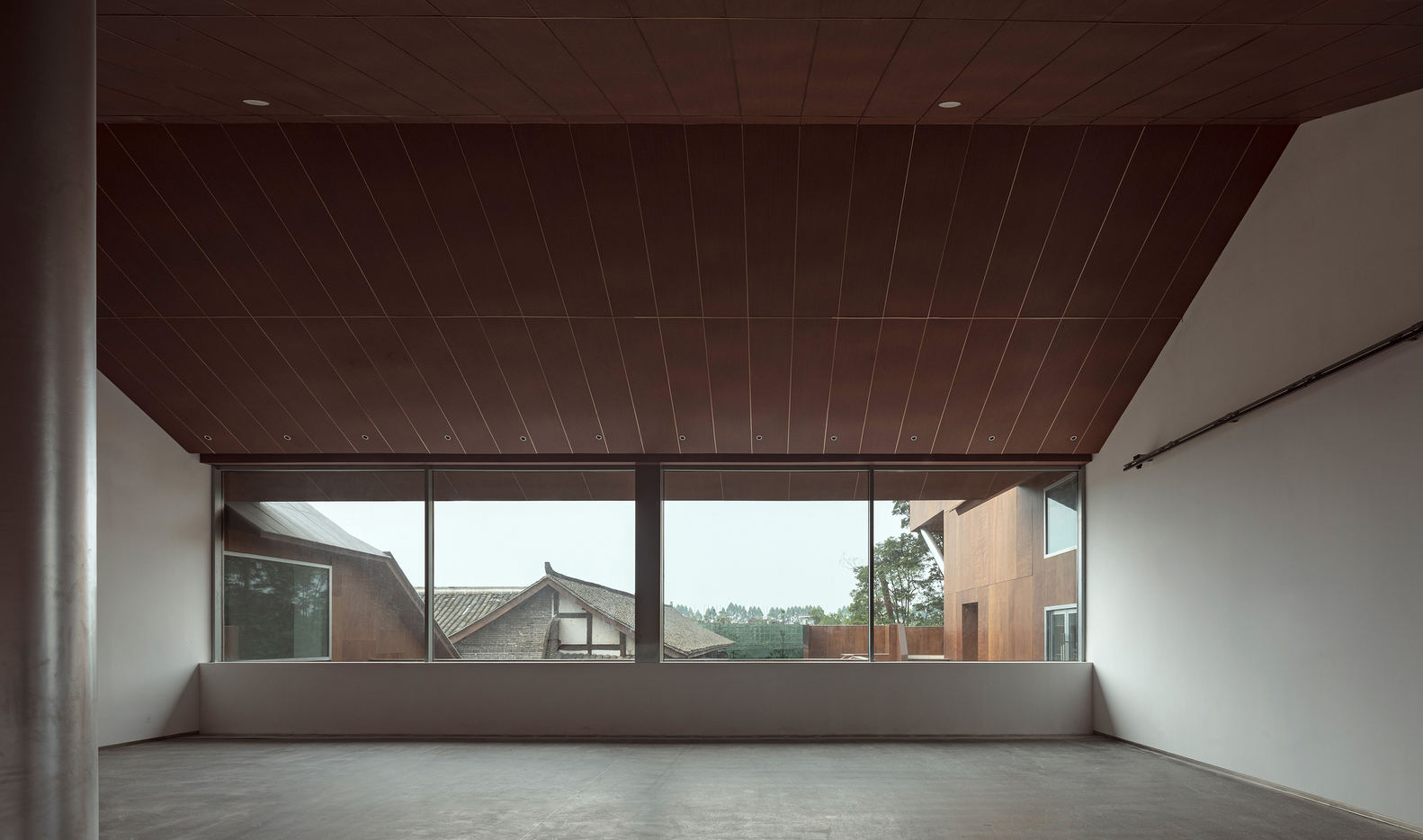
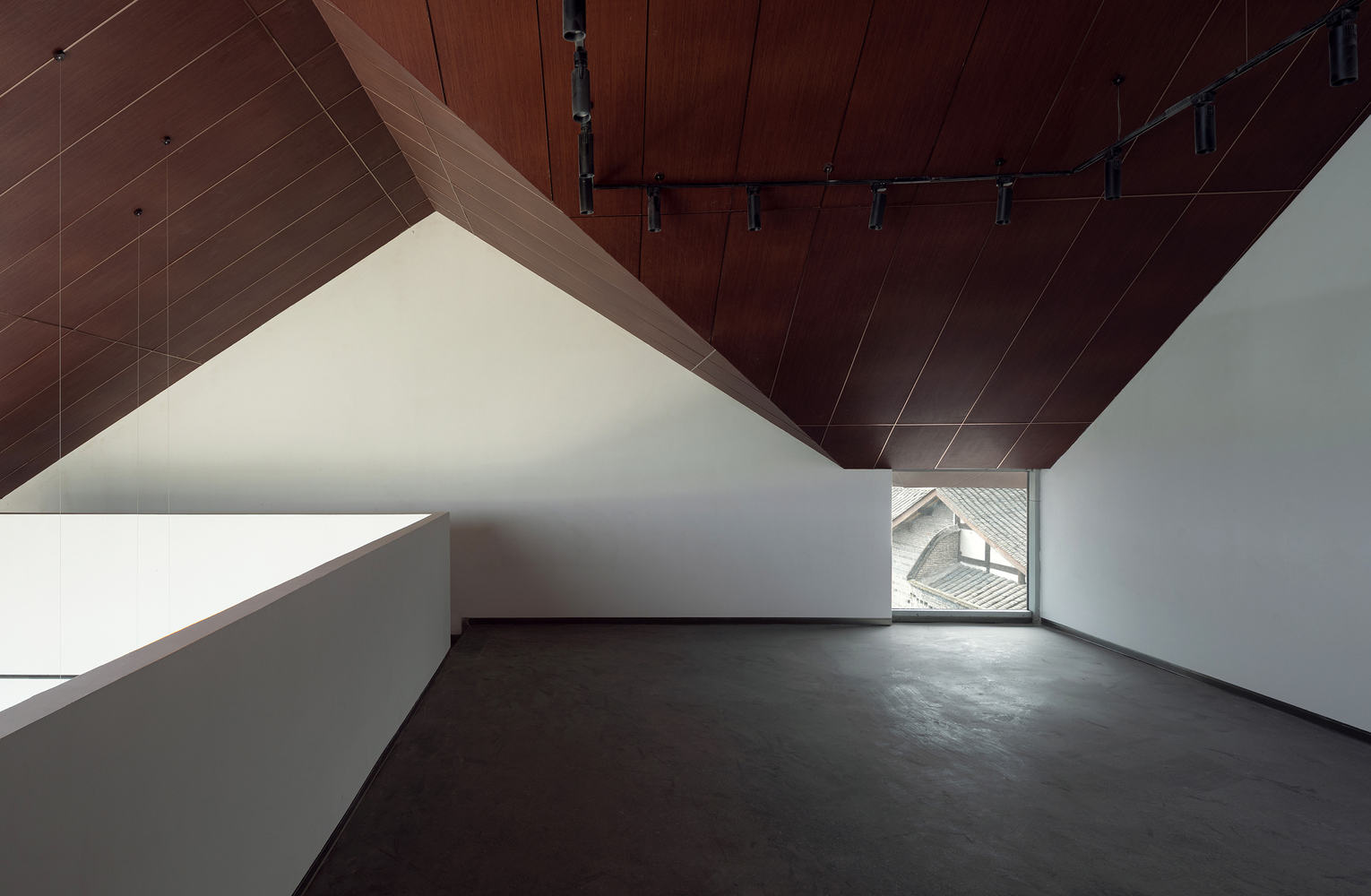
The space under the pitched roof organizes diverse functional areas, both high and enclosed. Visitors ascend the steps, and along the circulation path—which alternates between close proximity and distance from the pitched roof—reach the observation pavilion at the highest point. From here, they overlook the layered roofs of the Liao Wei Mansion to the west and the continuous expanse of the "Linpan" town, visually connecting the new and old buildings with the cultural context of the ancient town.
坡屋顶下组织高敞或狭闭的多样功能空间,游客拾级而上,在与坡屋顶时而亲近时而疏离的流线达到制高点的观景亭,向西俯瞰廖维公馆层叠的屋顶,与 “林盘”小镇连绵铺陈的场景,视线串联新旧建筑及古镇文脉。
© 苏圣亮