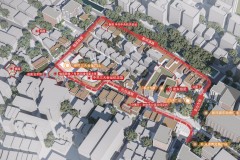
计算设计与文化遗产的数字化重塑:白塔项目精髓在于其对瑞士穆莱恩斯文化遗产的深刻致敬与大胆的数字化重塑。作为世界最高 3D 打印建筑,它成功地将场地文脉的记忆转化为一种前沿的、沉浸式的表演空间。建筑形式不再是简单复制传统,而是通过参数化和数字制造手段,将历史的精髓(如巴洛克式的繁复装饰)转化为结构语言,实现了历史传承与未来技术之间的诗意对话。其独特的灯塔形象不仅在视觉上成为村庄的新地标,更象征着传统社区在面对结构性挑战时,通过创新技术焕发新生。这种对地域文化的深刻理解与尖端技术的结合,是该项目最核心的亮点。
复杂结构美学与材料效率的完美统一:从结构工程师的角度看,白塔的建筑特色展现了3D打印技术在复杂形态实现与材料优化上的巨大潜力。32根独一无二的、造型各异的支撑立柱,构建了一种既神秘又迷人的内部空间序列,从幽暗到开阔,引导观者体验丰富的情感层次。更关键的是,机器人协同作业的钢筋嵌入式3D打印工艺,使得这些复杂的、无模板的自由形态构件首次具备了全承重能力。这不仅在美学上实现了“薄壁、高效用材”的极致追求,与传统浇筑相比大幅减少了材料浪费,更证明了数字化制造在实现高性能、非标准结构上的可行性,是对传统建筑工艺的一次颠覆性挑战。
跨学科研究的集成与循环经济的前瞻实践:白塔不仅是一个建筑实体,更是苏黎世联邦理工学院(ETH Zurich)在建筑、结构工程、材料科学及机器人技术等多领域跨学科研究的集成成果。项目通过实际建造验证了数字化建造的前沿路径,特别是全承重3D打印结构和模块化装配系统的应用。其设计理念中蕴含的循环经济思维尤为突出,采用可拆卸连接件,确保建筑在完成使命后能够被拆解和异地重建,体现了对资源可持续性的高度责任感。这种将创新技术、跨学科合作与可持续生命周期设计深度融合的实践,为未来建筑行业的转型提供了可复制的研究范本。
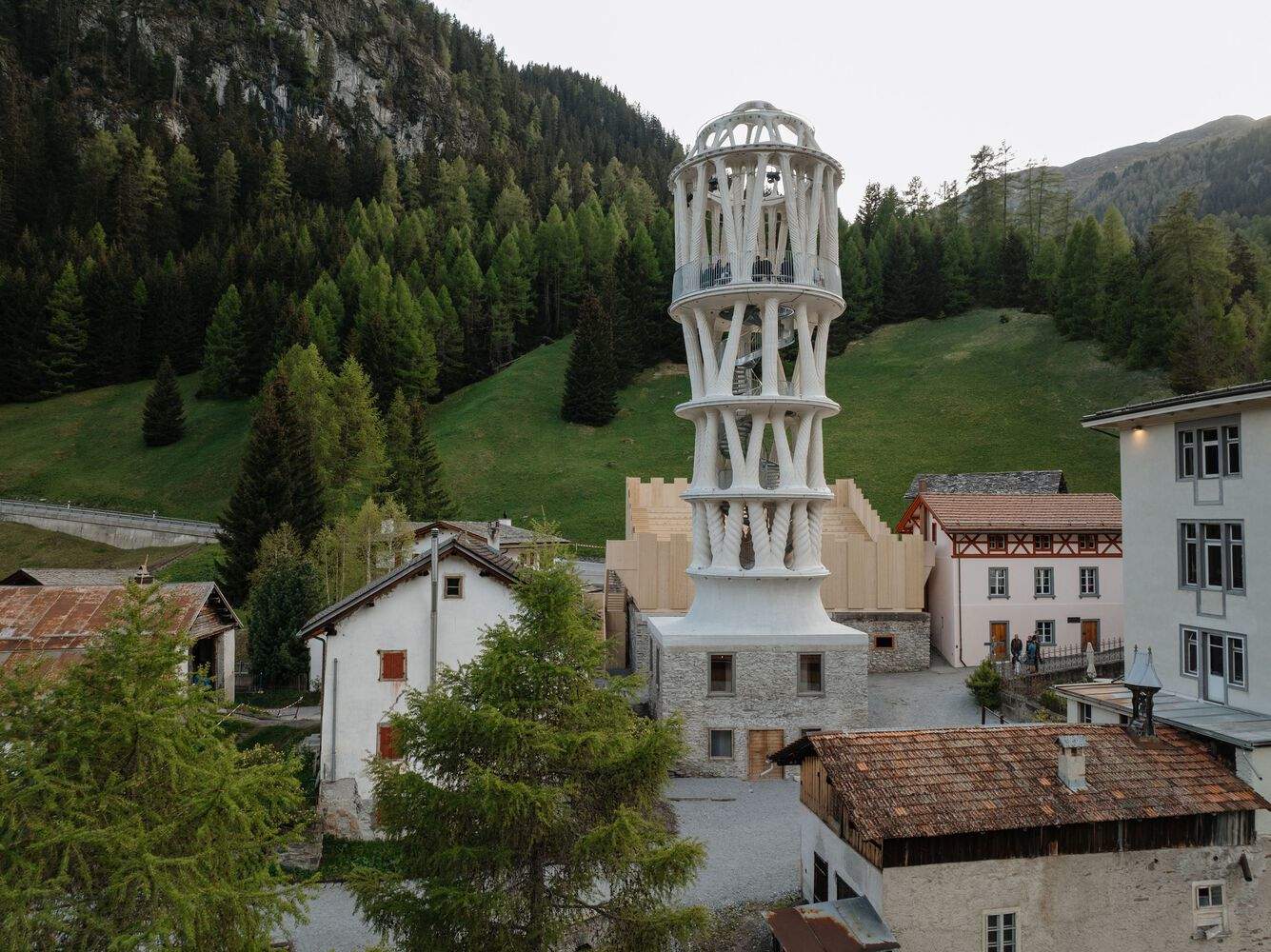
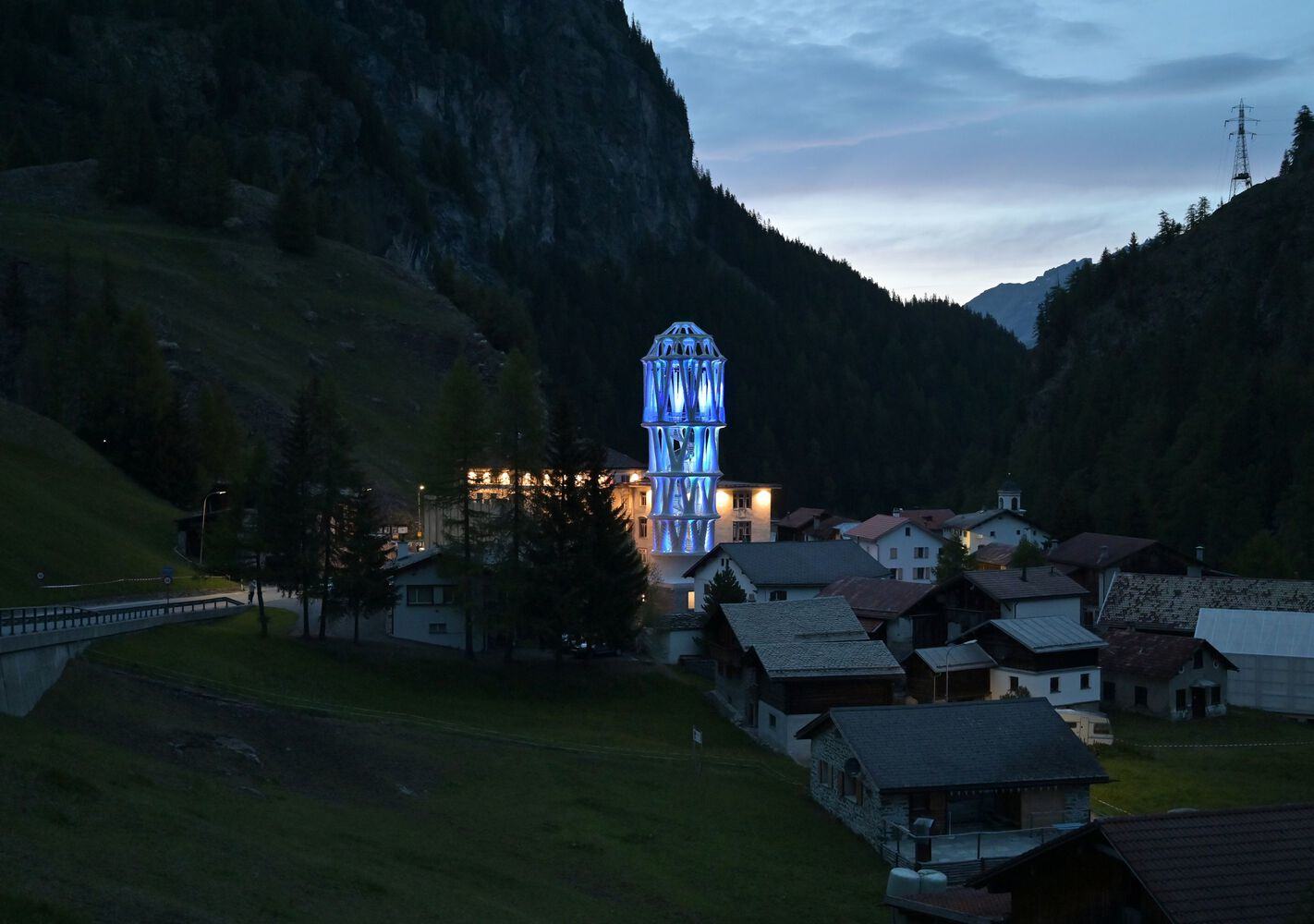
Project Overview —— The Tor Alva (“White Tower”) is the world's tallest 3D-printed building, located in the Alpine village of Mulegns, Switzerland. Designed by Benjamin Dillenburger and Michael Hansmeyer for the Origen Cultural Foundation, the tower reinterprets Mulegns’ cultural heritage through its architectural form. It stands as a beacon for the village and serves as an immersive performance space. The tower culminates in a dome theatre encircled by delicately carved, forked columns—a breathtaking venue perched atop a village house roof. With its spectacular design and groundbreaking technology, the tower showcases the potential of computational design and digital fabrication in architecture and construction. This potential extends beyond economic and ecological advantages to realizing complex, non-standard architectures with rich formal diversity. The project serves a dual purpose: first, to create a unique performance venue integrating architecture, culture, and science, while revitalizing a village facing structural challenges; second, to demonstrate the interdisciplinary research achievements of ETH Zurich in architecture, structural engineering, and material science, thereby advancing digital building practices to create an innovative, rich, and sustainable environment.
项目概述 —— 托尔·阿尔瓦(“白塔”)是位于瑞士穆莱恩斯(Mulegns)阿尔卑斯山村的世界最高 3D 打印建筑。该塔由本杰明·迪伦伯格(Benjamin Dillenburger)和迈克尔·汉斯迈耶(Michael Hansmeyer)为奥里金文化基金会(Origen Cultural Foundation)设计,通过建筑形式重新诠释了穆莱恩斯的文化遗产。它宛如村中的一座灯塔,同时也是一个沉浸式表演空间。白塔顶部是一座被精巧镂空分叉立柱环绕的穹顶剧场 —— 这一位于村舍屋顶之上的场地,令人叹为观止。凭借其壮观的建筑设计和突破性技术,该塔展示了计算设计与数字制造在建筑与施工领域带来的可能性。这不仅包括经济和生态优势,还能实现形式丰富多样的复杂非标准建筑。该项目具有双重目的:一是打造一个独一无二、融合建筑、文化与科学的表演空间,同时重振面临结构性挑战的村庄;二是展示苏黎世联邦理工学院(ETH Zurich)在建筑、结构工程和材料科学领域的跨学科研究成果,推动数字建筑实践,营造创新、丰富且可持续的环境。
© Birdviewpicture
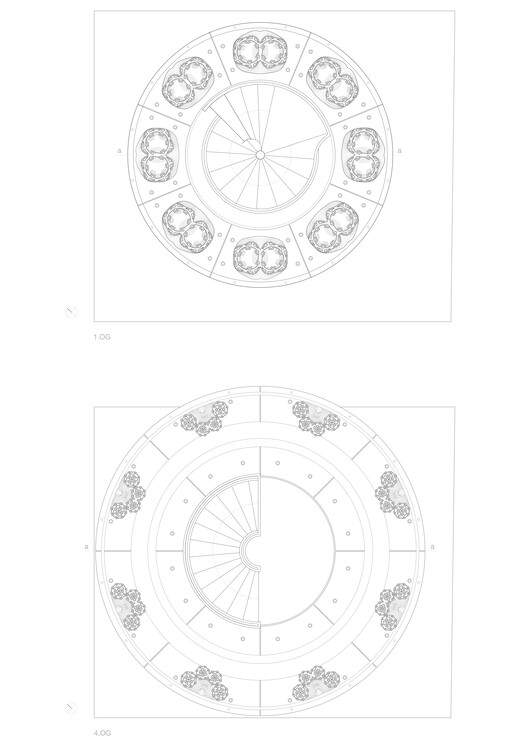
Plans
平面图
© Benjamin Hofer
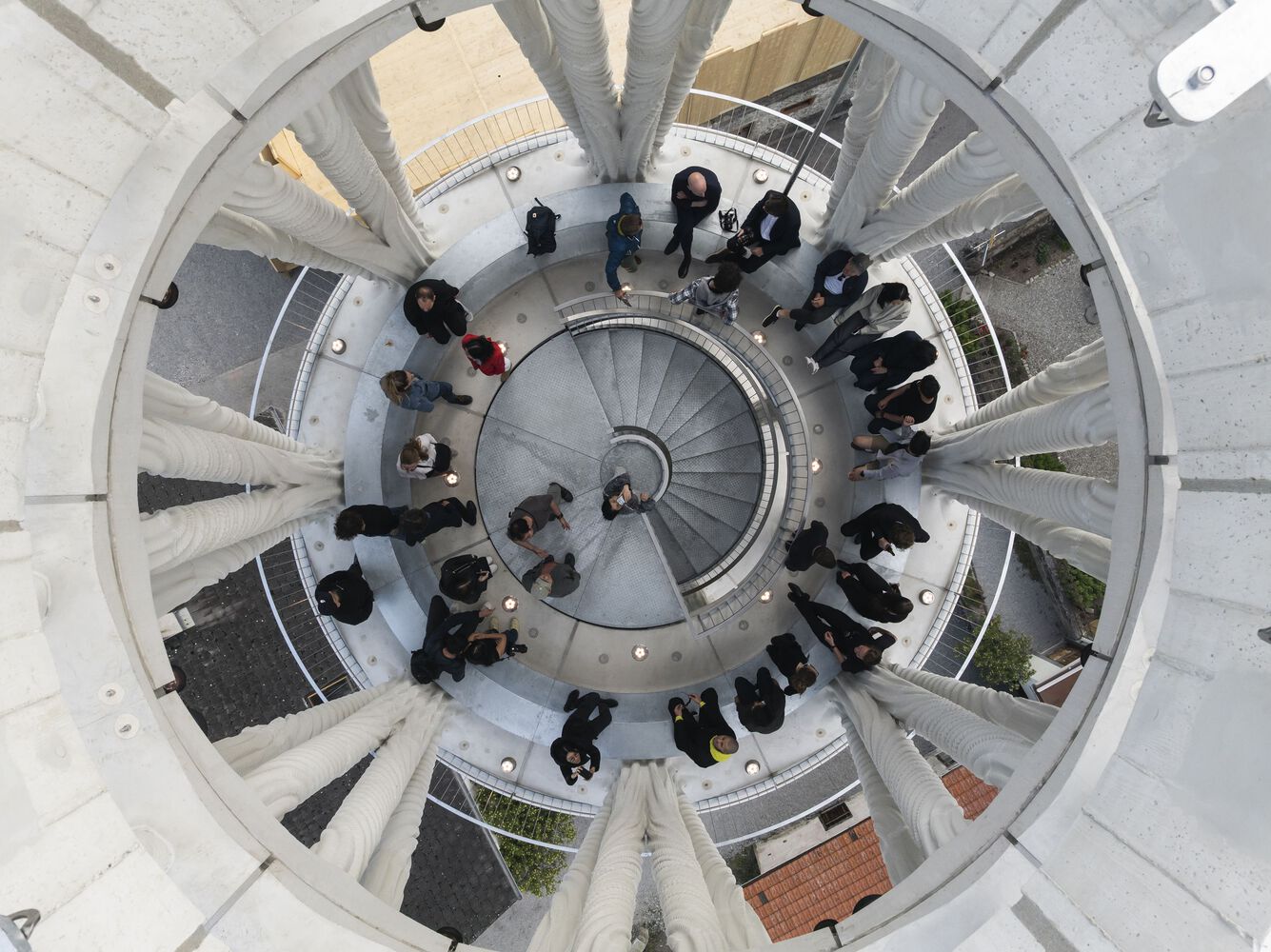
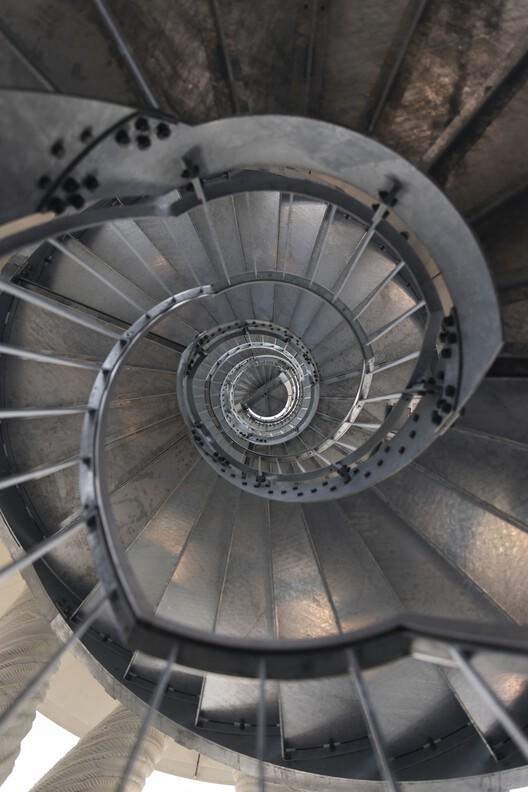
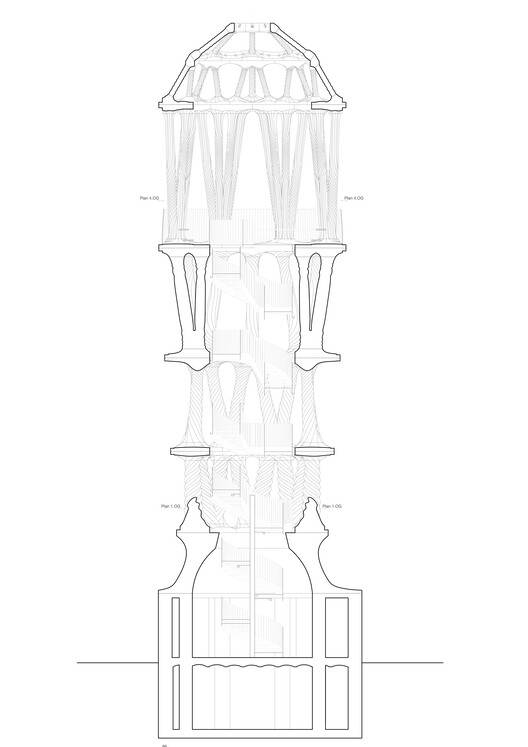
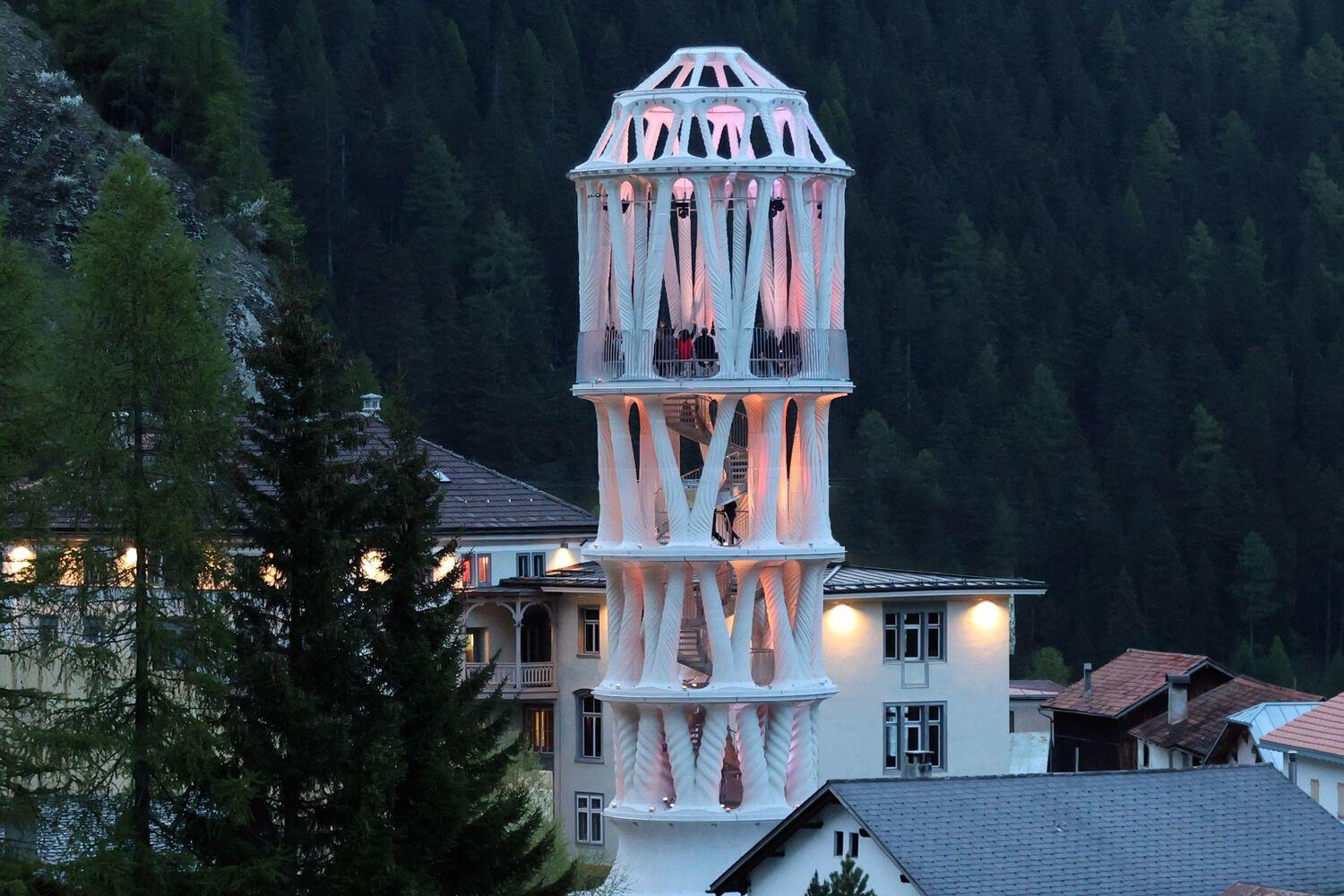
Architectural Features —— The White Tower is composed of 32 unique 3D-printed columns. Each column features bold, varied forms and highly intricate, multi-layered ornamentation. The robotic manufacturing process skillfully exploits the material properties to create a unique decorative language, lending the building a mysterious and captivating character, and presenting a novel tactile surface. This new digital craft recalls the virtuosity of Baroque architects from Graubünden, perfectly merging historical tradition with future innovation. As visitors ascend the central spiral staircase, they encounter atmospheric spaces: dimly lit chambers surrounded by stout columns lead upwards to a bright, open area where slender, interlaced columns support an exquisite dome. The vaulted performance space centers on a stage surrounded by 32 seats. Here, guests enjoy spectacular views of the village and the Alps of the Val Surses. As night falls, the White Tower transforms—its prominent openings glow like a lantern, making it a luminous beacon along the historic Julier Pass route.
建筑特色 —— 白塔由 32 根独一无二的 3D 打印立柱构成。每根立柱均以大胆多样的造型和多层次的精致装饰为特色。机器人制造工艺巧妙地利用了材料的特性,创造出一种独特的装饰语言,赋予建筑神秘而迷人的气质,并展现出新颖独特的表面触感。这种全新的数字工艺令人联想到格劳宾登州巴洛克风格建筑师的精湛技艺,将历史传统与未来创新完美融合。当游客沿着中央螺旋楼梯拾级而上时,会邂逅氛围浓郁的空间:被粗壮立柱环绕的幽暗密室向上延伸,通向阳光明媚的开阔区域,那里纤细交错的立柱支撑着精美的穹顶。拱形的表演空间中央设有舞台,周围环绕着 32 个座位。宾客可在此饱览村庄及苏尔塞斯谷(Val Surses)壮丽的阿尔卑斯山景。夜幕降临,白塔焕然一新 —— 其醒目的开口处宛如灯笼般散发着光芒,使其在历史悠久的尤利尔山口(Julier Pass)路线上宛如一座灯塔。
© Benjamin Hofer
Section
剖面图
© Benjamin Dillenburger and Michael Hansmeyer
Research and Innovation —— The White Tower showcases groundbreaking advancements in computational design, digital fabrication, structural engineering, and material science, all aimed at advancing the building industry toward greater sustainability. These pioneering achievements in architecture are made possible through close collaboration and interdisciplinary research with experts from structural engineering, material science, and robotics, each contributing their innovations to bring the project to fruition. Technical innovations include: the use of thin-walled, material-efficient 3D-printed concrete components for structural construction and a modular assembly approach for potential future reuse.
研究与创新 —— 白塔展示了计算设计、数字制造、结构工程和材料科学领域的突破性进展,这些进展均旨在推动建筑行业向更可持续的方向发展。建筑领域的这些开创性成果得益于与结构工程、材料科学和机器人技术等领域的专家开展的紧密合作与跨学科研究,各方均贡献了各自领域的创新成果,共同促成了这一项目的落地。技术上的创新包括:采用薄壁、高效用材的 3D 打印混凝土构件进行结构建造,以及采用模块化施工方式以便未来重复利用。
© CheWei Lin
The White Tower is the world’s first multi-story building constructed using fully load-bearing 3D-printed columns that integrate rebar reinforcement during the printing process. In the newly developed 3D concrete printing process, two robots work in tandem: one extrudes concrete layer by layer to form the complex free-form components, while the other embeds reinforcing steel between the layers. This process enables the 3D-printed structure to be fully load-bearing. Since concrete is used only where structurally required, this formwork-free construction method significantly reduces material consumption compared to traditional pouring techniques. The White Tower is designed with a circular mindset, utilizing detachable connections to allow for its disassembly and reassembly at a new location after five years of use in Mulegns.
白塔是全球首座采用全承重且在打印过程中集成钢筋加固的 3D 打印立柱建造的多层建筑。在全新研发的 3D 混凝土打印工艺中,两台机器人协同作业:一台逐层挤出混凝土,塑造出复杂的自由形态构件;另一台则在层间嵌入钢筋。这一工艺使 3D 打印结构具备完全承重能力。由于混凝土仅在结构所需部位使用,这种无模板施工方法相较于传统浇筑技术,可大幅减少材料消耗。白塔的设计秉持循环理念,采用可拆卸连接件,使其在穆莱恩斯村使用五年后能够拆解,并在新地点重新组装。