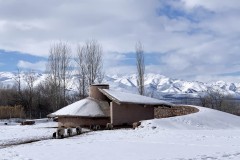
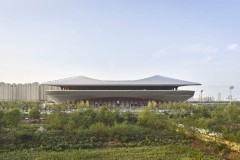
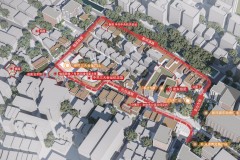
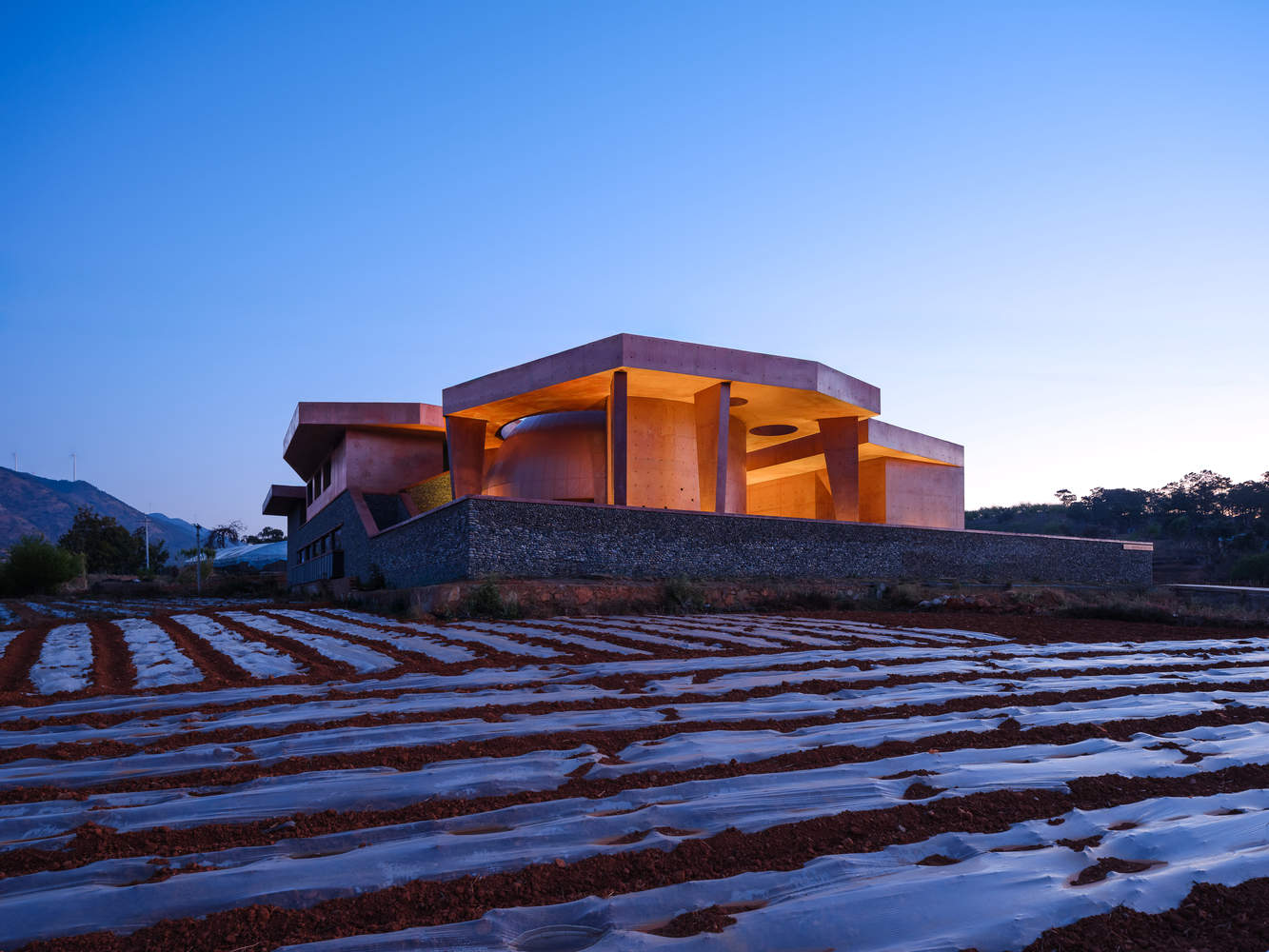
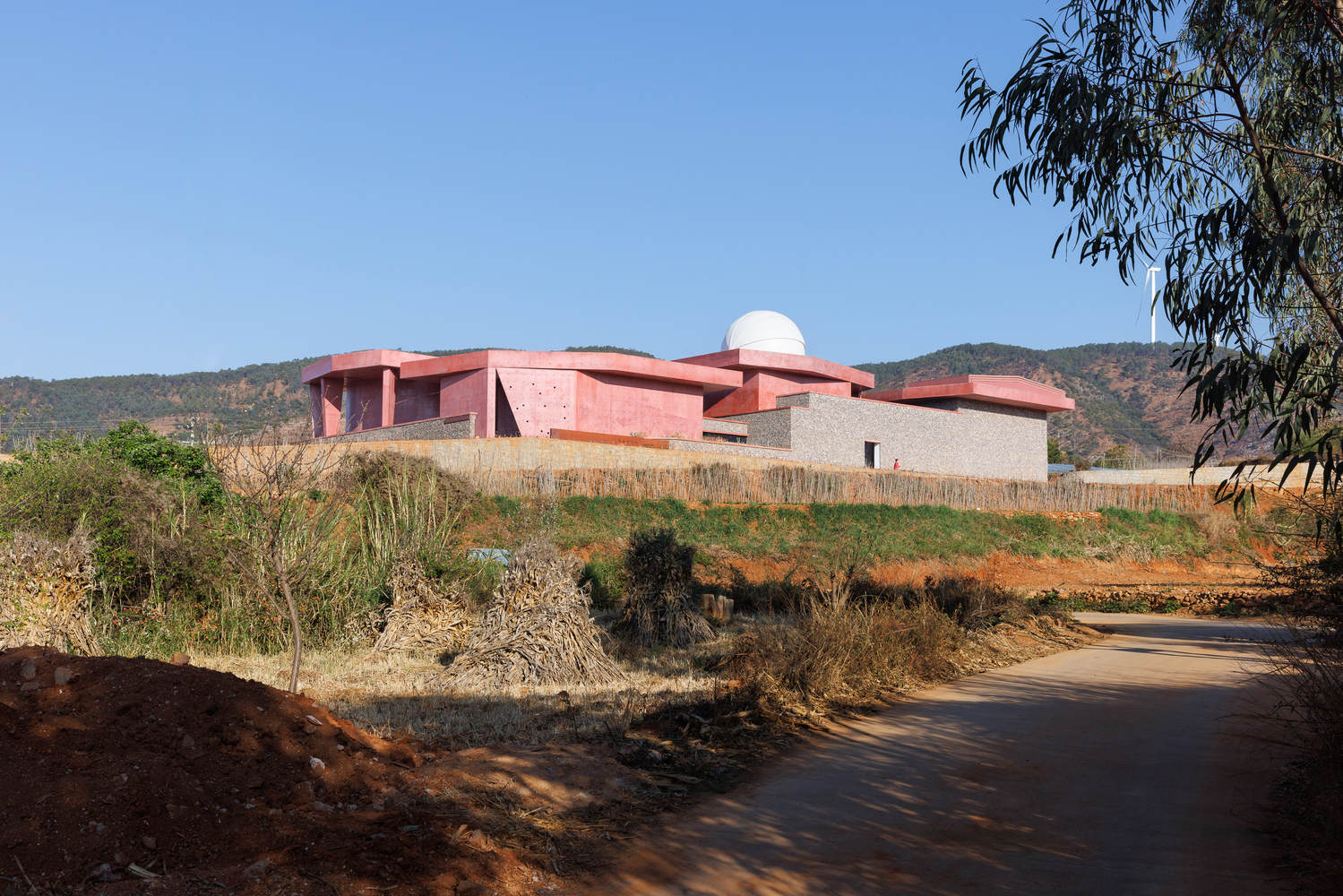
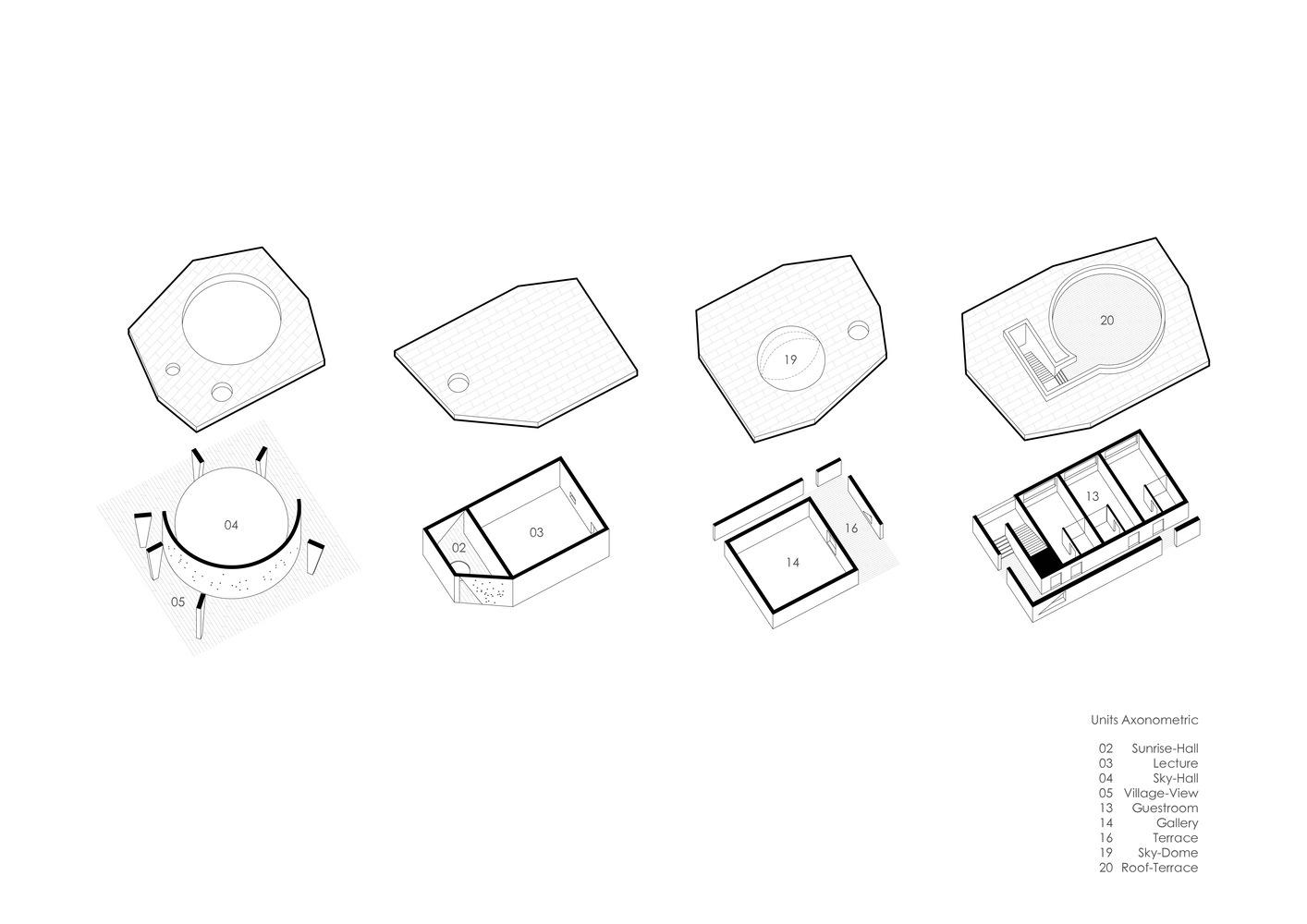
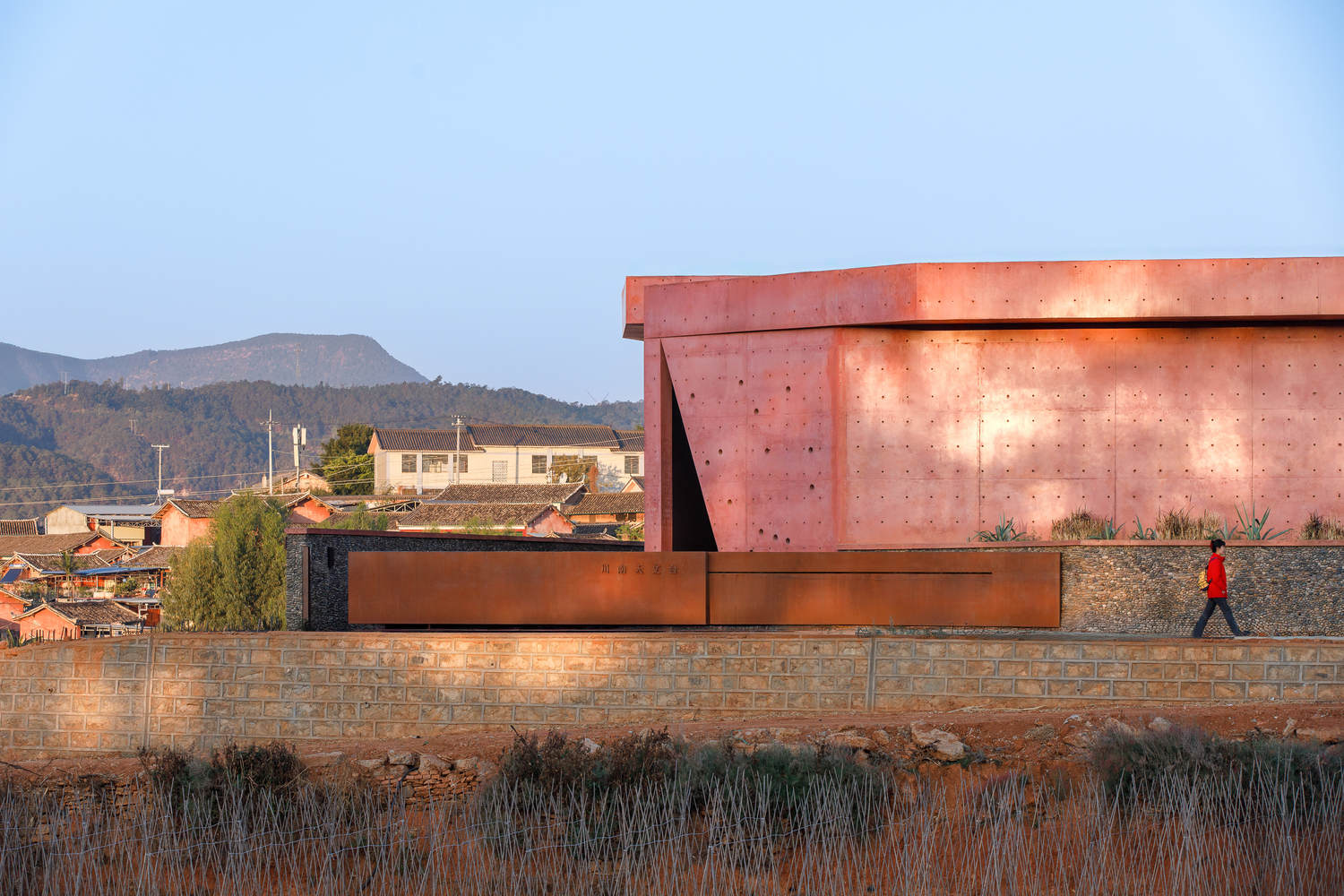
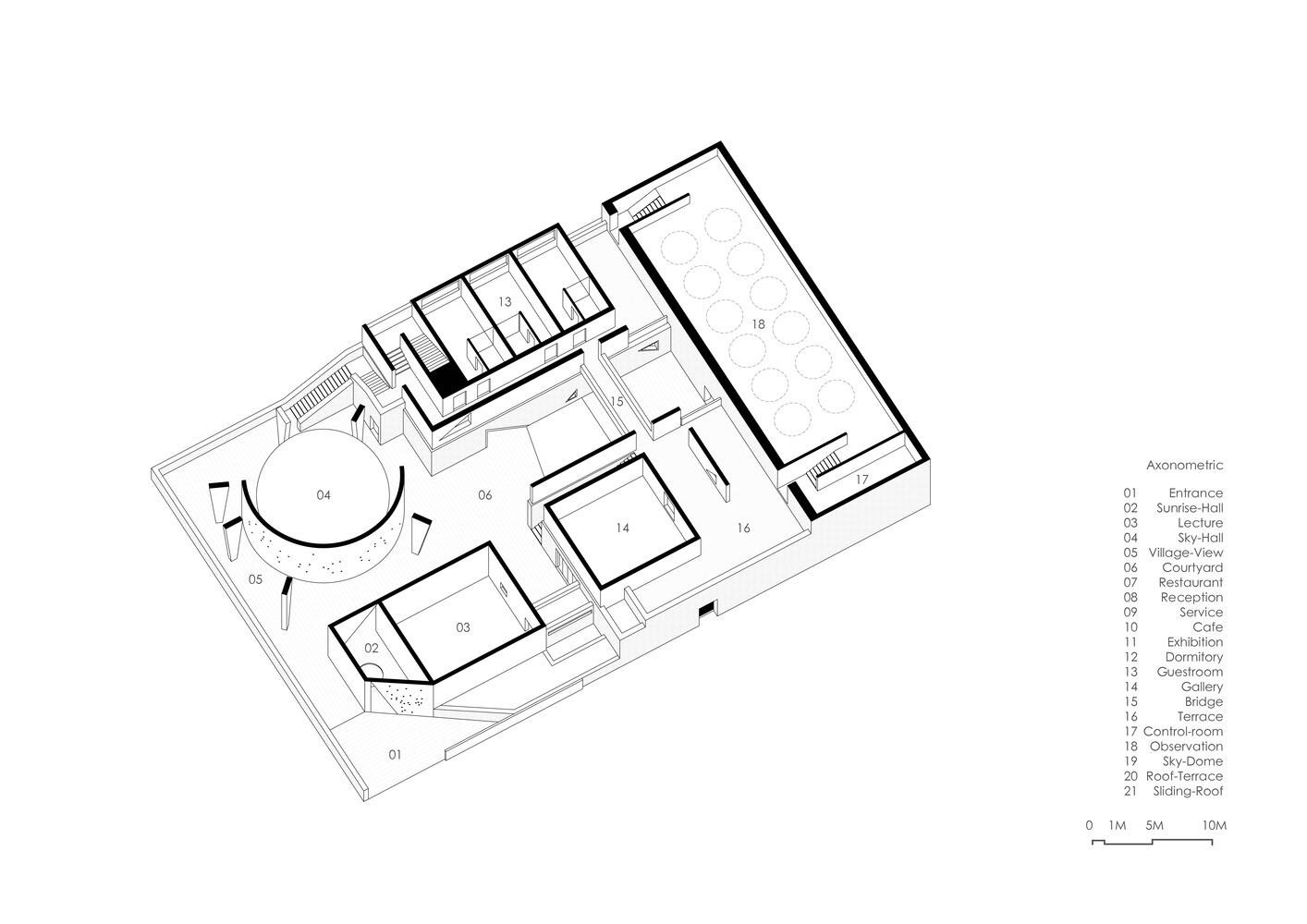
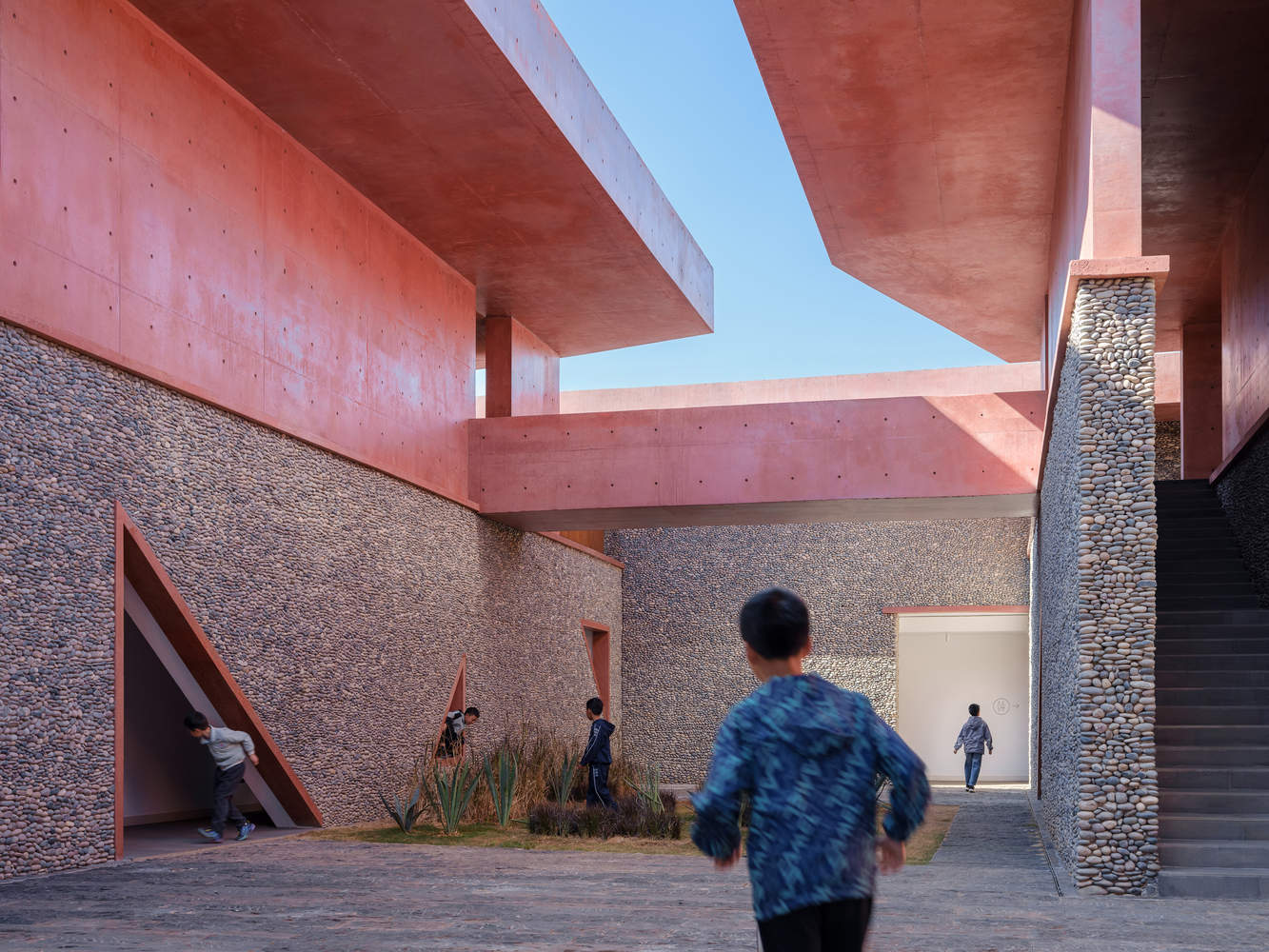
场地文脉的现代转译与场所精神的重构:本项目设计的精髓在于对迤沙拉传统聚落空间语汇的深刻理解与现代性转译。设计团队敏锐捕捉了村落中卵石梯田、依山就势院落以及光影交错的巷道肌理,并将其抽象为天文台的空间原型。通过将辅助空间压缩“回填”,并创造出四个错落分布的小尺度单元,辅以阶梯、檐廊和连桥进行有机串联,建筑成功地在现代建构语汇下,重现了传统山地聚落的趣味性和场所精神。这种由地域文脉驱动的设计策略,确保了建筑的在地性与叙事性,实现了传统生长到现代干预的优雅过渡。
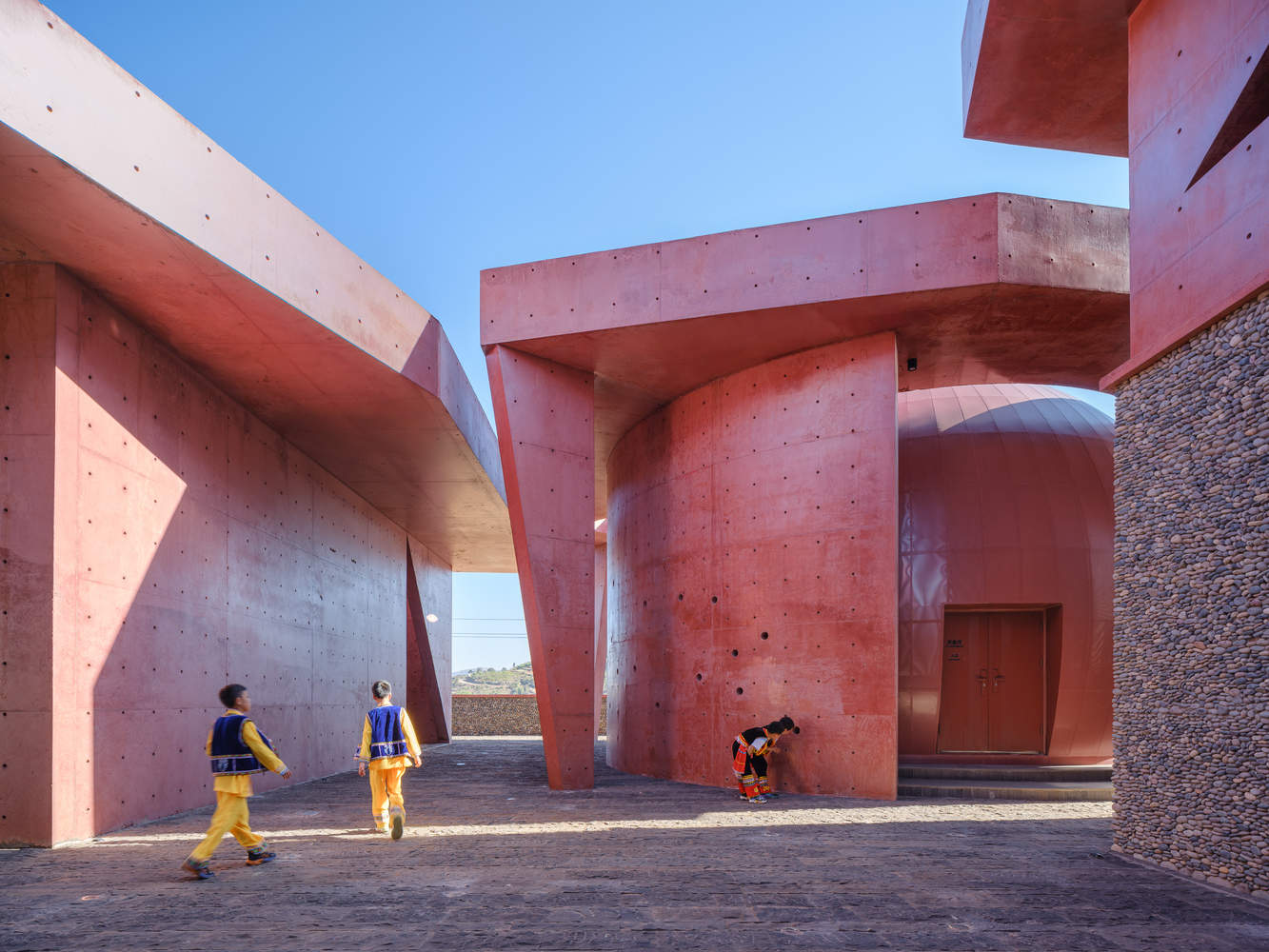
材料本真性与粗犷美学的在地表达:建筑大胆拥抱了清水混凝土的“粗糙”本真性,这源于对有限投资和本土施工能力的现实考量,却意外地成就了项目独特的材料美学。通过有意识地保留深色不均匀、交接不平整等“瑕疵”,粗粝的红色混凝土仿佛直接从攀西裂谷的土壤中生长出来,呈现出任性、自由、粗犷的地域气质。这种对材料缺陷的接纳与升华,是对传统精致化施工范式的挑战,体现了对“在地”施工逻辑和自然状态的尊重,使建筑的质感与周边环境的原始力量形成了强烈的呼应。
光影作为核心设计元素的动态雕塑:本项目将阳光提升到“一种材料”的高度,成为建筑空间和立面体验的核心驱动力。设计师通过巧妙利用屋盖的不规则挑出,以及屋盖之间水平和垂直的错位缝隙,在混凝土墙面上创造出清晰锐利的动态阴影形态和随时间推移实时变化的光带。此外,通过在科普前厅设置异形的通高洞口和嵌入式小圆洞,阳光被裁剪成跳动的光斑投射于墙面,强调了“洞口”而非“窗户”的属性。这种对光线形态的精准控制和戏剧化处理,赋予了建筑一个不断演变、充满生命力的感知维度。
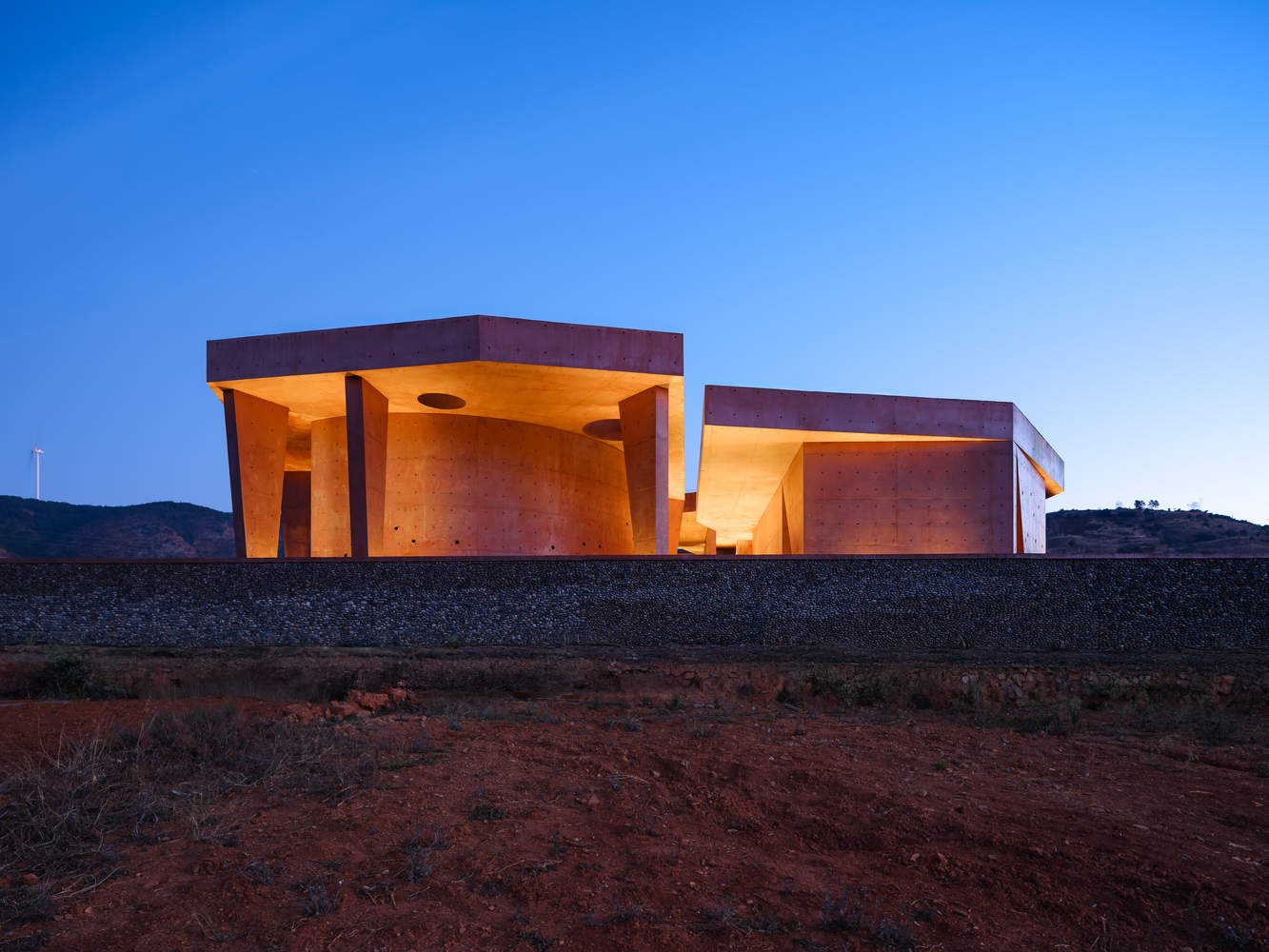
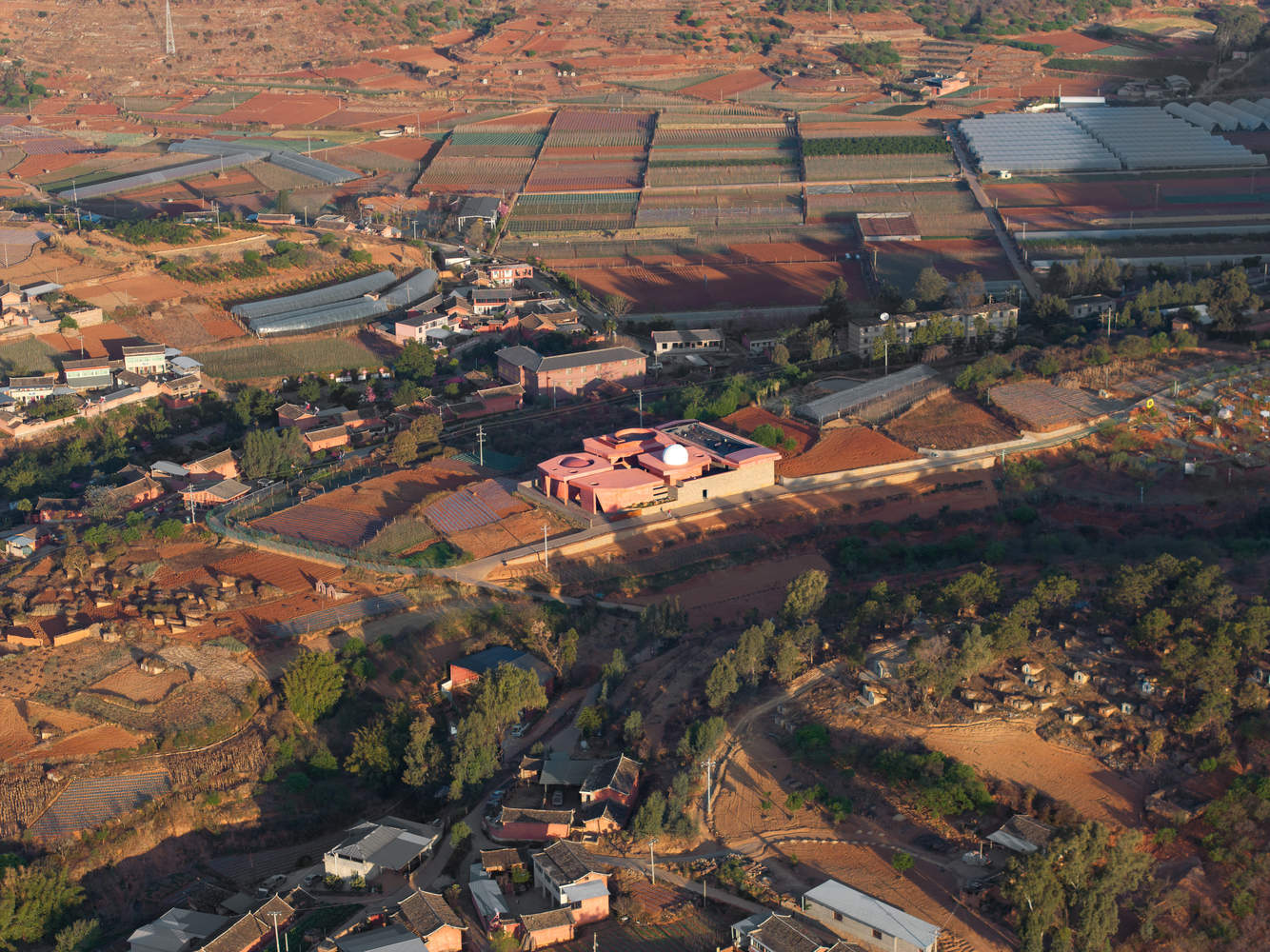
The first visual impression upon entering Yishala is the stacked pebble terraces outside the village and the courtyards nestled into the mountain slopes within. The intense sunlight of the Xichang-Yibin Rift Valley penetrates the gaps between the eaves, casting sharp, geometric light and shadow in the narrow, winding, and undulating alleys of the mountain village. This served as the spatial prototype for the observatory. The design first compressed and "backfilled" the auxiliary spaces, using a stepped approach to repair the height differences of the mountainous terrain. Subsequently, the functions were disassembled into four small-scale, staggered units, connected by stairs, eaves corridors, and linking bridges, translating the lively interest of traditional structures into modern construction vocabulary.
迤沙拉村外是卵石堆叠的层层梯田,村内是依山就势的院落民居。攀西裂谷强烈的阳光,穿过屋檐之间的缝隙,在狭窄曲折、上下蜿蜒的山村巷道中,投射出棱角分明的几何光影。这是走入迤沙拉时的第一视觉印象,是天文台空间的设计原型。设计首先将辅助空间压缩“回填”,阶梯式修复环境中的山地高差。而后将功能拆解,形成四个小尺度单元错落分布,彼此间通过阶梯、檐廊、连桥串联,用现代的建构语汇转译传统的生动趣味。
© 刘松恺、陈旸
© 刘松恺、陈旸
© 刘松恺、陈旸
© 刘松恺、陈旸
© 刘松恺、陈旸
Axonometric Drawing
轴测图
© 刘松恺、陈旸
Rough Concrete
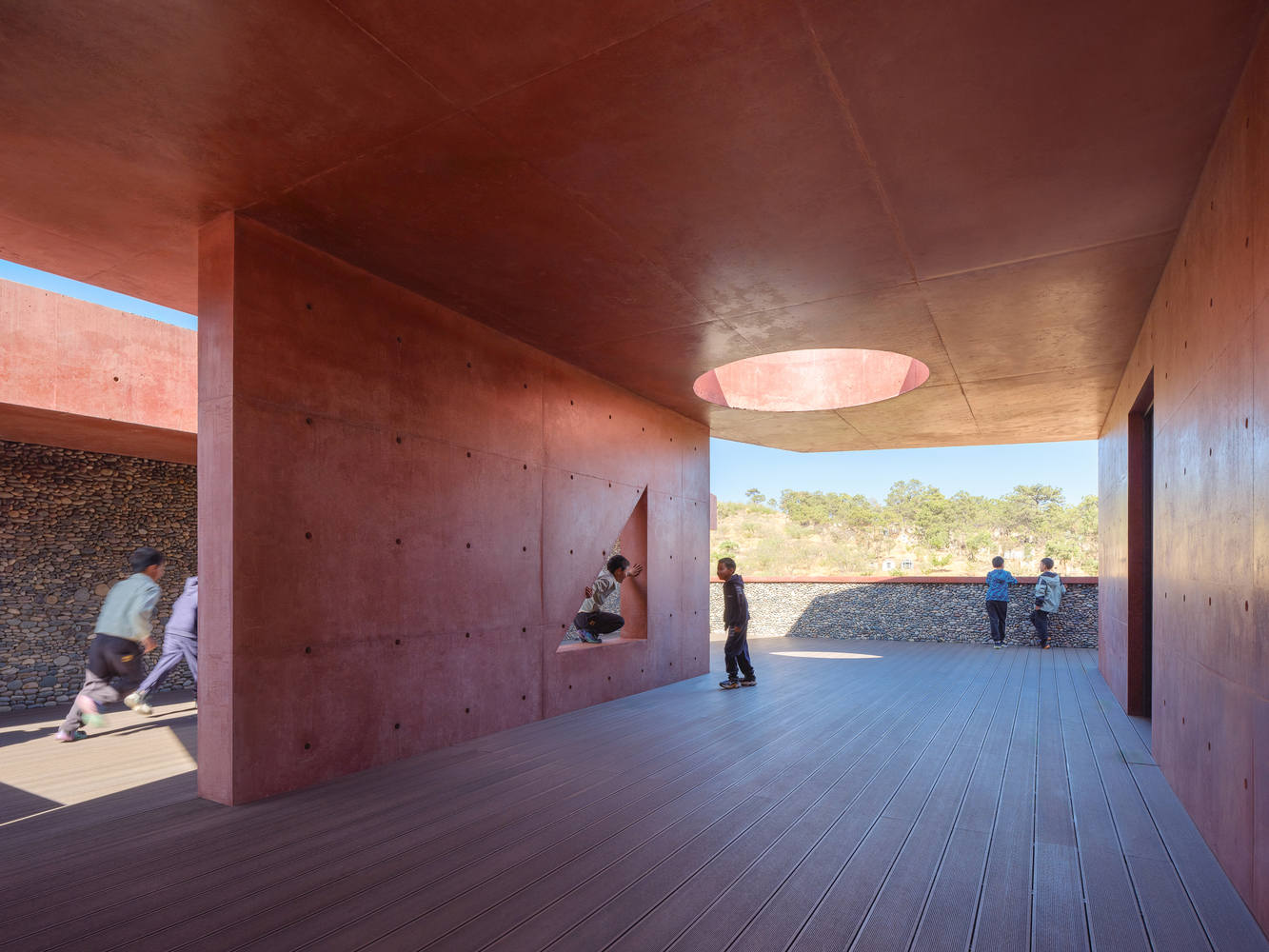
The construction of fair-faced concrete usually requires specialized teams to subcontract in China to achieve a delicate and refined effect. Unfortunately, the limited investment for the observatory in the village made re-subcontracting impossible, forcing the work to be "managed" by local construction crews. The unattainable refinement instead fostered skepticism towards refinement itself: why must concrete, the "rough fellow," always be dressed up as a "young lady"? Therefore, minor imperfections that did not compromise structural safety—such as uneven dark coloration, uneven joints, and surface blemishes—were naturally retained and not repaired. The coarse red concrete appears as if it has emerged from the Xichang-Yibin Rift Valley, willful, free, and ruggedly untamed.
清水混凝土的施工要求较高,国内工程大多是由专业团队分包完成,以达到精致细腻的效果。无奈村里天文台有限的投资难以再次分包,只能 “将就”由本土施工队完成。得不到的精致反而催生了对精致的怀疑:混凝土这个“糙汉子”,为什么一定要打扮成“小姑娘”呢?因此沉色的不均匀、交接的不平整、表层的小瑕疵等不影响结构安全的小毛病,都被原本地保留下来且不做修复,粗糙的红色混凝土看上去犹如脱胎于攀西裂谷,任性自由粗犷不羁。
© 刘松恺、陈旸
© 刘松恺、陈旸
Sunlight as a Material
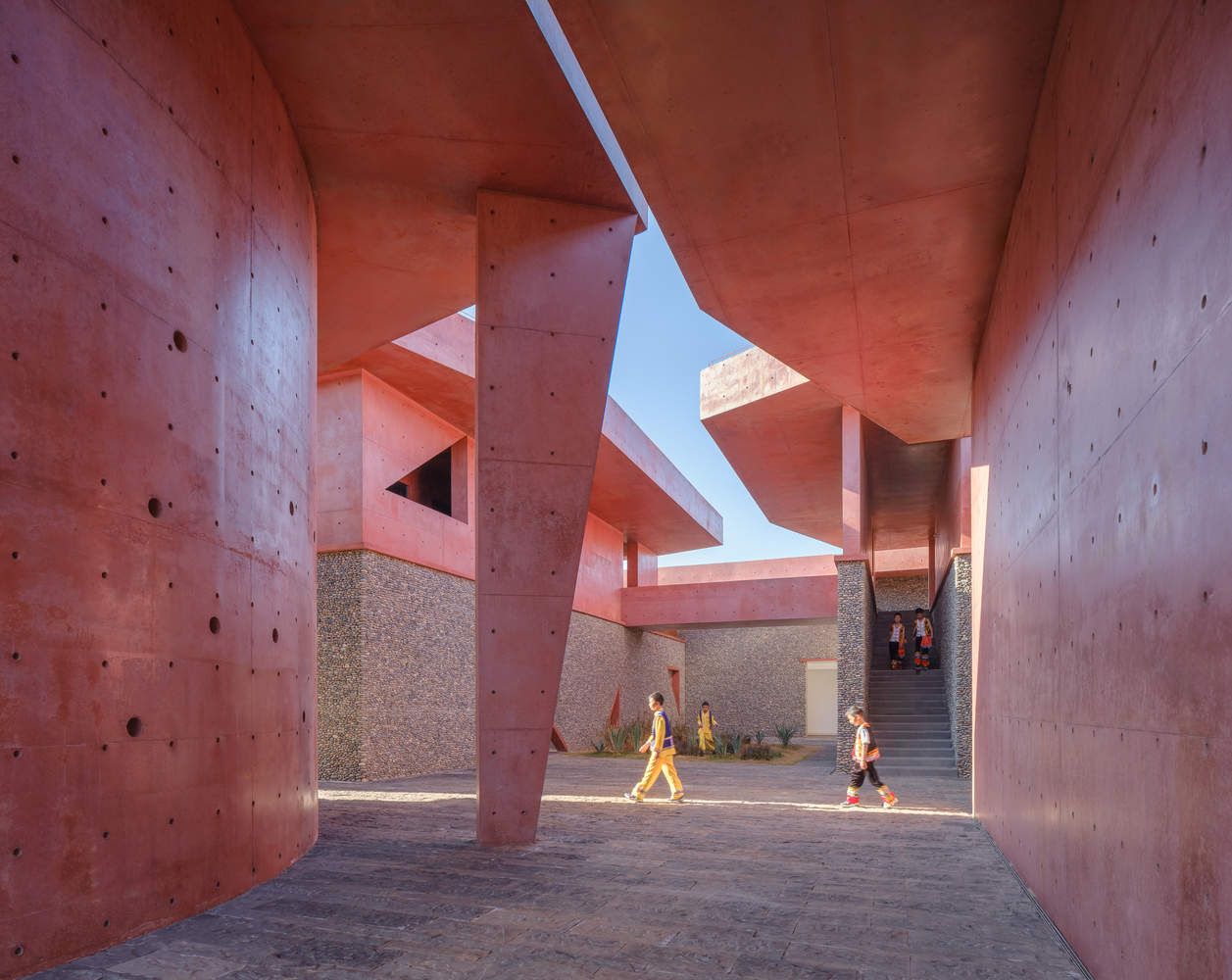
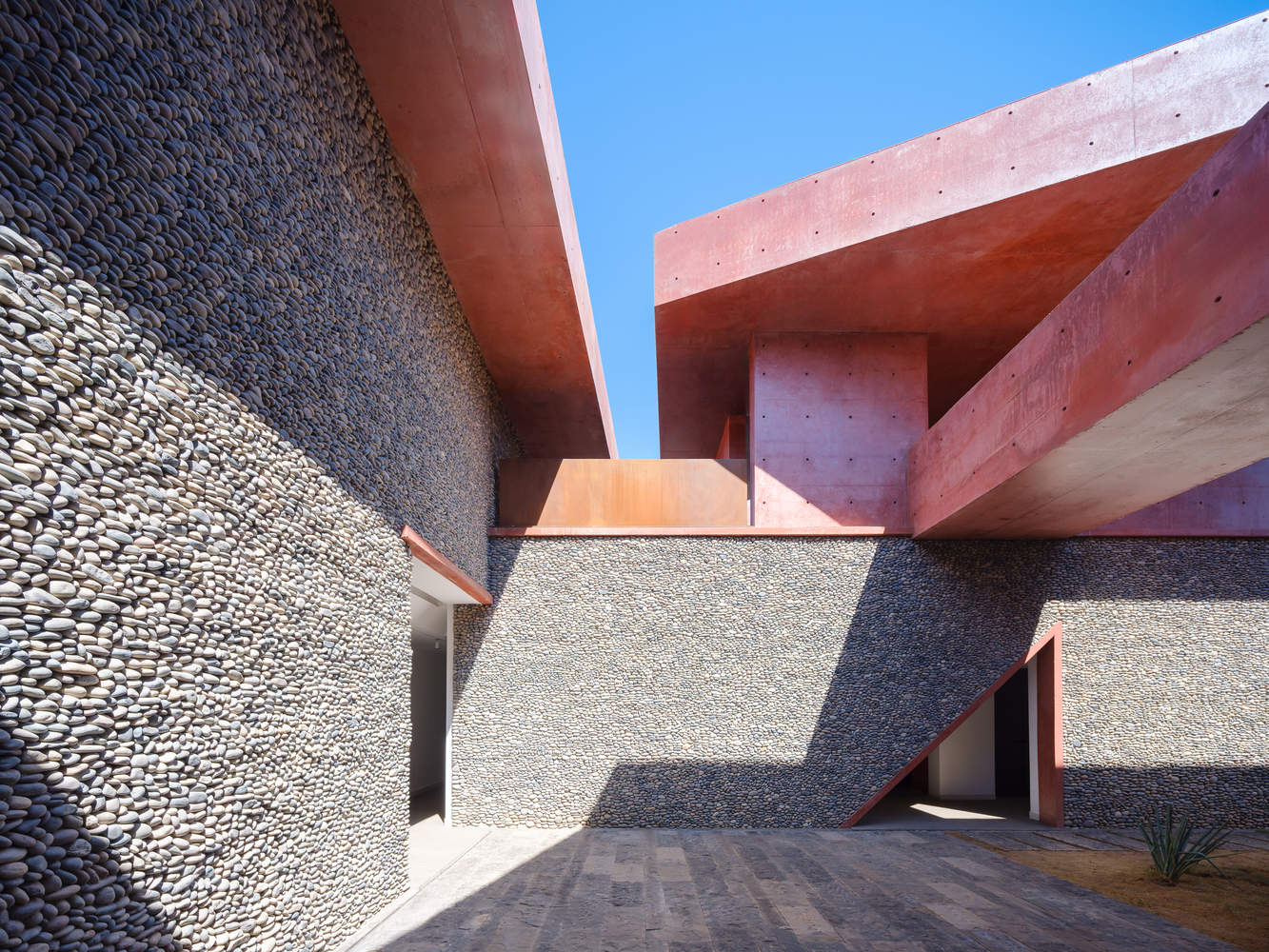
The concrete walls of the observatory facade serve as a free canvas for sunlight. The tops project outward irregularly, and the angular misalignment between the roof and the wall creates sharp facade shadow patterns. Horizontal gaps are left where the roof planes separate, and these gaps are then vertically torn open using differences in floor height. The light bands outlined by these openings are projected onto the walls and floors, their forms changing in real-time as time passes.
天文台立面的混凝土墙体是阳光自由的画布,顶部向外不规则出挑,通过屋盖与墙面的角度错位,形成锐利的立面阴影形态;屋盖之间水平脱开留出缝隙,再利用层高差异将缝隙竖向撕开,缝隙勾勒出的光带投射在墙地面上,形态随时间推移而实时变化。
© 刘松恺、陈旸
Axonometric Drawing
轴测图
© 刘松恺、陈旸
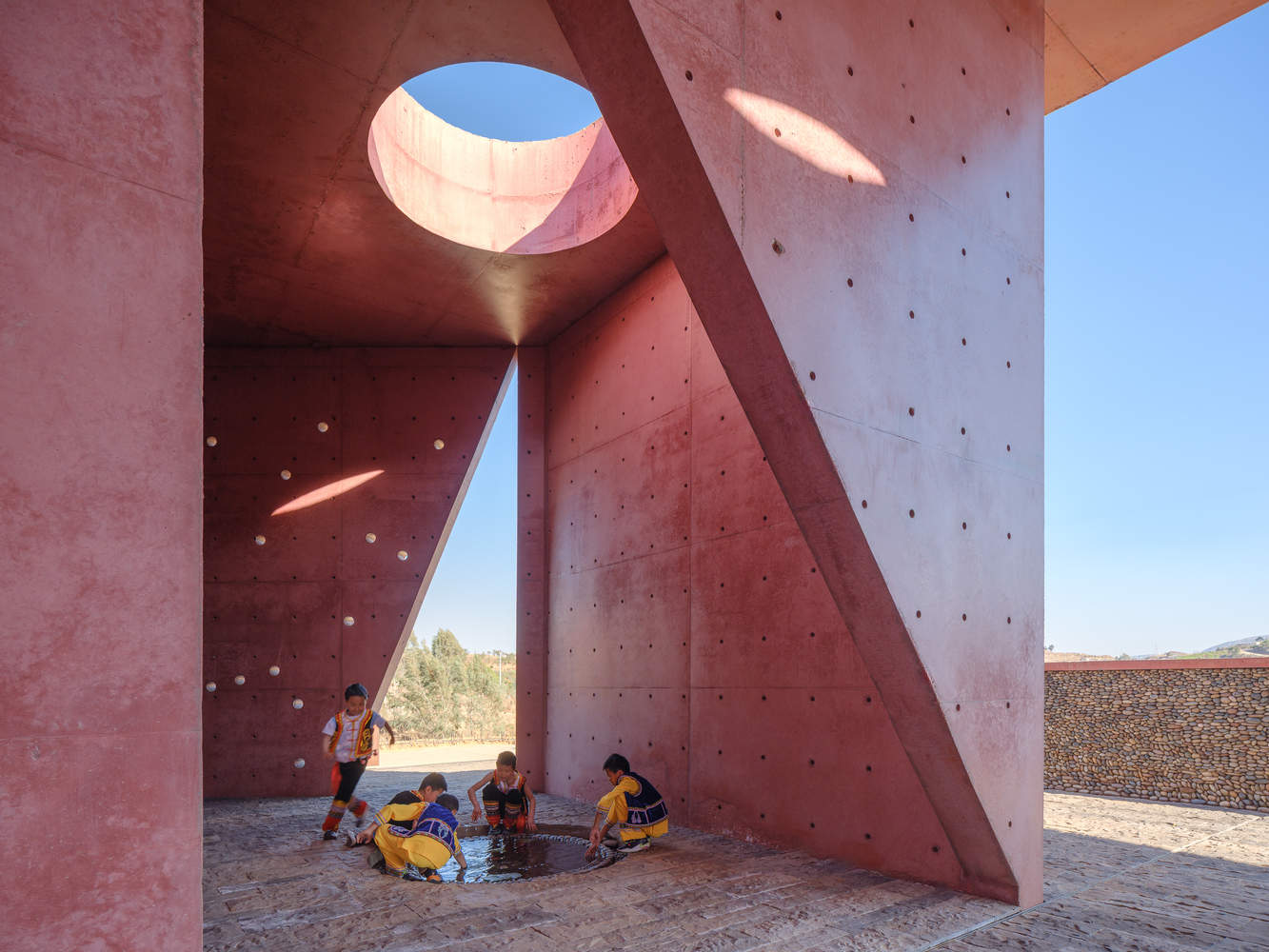
Most of the public systems in the observatory are semi-outdoor environments, requiring only openings rather than windows. Therefore, the design uses uniquely shaped openings to emphasize that they are voids, not windows. The eastern wall of the popular science foyer is split open with a floor-to-ceiling opening, embedding multiple small circular holes within the solid wall. In the early morning, sunlight can be seen crossing the Daliang Mountains and spilling onto Yishala, passing through the small circular holes to form dancing spots of light on the red concrete walls.
天文台的公共系统大多为半室外环境,空间只需洞口、无需窗户,因此设计用异形的洞口强调此为洞口而非窗户。科普前厅的墙面朝东撕开一个通高的洞口,实墙内部嵌入多个小圆洞,清晨透过洞口可以望见阳光翻过大凉山,洒向迤沙拉,穿过小圆洞,在红色的混凝土墙面上形成跳动的光斑。
© 刘松恺、陈旸
© 刘松恺、陈旸