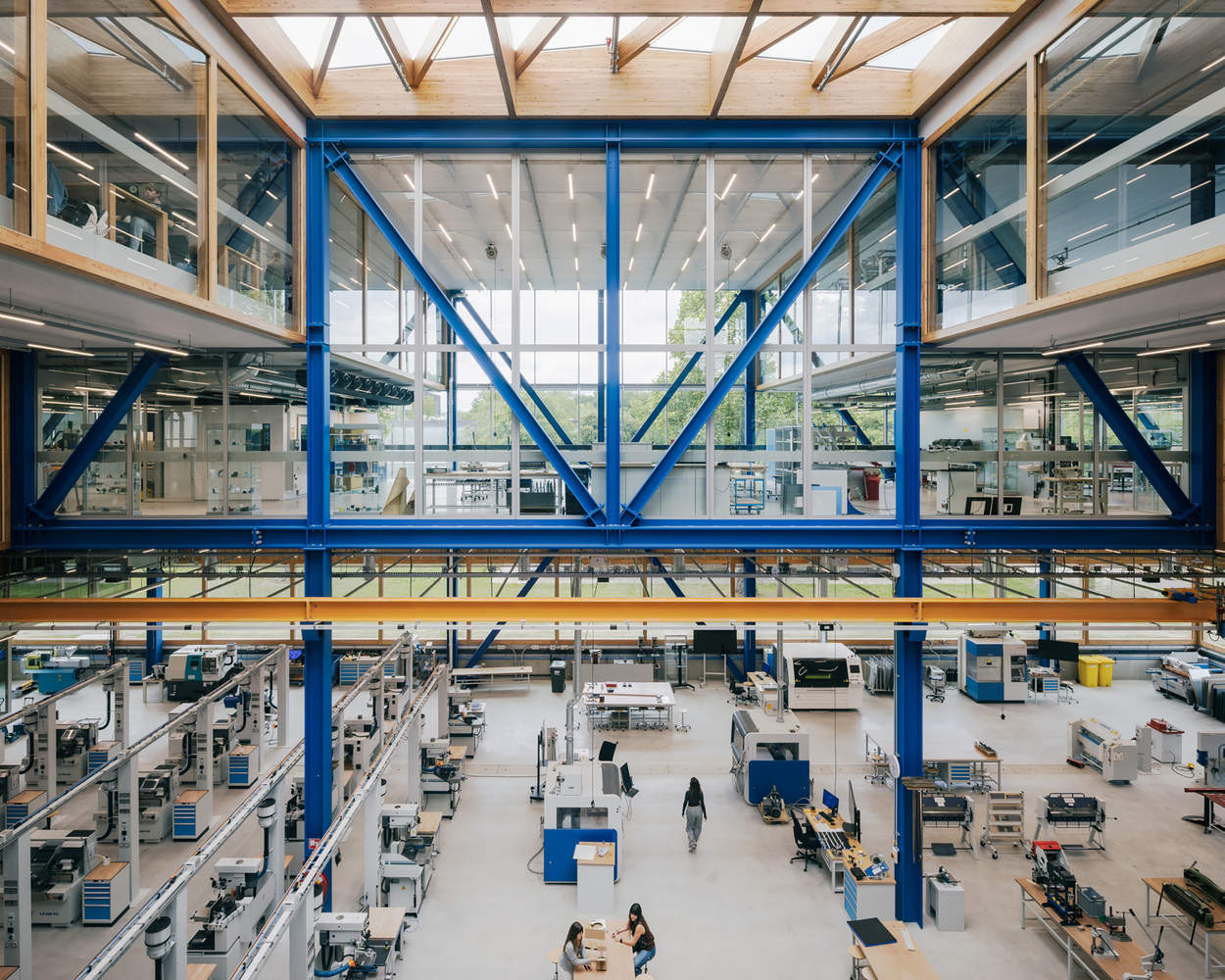
空间叙事与体验驱动的核心设计:CUBE 项目最精髓之处在于其“下沉式车间地板”的设计策略,这不仅是空间布局的创新,更是对学院精神的具象化表达。通过 1.4 米的下沉,建筑成功地将七米高的车间空间完全暴露给使用者和访客,形成一个极具冲击力的“展览馆”效果。这种设计打破了传统教学和科研空间的封闭性,使高强度的制造活动(楼下)与原型制作和教学(楼上)实现了无障碍的视觉连接,极大地促进了跨层次的互动与知识传递。这是一个将建筑体验置于教育核心的典范。
结构逻辑与未来适应性的宣言:该建筑将结构系统提升至建筑宣言的高度,完美契合了工程技术学院对“变化适应性”的需求。通过使用大跨度钢桁架(14米主跨)和高承重楼板,CUBE 确保了内部空间可以根据未来教学和研究需求的演变而自由重构。同时,三角支撑与正交胶合木(CLT)核心筒的结合,不仅提供了必要的稳定性和独特性外观,更巧妙地平衡了结构效率与材料的现代感。结构不再是隐藏的骨架,而是清晰展示工程智慧的宣言。
文脉融合与气候敏感的立面策略:CUBE 在场地文脉的处理上展现了高超的敏感性。它既是对 20 世纪 60 年代现代主义杰作霍斯特建筑群的尊重与呼应(体量、线条的延续),又通过气候敏感的立面设计实现了自身的现代升级。透明的西北立面最大化自然采光和景观视野,而封闭的东南和西立面则有效控制了过热,体现了对可持续性和使用舒适度的考量。底层木质材料与上层玻璃幕墙的对比,以及外露设施的精细化设计,共同塑造了一个既温暖又充满“工程技术”气息的建筑形象。
From the architect. The CUBE project, a cascading workshop building for the Faculty of Engineering Technology at the Drienerlo campus of the University of Twente, is now complete, featuring a total floor area of 4734 m². CUBE, a joint design by Civic Architects, VDNDP, and Studio Groen+Schild, and constructed by WAM&VanDuren Bouwgroep with WSi Techniek, acts as a compact extension to the Horst ensemble, housing stacked workshops, offices, and flexible laboratory spaces.
来自建筑师。CUBE 项目现已竣工,这是位于恩斯赫德特文特大学德里纳洛校区( Drienerlo campus of the University of Twente)工程技术学院的一座层叠式车间大楼,总建筑面积达 4734 平方米。CUBE 由 Civic Architects、VDNDP 和 Studio Groen+Schild 联合设计,并由 WAM&VanDuren Bouwgroep 与 WSi Techniek 承建。该建筑以层叠的车间、办公室和灵活实验室空间,构成了霍斯特建筑群的紧凑延伸。
© Stijn Bollaert
© Stijn Bollaert
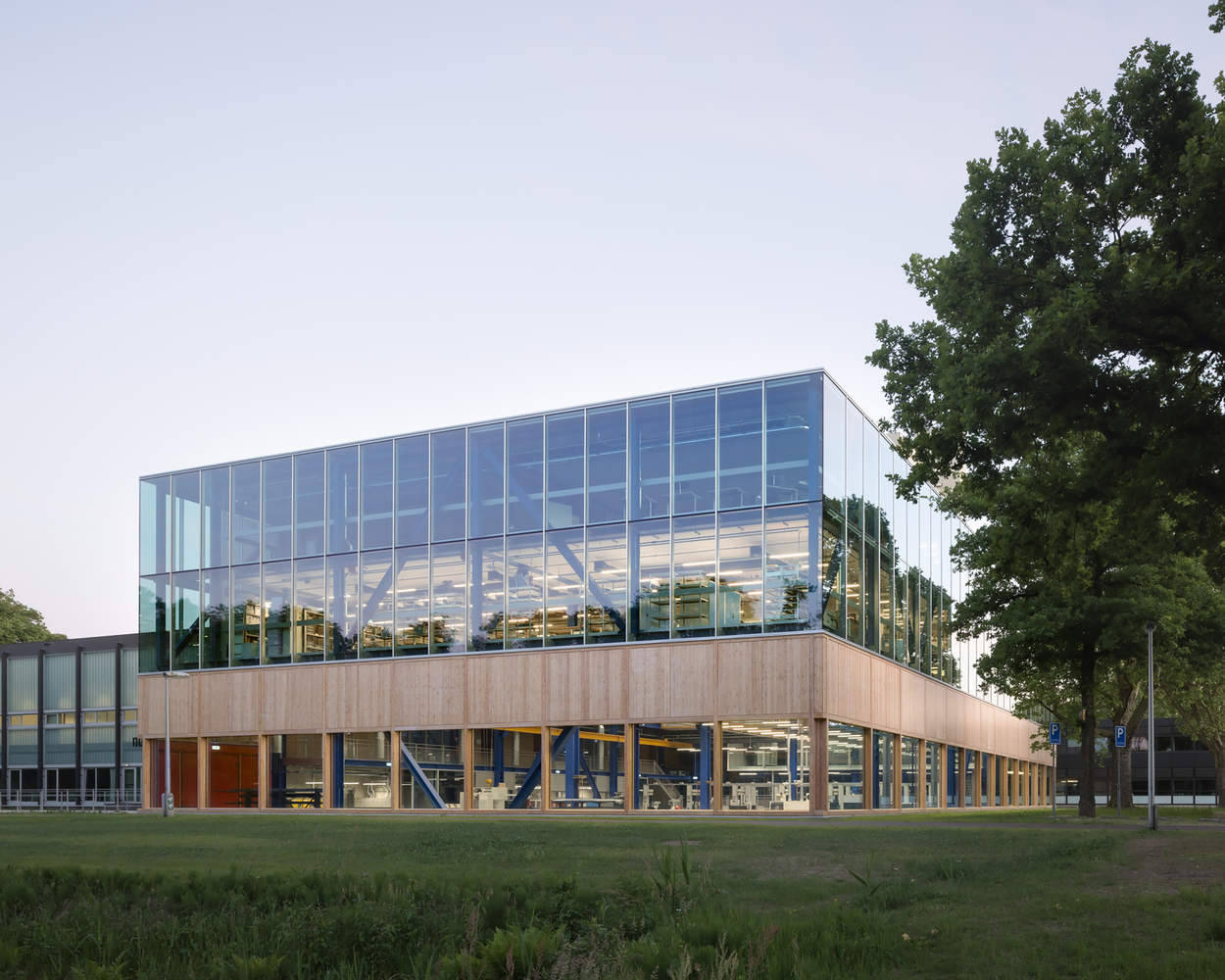
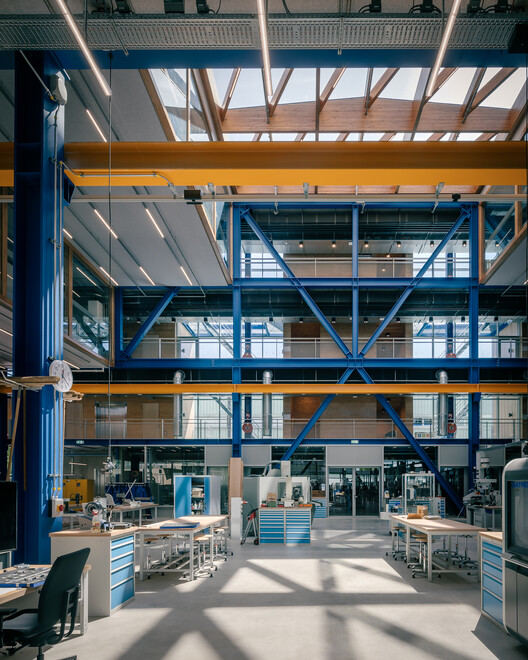
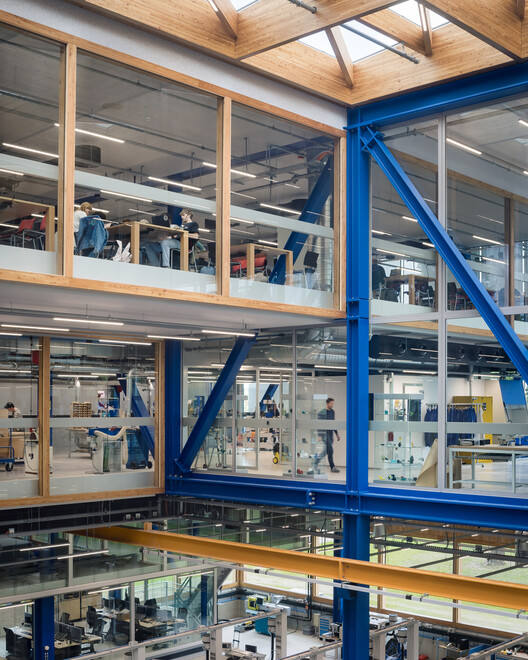
Sunken workshop floor – the heart of the faculty. At the Faculty of Engineering Technology (ET), students are trained to design technology that can change the world. In the current faculty building, the Horst ensemble, this meaning is rarely tangible. CUBE changes this: here you can physically experience the spirit of the faculty. Upon entering, the seven-meter-high metal and welding workshops are immediately visible. Because the workshop floor is sunken by 1.4 meters, you have an unobstructed view of the entire space and all machinery. Through a large atrium, the upper workshops are also clearly visible. Downstairs, students and researchers operate machines; upstairs, prototyping and teaching activities take place, while enjoying views of the campus. CUBE thus becomes the faculty’s exhibition space.
下沉式车间地板——建筑之心。在工程技术学院(ET),学生们接受培训,旨在设计能够改变世界的技术。然而,在当前学院大楼“霍斯特”(Horst ensemble)中,这一意义却鲜有体现。CUBE 改变了这一现状,在这里,你可以亲身感受学院所代表的精神。步入其中,七米高的金属与焊接车间尽收眼底。由于车间地板下沉 1.4 米,你可以一览无余地看到整个空间和所有机器。通过一个巨大的中庭,上层的车间也清晰可见。楼下,学生和研究人员操作着机器;楼上,则进行原型制作和教学活动,同时校园美景映入眼帘。如此,CUBE 成为了学院的展览馆。
© Stijn Bollaert
Ground Floor Plan
1st Floor Plan
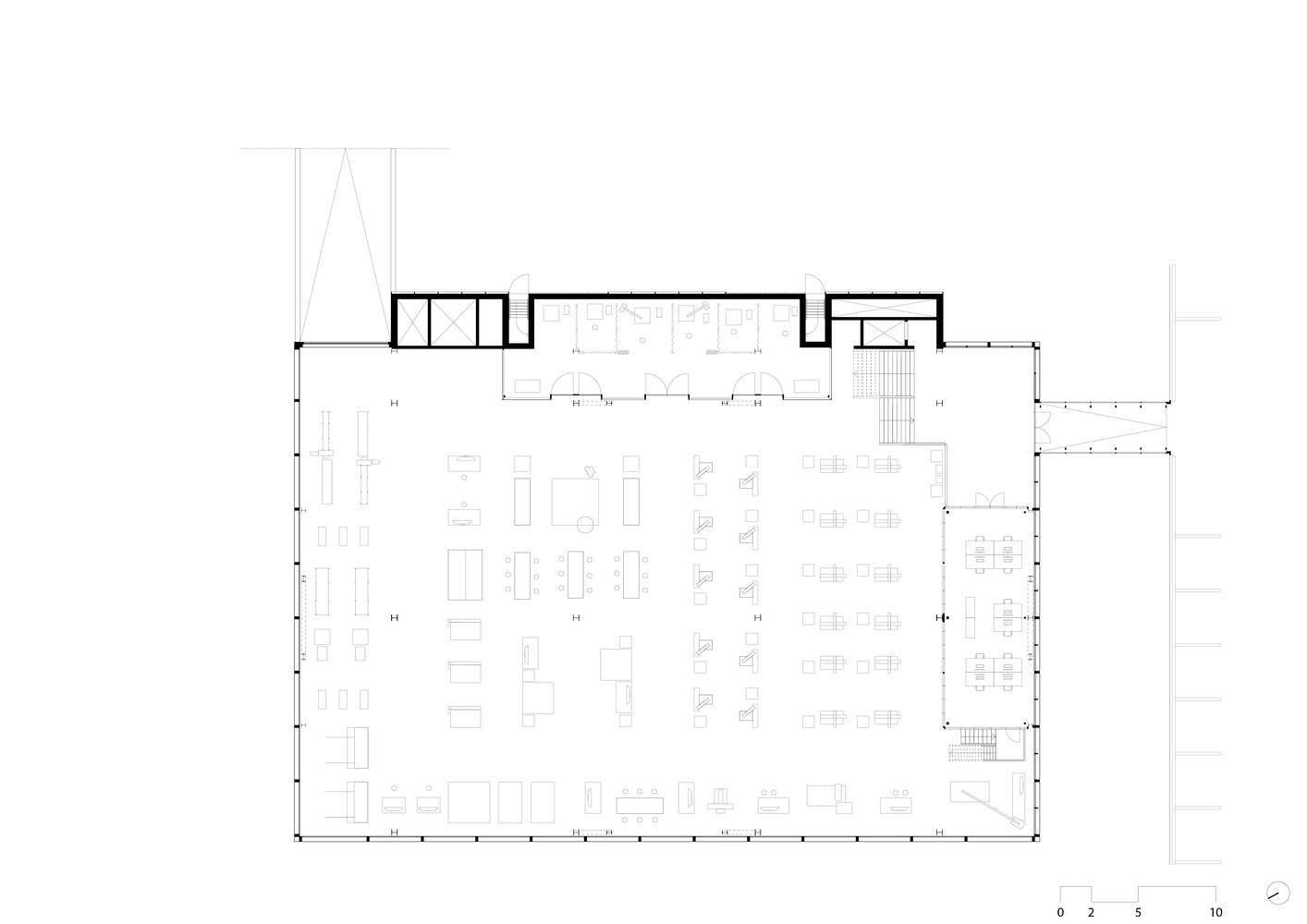
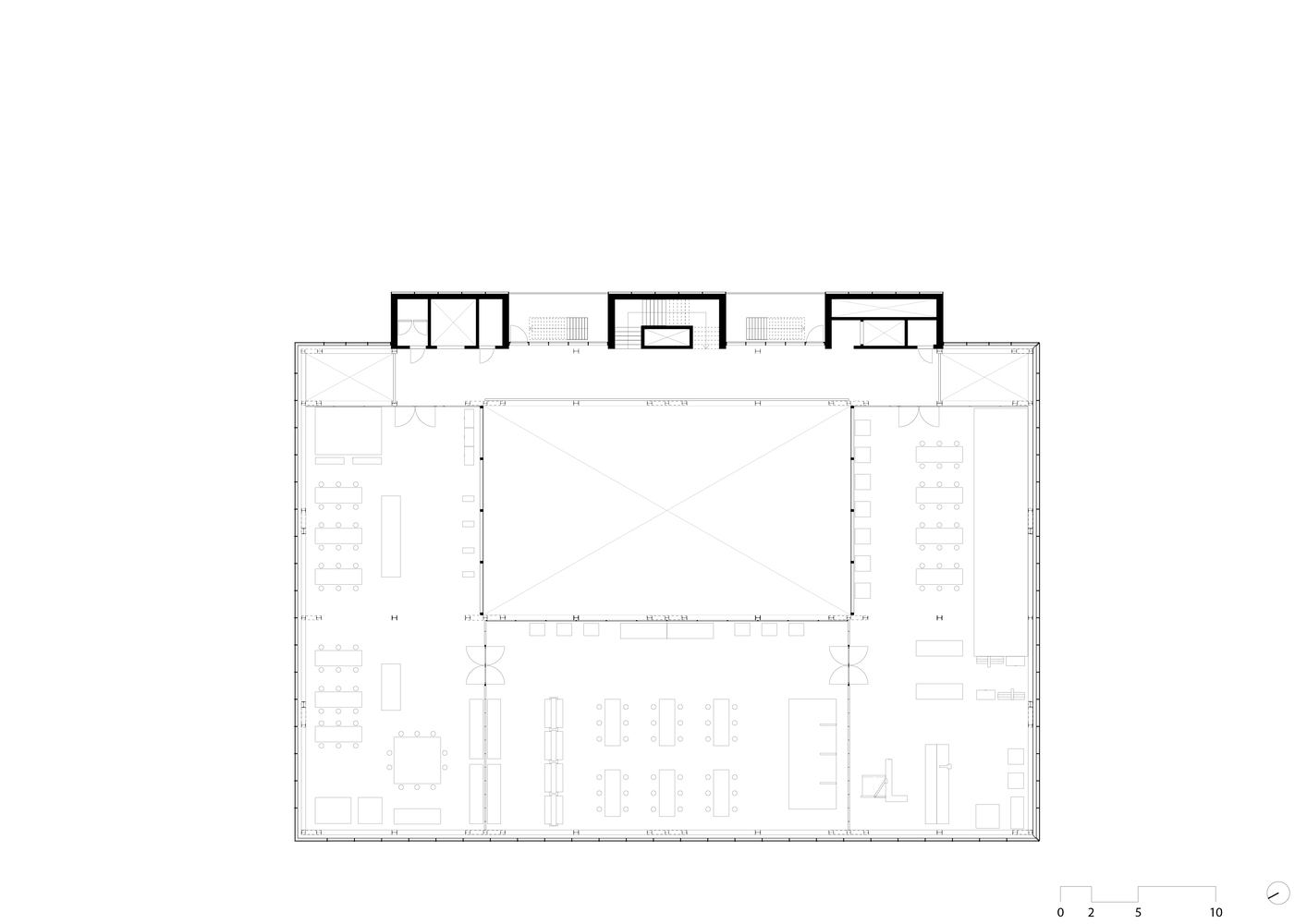
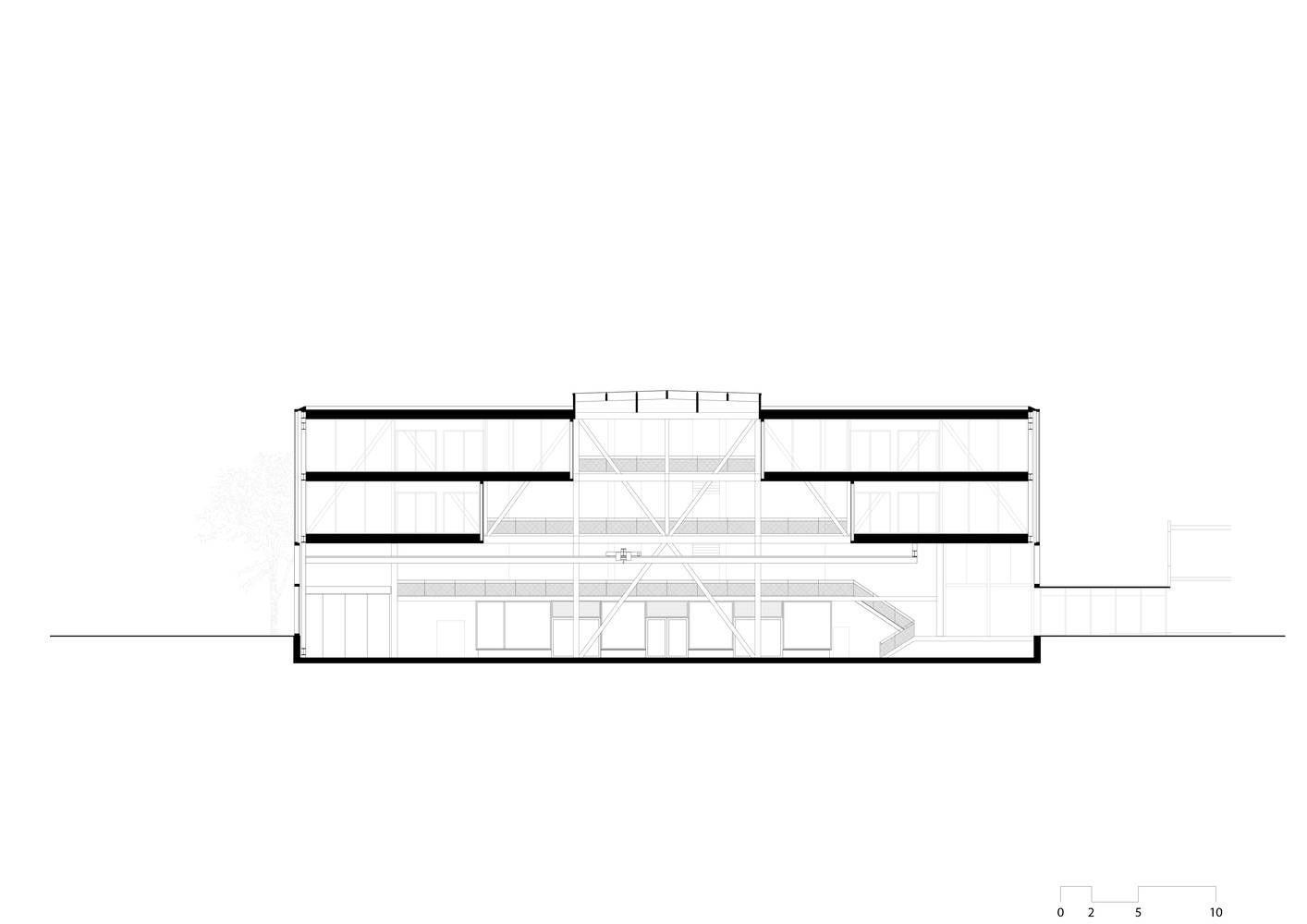
Functionality and interactivity. Where research used to require independence, innovation today revolves around collaboration. CUBE responds to this change by merging functionality and interactivity. The building houses five workshops—welding, metalworking, model making, and assembly—along with approximately 500 m² of laboratory and measurement space. These spaces are layered rather than side-by-side, maintaining a compact footprint, convenient circulation routes, and optimal visual connections between the spaces. The metal workshop is located on the sunken ground floor. Offices are situated on the south side, slightly elevated for supervision. The three floors above house air treatment equipment. The welding workshop is on the right, while the logistics entrance is on the north side for easy truck and forklift access. The second floor holds the assembly and model workshops, and the third floor is dedicated to laboratories. Circulation spaces, service cores, and storage rooms are located on the east side, acting as the 'backbone' supporting the freely configurable workshops. From here, one overlooks the large open spaces. A pyramid-shaped atrium brings in ample daylight and visually connects the different floors. Work processes are visible everywhere, as if the faculty's veil has been lifted.
功能性与互动性。过去,研究需要独立,而如今,创新则围绕合作展开。CUBE 通过融合功能性与互动性来回应这一变化。大楼内设有五个车间——焊接、金属加工、模型制作和装配车间——以及约 500 平方米的实验室和测量空间。这些空间采用层叠式布局,而非并排排列,从而保持了紧凑的占地面积、便捷的通行路线以及空间之间的最佳视觉联系。金属车间位于下沉的底层。办公室位于南侧,略高以便于监督。上方三层设有空气处理设备。焊接车间位于右侧,而物流入口则位于北侧,方便卡车和叉车进出。二层是装配和模型车间,三层则是实验室。通行空间、服务核心和储藏室位于东侧,作为“主干”为可自由配置的车间提供支持。从这里,可以俯瞰大型开放空间。一个金字塔形中庭引入充足的自然光,并在视觉上连接各楼层。工作过程随处可见,仿佛掀开了学院的面纱。
© Stijn Bollaert
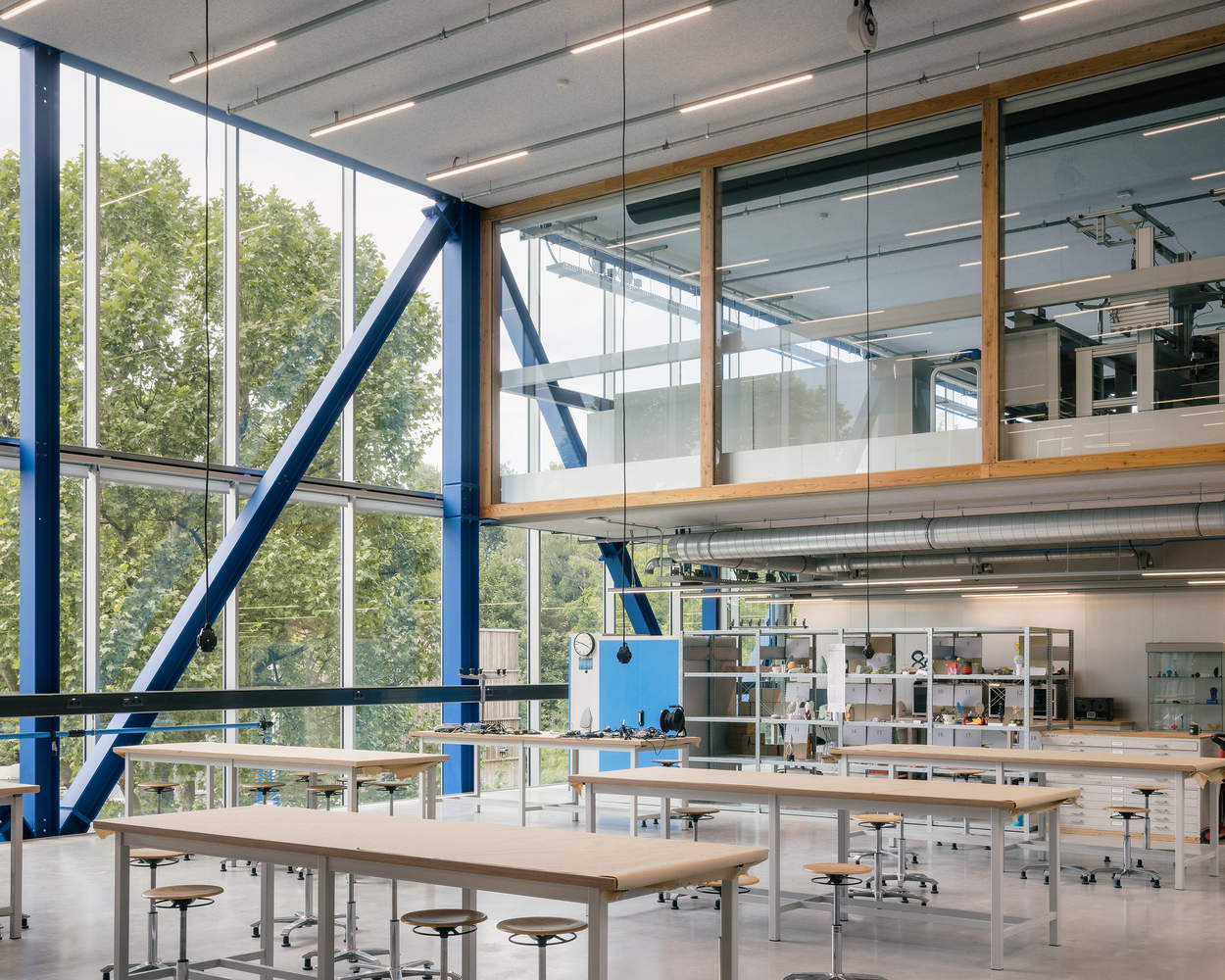
Structure as an architectural statement. The faculty wishes the building to adapt to changes every semester. This is made possible by the large spans and high load-bearing floors. The building structure consists of two main spans of 14 meters and a narrower 'backbone' span. Steel trusses spanning two floors reduce the number of columns in the workshops. Triangular supports and the cross-laminated timber (CLT) cores containing the elevators, stairs, and services provide stability to the building and give it a distinctive appearance. The structure thus offers a rational solution for flexible use while exhibiting a bold architectural posture fitting for the faculty.
结构作为建筑宣言。学院希望建筑每学期都能适应变化。大跨度和高承重地板使这一愿望成为可能。建筑结构由两个 14 米跨度的主跨和一个较窄的“主干”跨组成。跨越两层的钢桁架减少了车间内的柱子数量。三角形支持和包含电梯、楼梯和服务的正交胶合木(CLT)核心筒为建筑提供了稳定性,并赋予其独特外观。因此,该结构既为灵活使用提供了合理的解决方案,又展现了符合学院气质的鲜明建筑姿态。
© Stijn Bollaert
© Stijn Bollaert
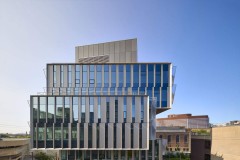
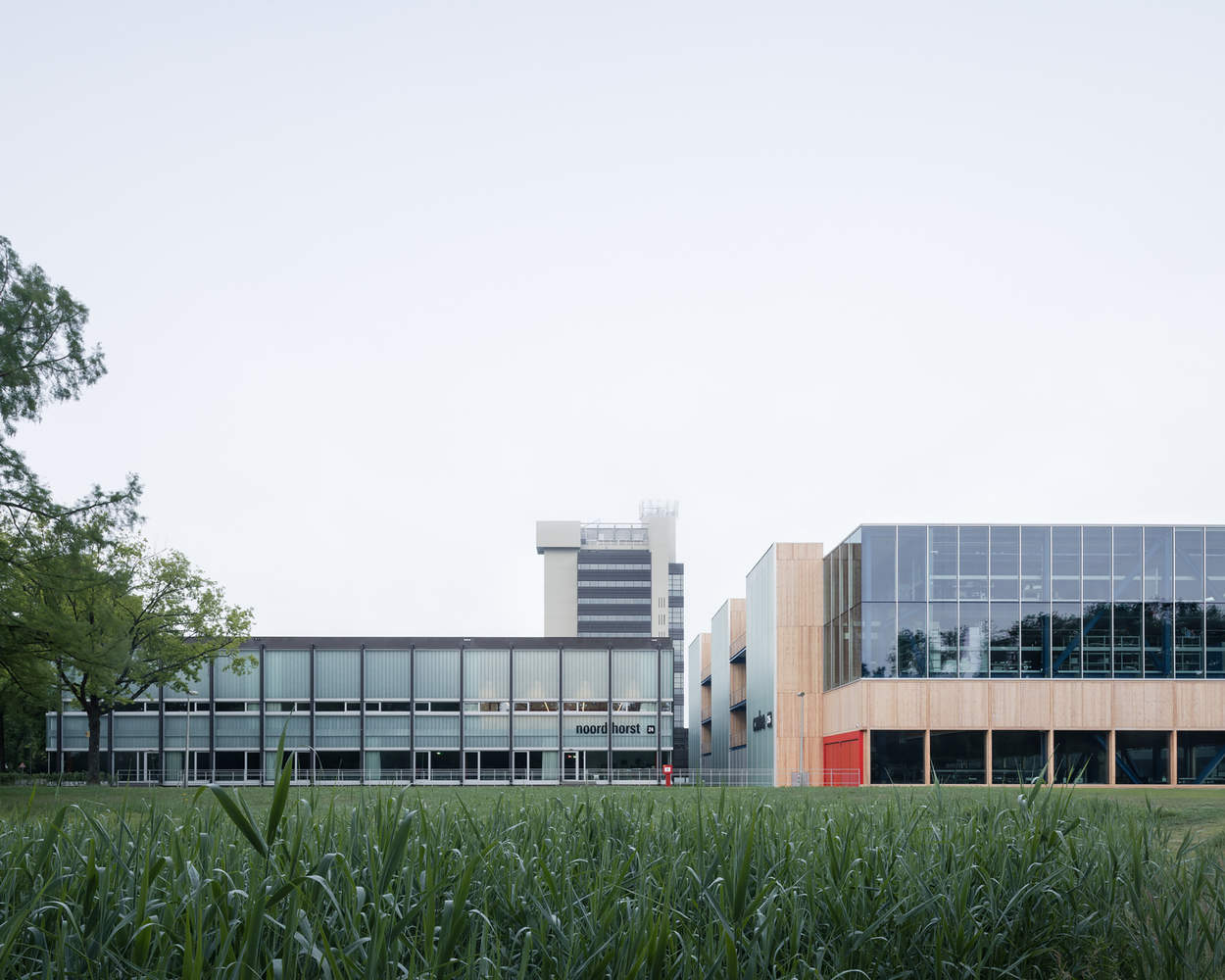
Machine in the landscape. The Horst ensemble is one of the jewels of the University of Twente campus. Designed by Dick van Mourik in the 1960s, Horst is a modernist complex of low courtyards, towers, and satellite buildings. The new extension interprets this style in a contemporary way while retaining the original architectural language. CUBE is designed as a new satellite building. Because the site was too small to meet the program requirements, the solution was to use a smaller, linear volume and add an extra floor. This way, the Horst ensemble retains its composition of courtyards and satellite buildings. The sunken ground floor limits the building's height, while the three CLT cores echo the characteristic service towers of the Horst ensemble, making the building volume appear visually slimmer.
景观中的机器。霍斯特建筑群是特文特大学校园的瑰宝之一。由迪克·范·穆里克(Dick van Mourik)于 20 世纪 60 年代设计的霍斯特,是一个由低层方庭、塔楼和卫星建筑组成的现代主义建筑群。新扩建项目在保留原有建筑风格的基础上进行了现代诠释。CUBE 被设计为一座新的卫星建筑。由于场地太小,无法满足项目需求,解决方案是采用一个更小、线性的建筑体量,并增加一层。这样,霍斯特建筑群仍保持为方庭与卫星建筑的布局。下沉的底层限制了建筑高度,而三个 CLT 核心筒则呼应了霍斯特建筑群标志性的服务塔楼,使建筑体量在视觉上更加纤细。
Section 1
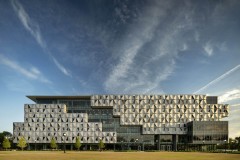
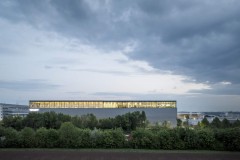
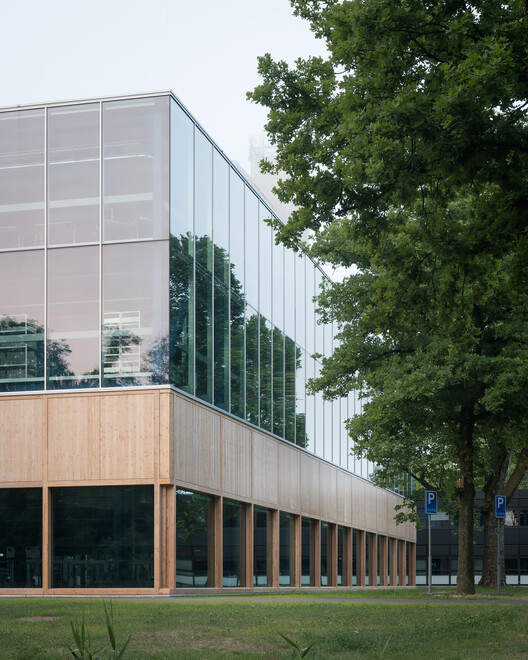
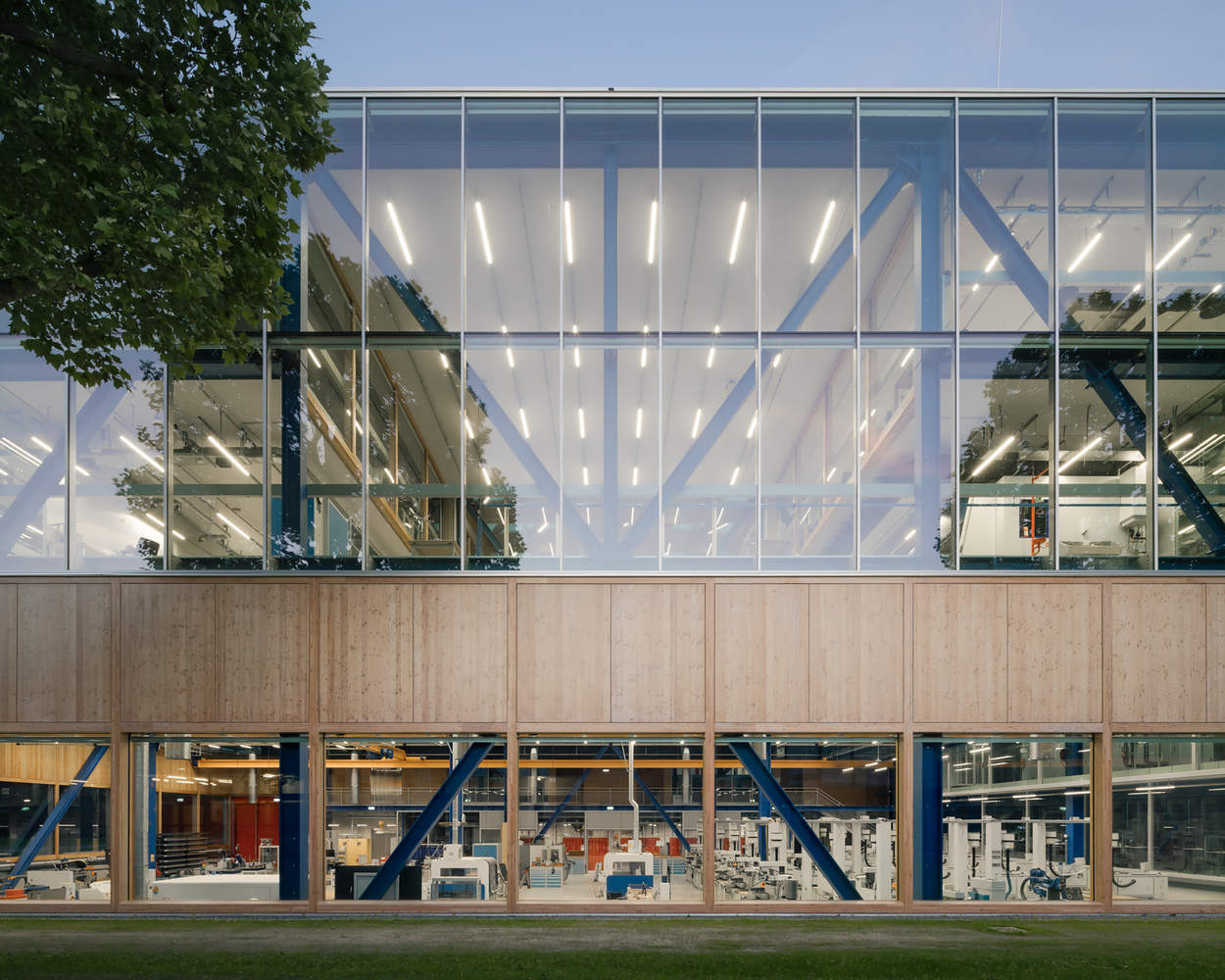
Modernism adapted for climate change. CUBE’s exterior echoes the Horst ensemble, but its design is more climate-aware. Like Horst, the facades of CUBE emphasize the building's organization. However, unlike the rest of the complex, each facade has its own character. The facades facing northwest are transparent, offering views of the landscape and diffused daylight. The southeast and west facades are more closed to prevent overheating. The ground floor features large windows with deep sills overlooking the sunken workshops, acting as the faculty’s display window. The facade here is clad in wood, adding tactility and texture. Above, a sleek glass curtain wall aligns with the Horst ensemble. Behind the curtain wall, the steel trusses are clearly visible, adding dynamism to the exterior through a play of geometry with the orthogonal facades.
为应对气候变化而生的现代主义建筑。CUBE 外观与霍斯特建筑群相呼应,但在设计上更注重气候意识。与霍斯特一样,CUBE 的外墙强调了建筑的组织结构。但与建筑群其他部分不同的是,每面外墙都各具特色。建筑朝西北方向开放,这些外墙采用透明设计,可欣赏到景观和漫射的日光。东南和西侧外墙则更为封闭,以防止过热。底层设有宽大的窗户,带有深凹的窗台,俯瞰下沉的车间,宛如工程技术学院的展示橱窗。这里的外墙采用木质材料,增添了触感和质感。上方悬挂着与霍斯特建筑群对齐的清晰玻璃幕墙。幕墙背后,钢桁架清晰可见,通过与正交外墙的几何游戏为外观增添了动感。
© Stijn Bollaert
Excellence in functionality. The principle of magnifying functionality runs through every detail. Structural nodes have been optimized countless times, and fences, stairs, and facade details have been meticulously designed. The material palette is simple and clearly aligned with the function. Steel trusses provide large spans and are painted fire-resistant blue to emphasize the spatial structure; light grey floors and recycled PET ceilings add tranquility and light reflection; glass partitions maximize visual connections. This robust base is complemented by larch frames on both the inside and outside, adding warmth. The CLT cores reinforce this further. Exposed installations are carefully detailed, adding a technical character to the building. The entire building exudes a sense of 'engineering technology.'
卓越的功能性。建筑放大了其功能性,这一原则贯穿于每一个细节之中。结构节点经过无数次优化,围栏、楼梯和立面设计精细至极。材料调色板简单明了,与功能相契合。钢桁架提供大跨度,涂有防火蓝色以强调空间结构;浅灰色地板和回收 PET 天花板增添宁静与光线反射;玻璃隔断最大限度地实现视觉连接。这一坚固的基础通过内外两侧的落叶松框架得到补充,增添了温暖感。CLT 核心筒进一步强化了这一点。外露的设施经过精心设计,为建筑增添了技术特色。整座建筑都散发着“工程技术”的气息。
© Stijn Bollaert