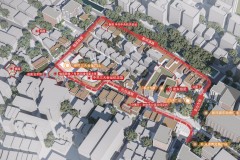
工业遗产的审慎重塑与有机融合:该项目最精髓之处在于其对一座19世纪达内尔印刷厂工业遗址的**审慎尊重与有机重塑**。设计师秉持“一切皆为遗产”的理念,将现有结构视为转化的杠杆而非束缚。这种策略成功地保留了建筑原有的长度、极高的底层天花板、独特的混凝土柱梁结构和柔和色调的砖砌工艺,使其在不失工业历史印记的同时,为新生功能提供了坚实的基础。这不仅是对物质遗产的保护,更是对场所精神的深度挖掘与延续。
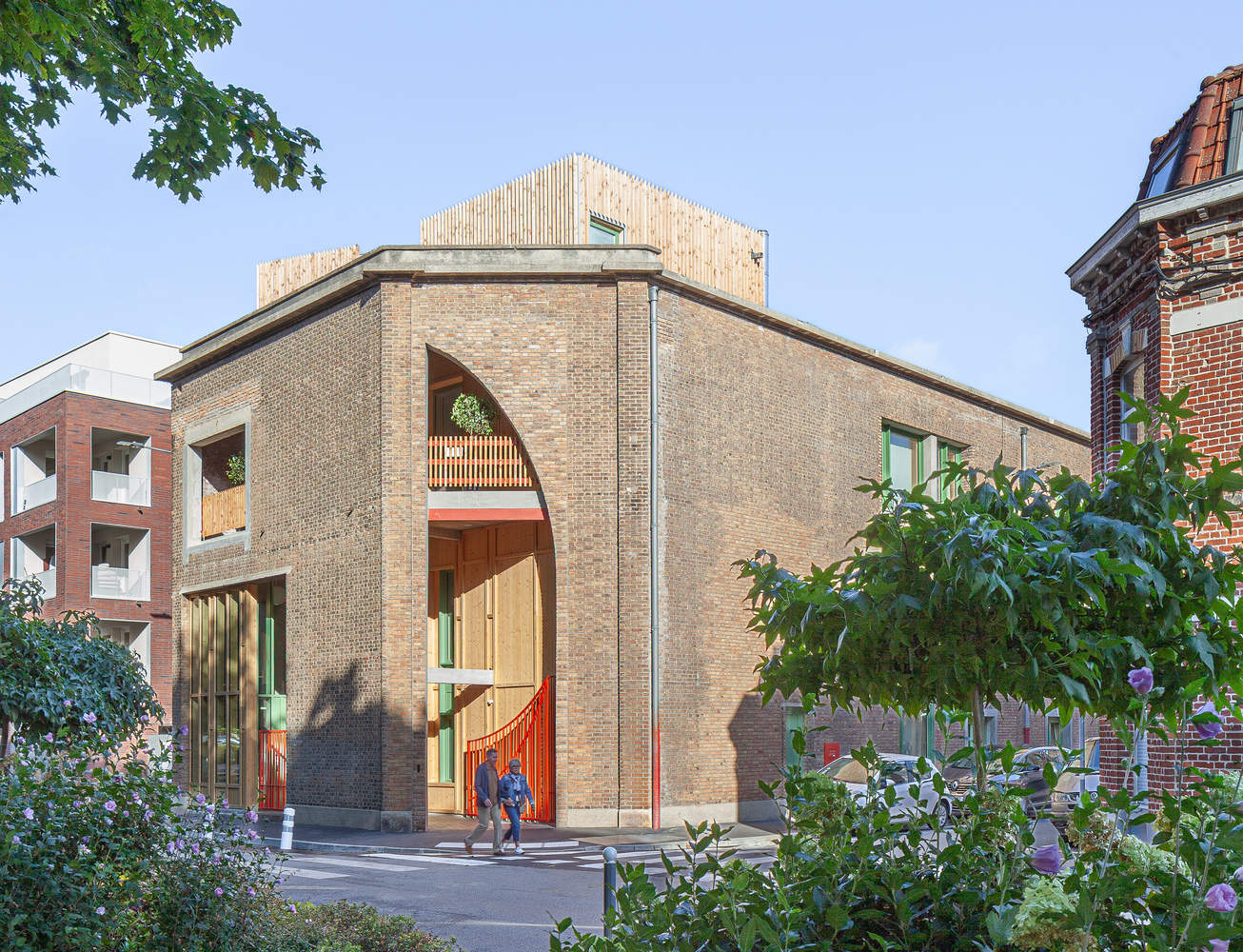
空间戏剧性与公共身份的构建:通过引入**宏伟的拱形开口**,设计师巧妙地将原本封闭的工业建筑转变为具有显著公共设施地位的音乐学院。这些新的开口不仅打破了原有的沉闷立面,更直接地向城市和访客展示了内部共享空间(如大厅和即兴创作区)。拱形元素的应用赋予了建筑强烈的象征意义,清晰地界定了其作为社区亮点的角色,实现了从工业遗迹到文化地标的身份转变,强调了“让音乐在城市中可见”的公共导向。
功能升级与场所激活的战略布局:项目的成功还体现在其对**战略位置和独特空间潜力**的精准把握。建筑位于街角,正对达内尔公园,这一区位优势被充分利用。设计师通过在现有结构中植入新的功能需求——音乐学院,并利用高挑的天花板和结构特色,创造出具有戏剧性的内部体验。这种在保留历史肌理基础上进行高价值功能植入的做法,有效地激活了整个工业地块的活力,使其成为社区文化生活和互动的中心,实现了历史建筑在现代城市语境下的再生价值。
This project involves the redevelopment of an old building that was once part of the industrial site of the Léonard Danel printing works.
该项目涉及对一座曾为莱昂纳德·达内尔(Léonard Danel)印刷厂工业遗址一部分的旧建筑进行重新开发。
© Beal Blanckaert
© Beal Blanckaert
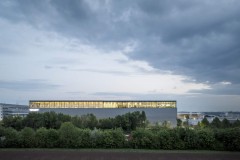
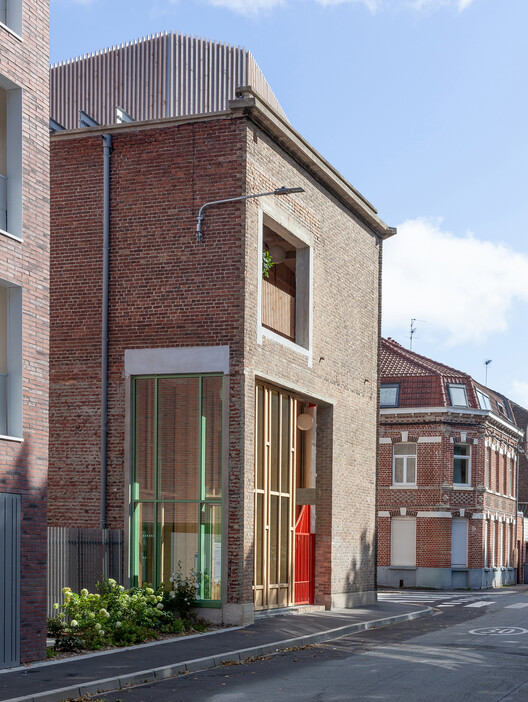
The building, dating from the 19th century, was originally part of the Dannel printing works' industrial space in Loos. It is believed to be the last surviving remnant of this site. At first glance, the structure might not be particularly striking due to its length, lack of openings and ornamentation, its gently toned brickwork, and its concrete column-beam structure.
这座建筑建于 19 世纪,原本是达内尔印刷厂在洛斯(Loos)工业空间的一部分。据信,它是该遗址现存的最后遗迹。这栋建筑以其长度、缺乏开口和装饰、色调柔和的砖砌工艺以及混凝土柱梁结构,乍看之下或许并不引人注目。
© Beal Blanckaert
© Beal Blanckaert
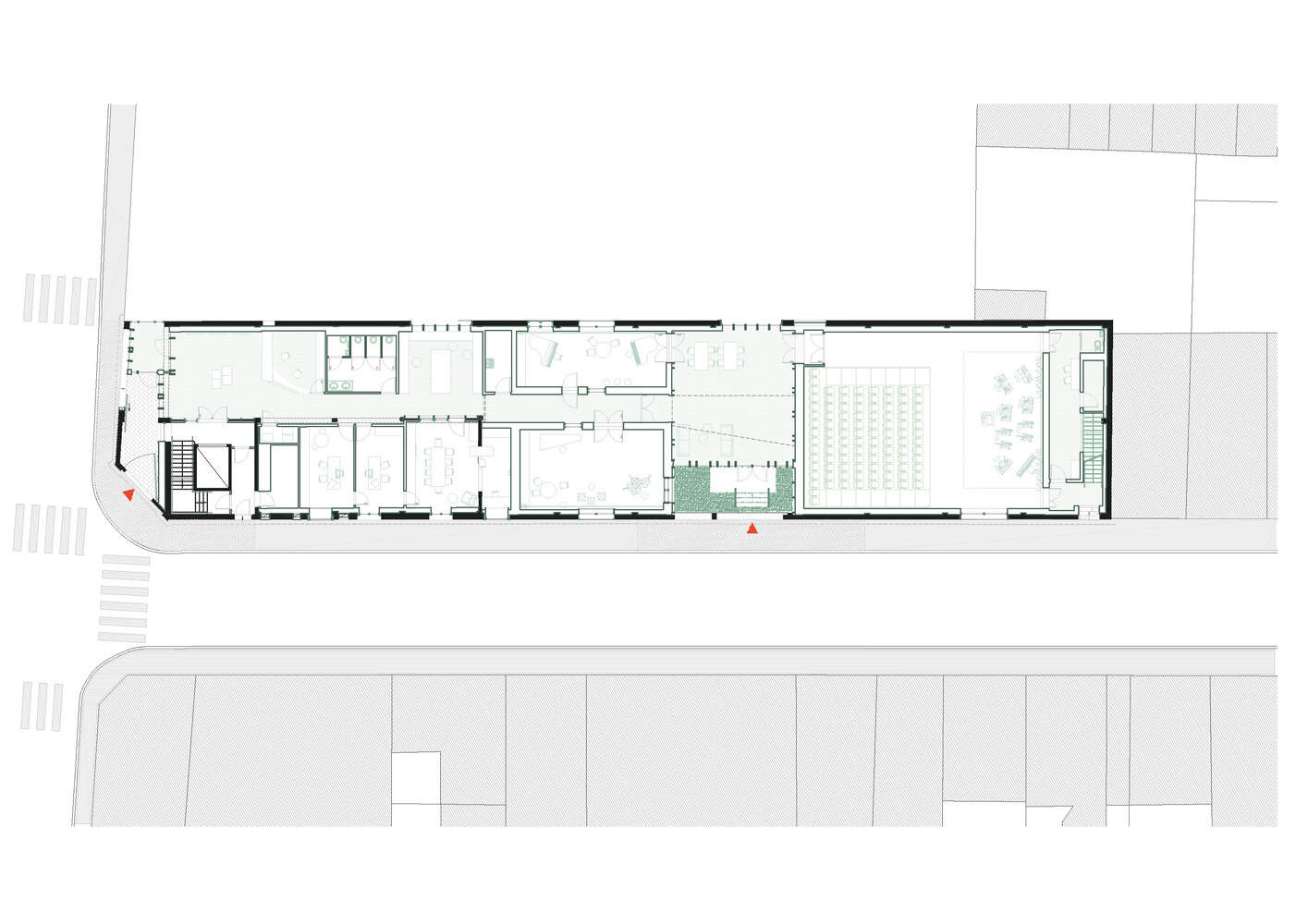
Ground floor plan
一层平面图
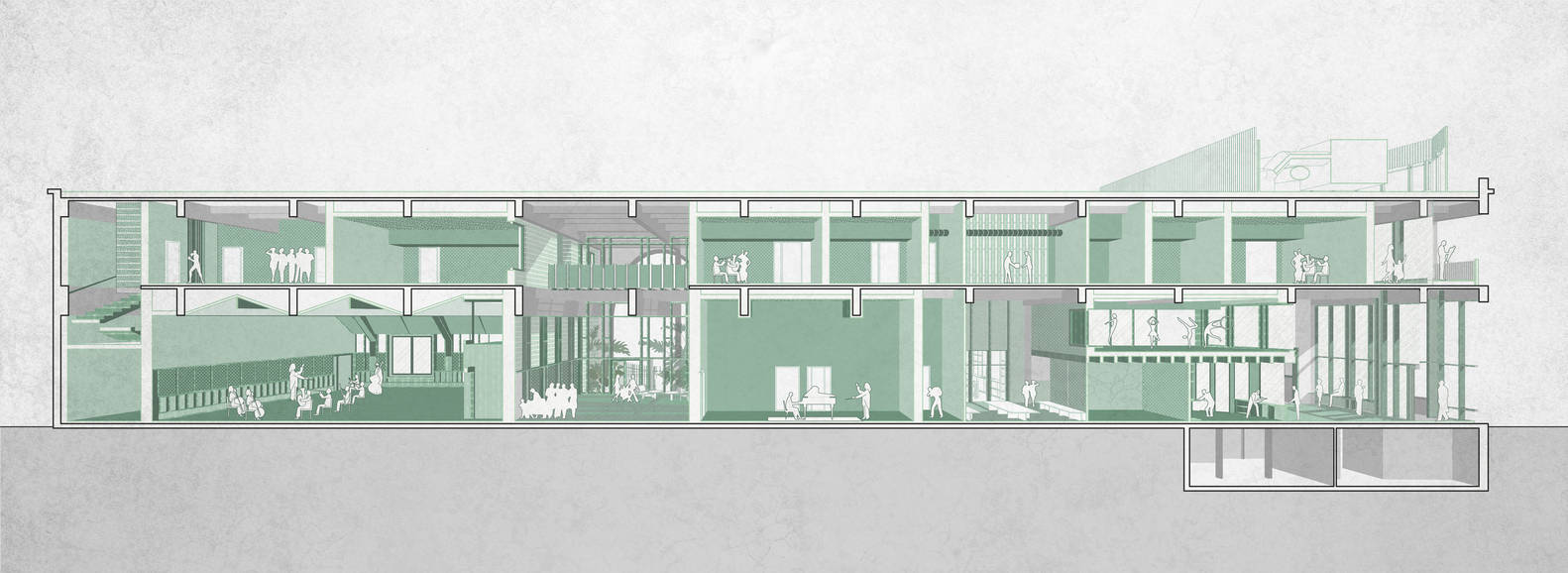
Cross-section perspective
剖透视
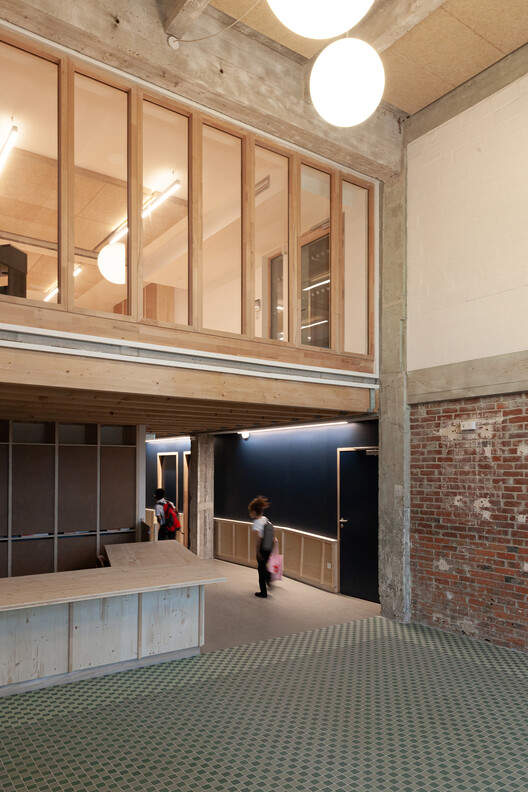
However, its very high ground floor ceiling, double-pitched concrete beams, yellow facade bricks, and its strategic location on the street corner facing the brand new Danel Park are key elements that define the extraordinary nature of this building and reveal its immense potential.
然而,它极高的底层天花板、双坡混凝土梁、黄色外墙砖,以及位于街角、正对全新达内尔公园的战略位置,均是定义这座建筑非凡特质的关键元素,使其蕴含着巨大潜力。
© Beal Blanckaert
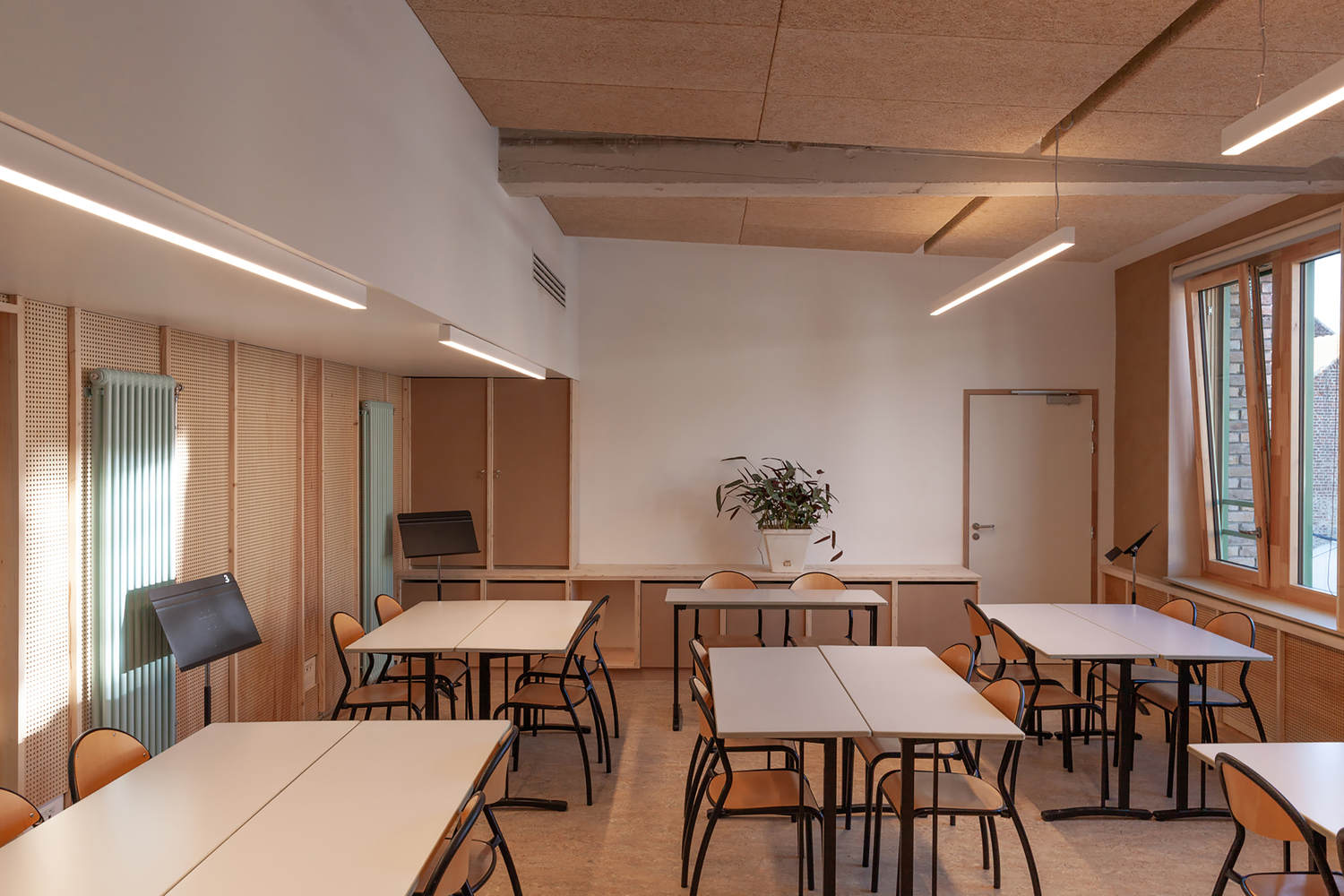
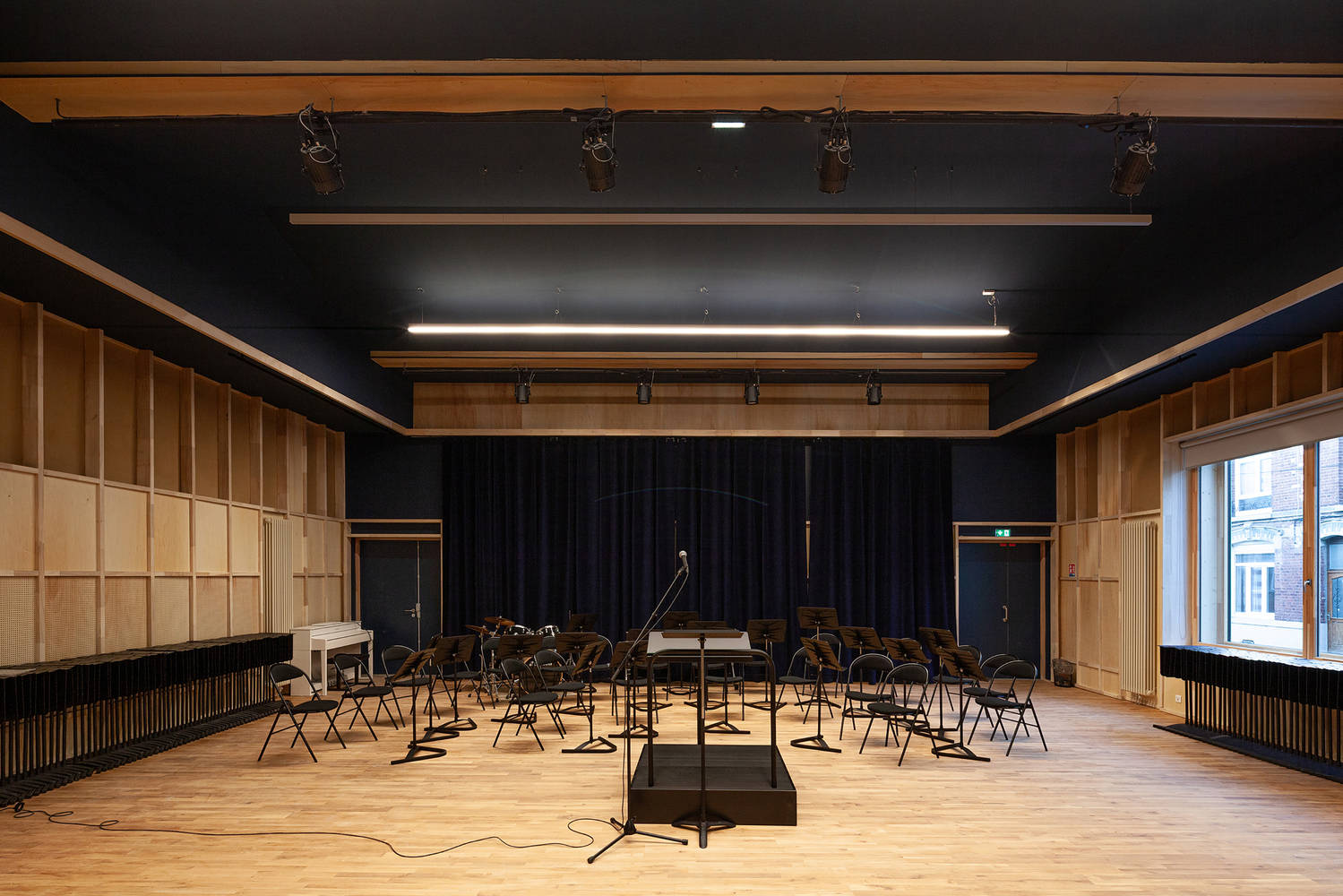
The construction method is based on the principle that "everything is heritage." The primary intention was to preserve as much of the existing structure as possible, using it as a lever for the project rather than viewing it as a constraint.
建筑方法基于“一切皆为遗产”的原则。首要意图是尽可能多地保留现有结构,并将其作为项目的杠杆,而非视为限制。
© Beal Blanckaert
© Beal Blanckaert
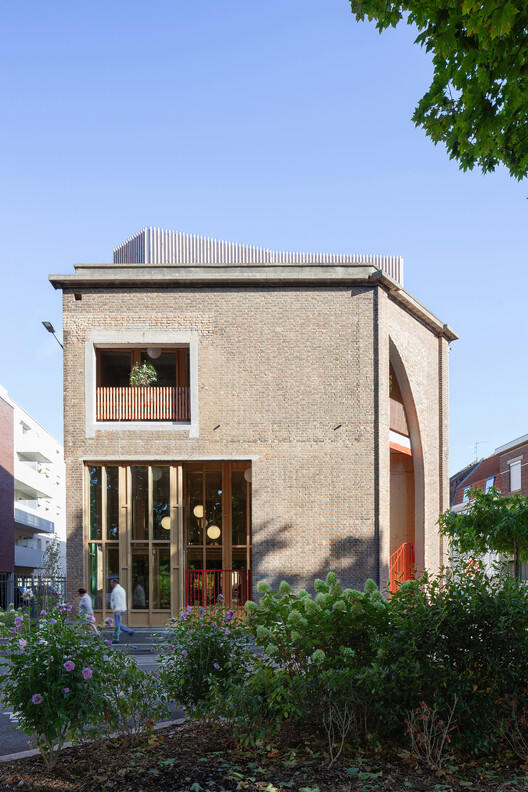
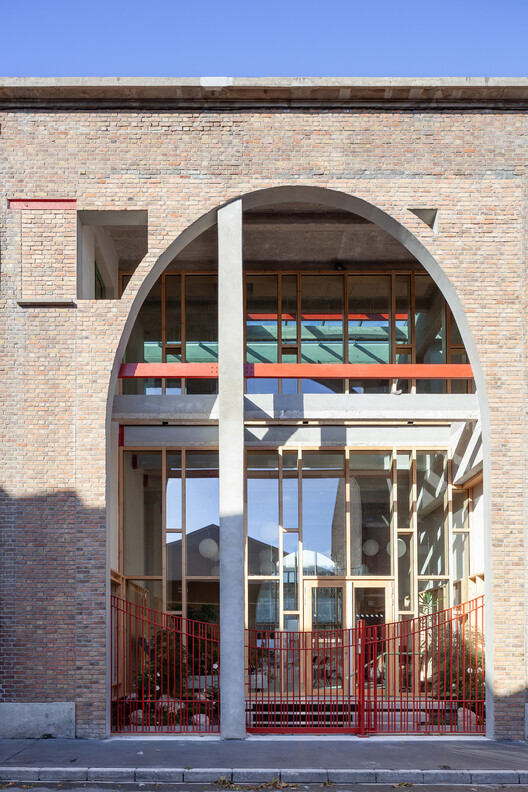
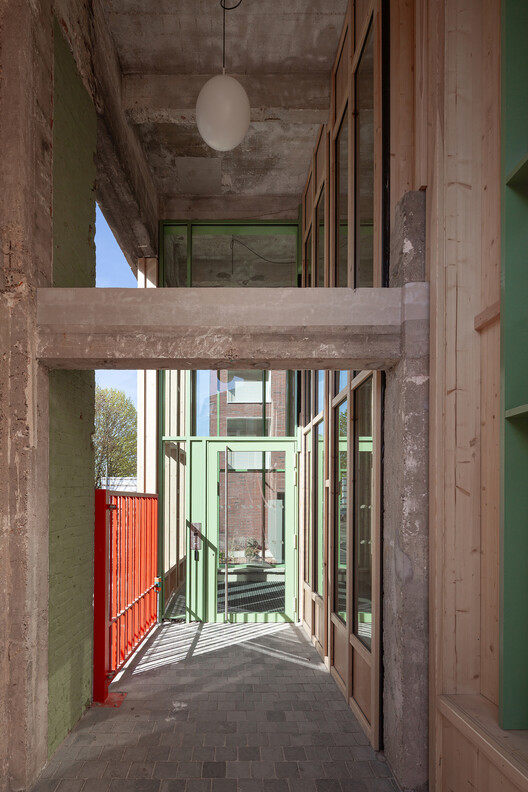
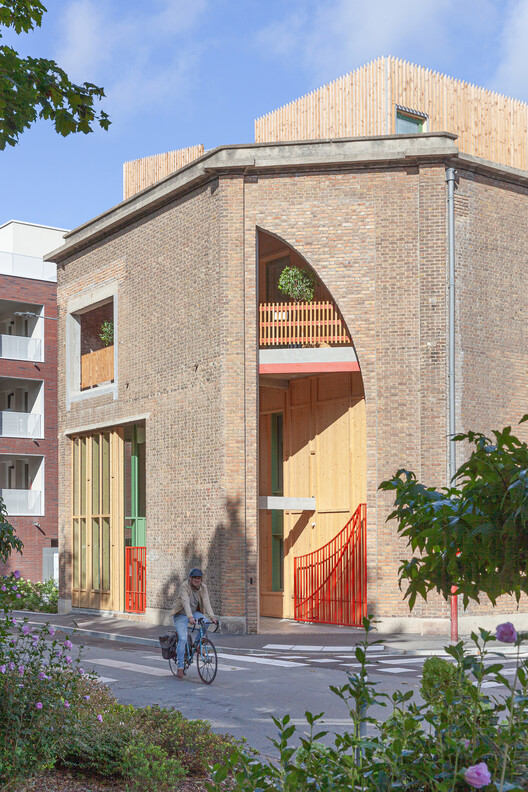
As a symbol of Loos's historical heritage, the establishment of the Conservatory aims to be a highlight for the community. As the existing building was rather closed off, new openings were introduced. The architectural element of the arch gives the building the status of a public facility, signaling its openness to visitors.
作为洛斯历史机构的象征,音乐学院的设立旨在成为该社区的亮点。现有建筑较为封闭,因此引入了新的开口。拱形这一建筑元素赋予了该建筑公共设施的地位,表明其向访客开放。
© Beal Blanckaert
These magnificent openings reveal the shared spaces within the Conservatory: the lobby, improvisation areas, waiting rooms, etc. The goal is to make music visible in the city and encourage local residents to participate.
这些宏伟的开口展现了音乐学院内的共享空间:大厅、即兴创作区、候车室等。其目标是让音乐在城市中可见,并鼓励当地居民参与其中。
© Beal Blanckaert