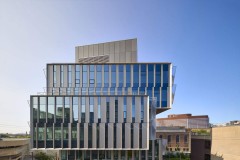
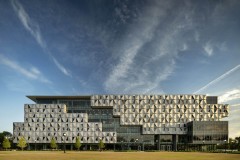
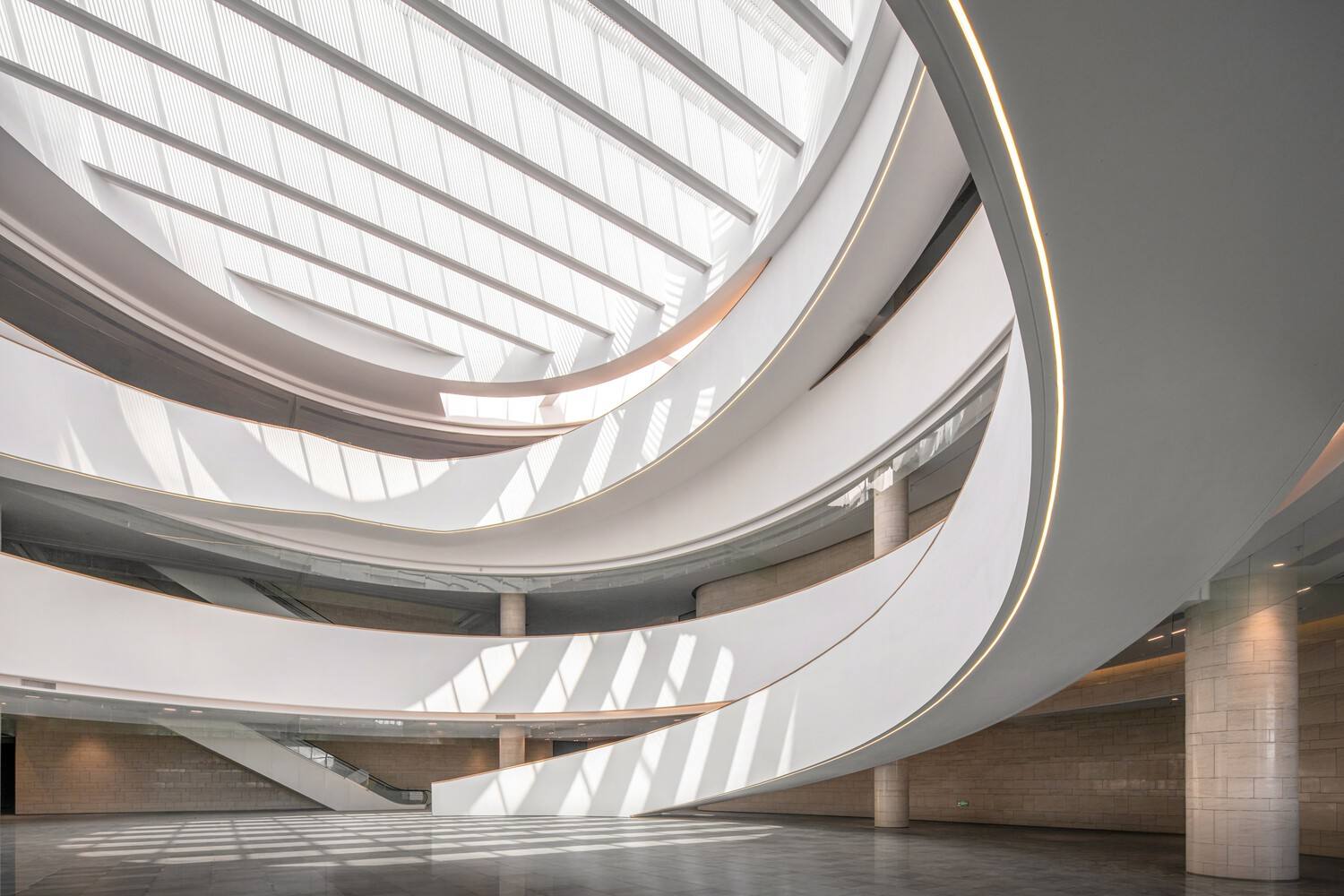
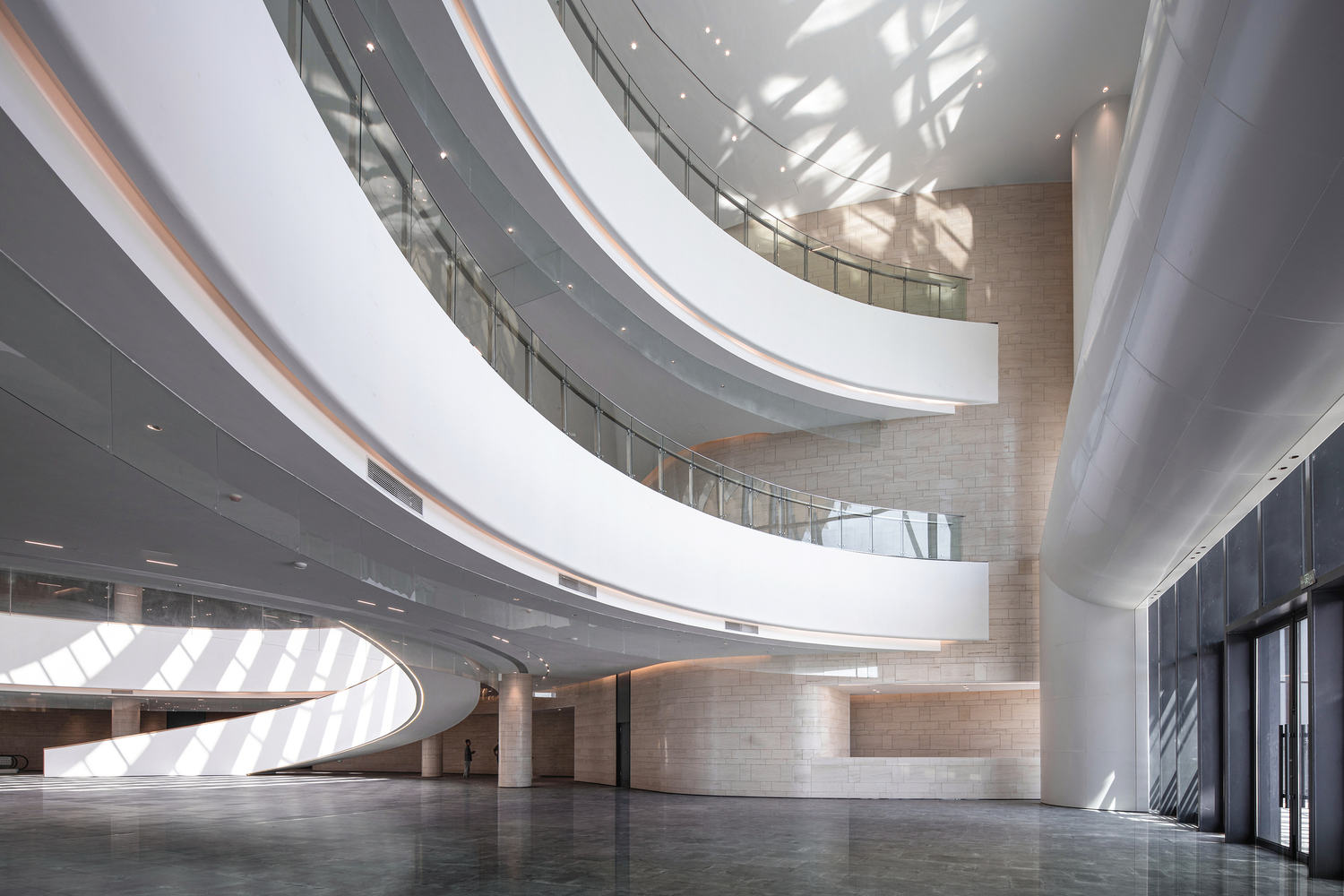
功能集约与共享的城市文化新范式:本项目通过将档案、党史、博物馆等七大功能机构整合于一体,围绕共享中庭形成“七馆合一”的复合布局。这种设计策略不仅极大丰富了市民的空间体验,更通过集中的服务管理显著优化了流线效率,实现了用地、能耗及运营成本的节约。它为国内中小城市文化综合建筑的集约化建设提供了一种创新且高效的模式,充分体现了资源整合与功能复合的价值。
激发社区活力的开放性平台设计:建筑设计巧妙地将文化中心与漠阳湖公园相融,通过设置平缓草坡和融合商业、文体活动的基座平台,模糊了建筑与公园的边界。这一开放的绿化平台成为市民社交、休憩和观景的活力场所,使文化中心从传统的封闭式建筑转变为向社区持续开放的城市客厅。这种对公共空间的积极塑造,有效激发了新城区的社区活力,实现了文化设施与城市公共空间的有机连接。
参数化驱动的被动式可持续策略:针对亚热带滨海气候特点,项目采用了多项创新的被动式设计。其中,专利性的大型复合陶棍遮阳系统是设计的核心亮点,通过参数化分析,实现不同角度的遮阳控制,优化了遮阳、隔热与采光效果。结合利于通风的布局、通风中庭设计以及雨水收集与绿化覆土等措施,建筑在保证舒适性的同时,大幅降低了运营能耗,体现了对地域气候的深刻理解和可持续设计的专业水准。
© 徐勉
© 徐勉
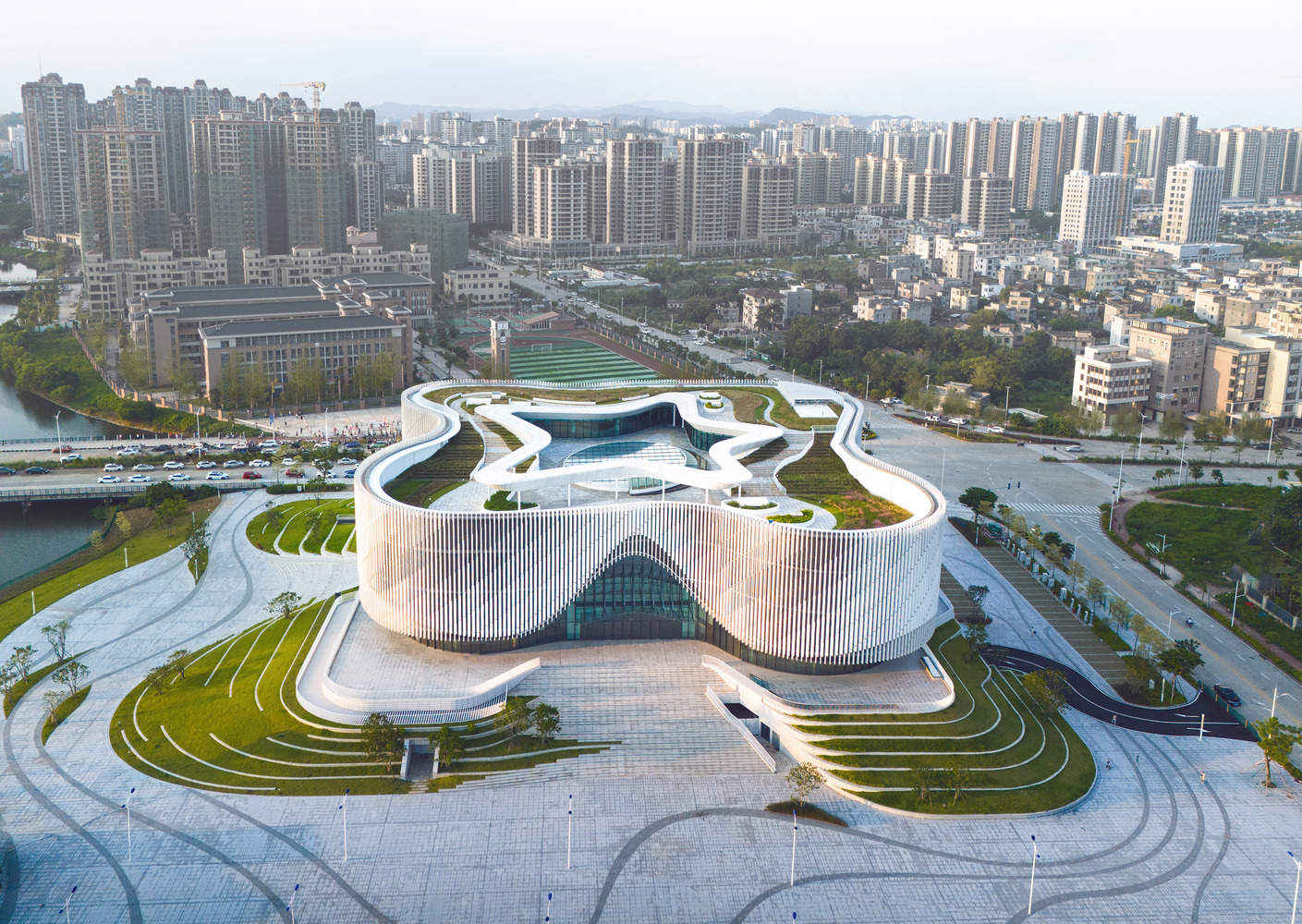
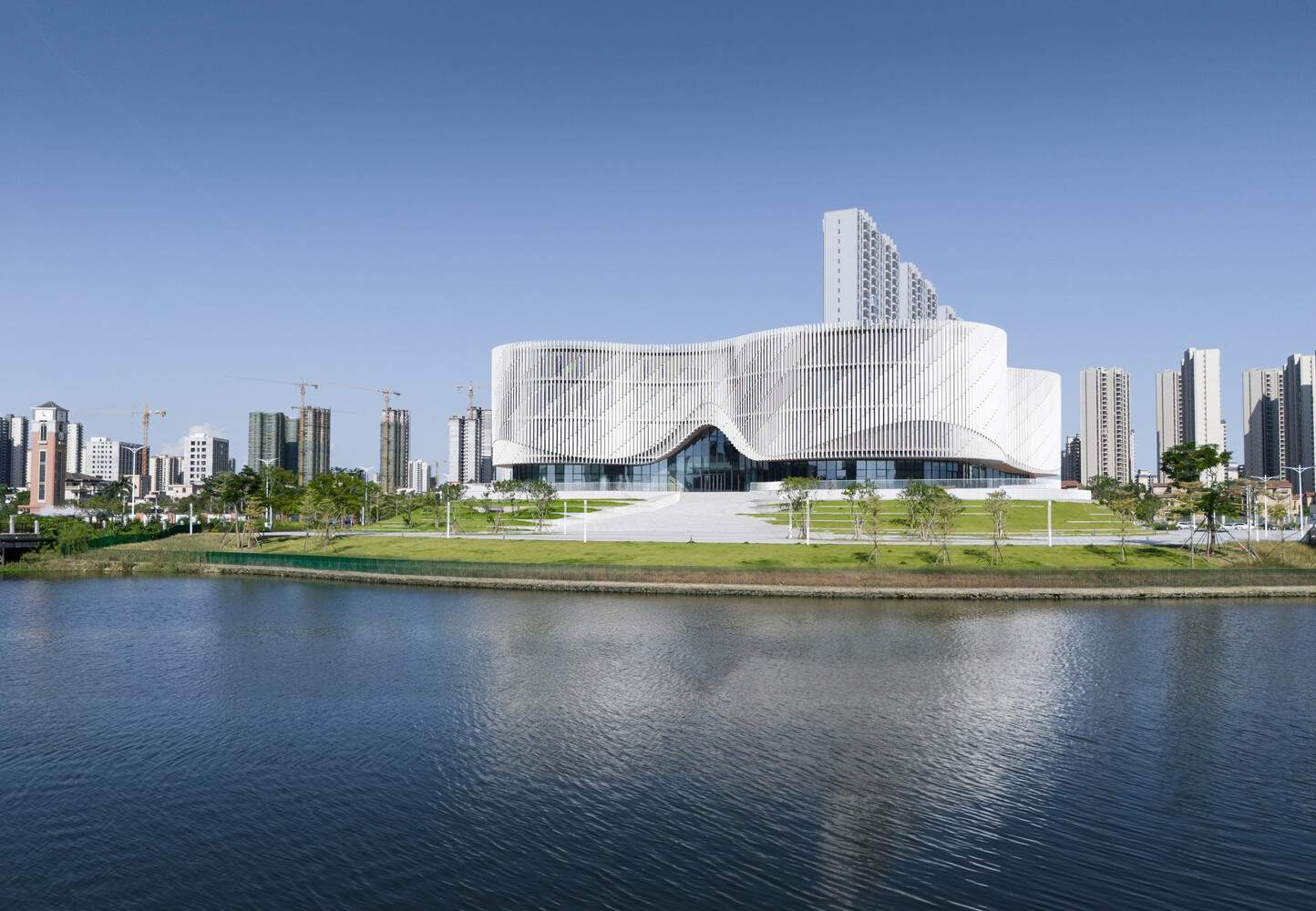
The Yangjiang Comprehensive Cultural Center is situated north of Moyang Lake Park in Yangjiang City, boasting a beautiful environment with open views. The project integrates multiple institutions and functions, including the Yangjiang City Archives, Party History Museum, Local Chronicles Museum, Celebrity Museum, Museum, Planning Exhibition Hall, and the Workers' Cultural Palace. It injects new vitality into the surrounding communities, establishing itself as a cultural landmark in Yangjiang's new urban area.
阳江市综合文化中心位于阳江市漠阳湖公园北侧,基地环境优美视线开阔。项目集合了阳江市档案馆、党史馆、方志馆、名人馆、博物馆、规划馆及工人文化宫等多个机构与功能,它为周边社区注入全新的活力,成为阳江市新城区的文化地标。
© 徐勉
© 徐勉
1. A New Model of Functional Integration and Shared Intensification
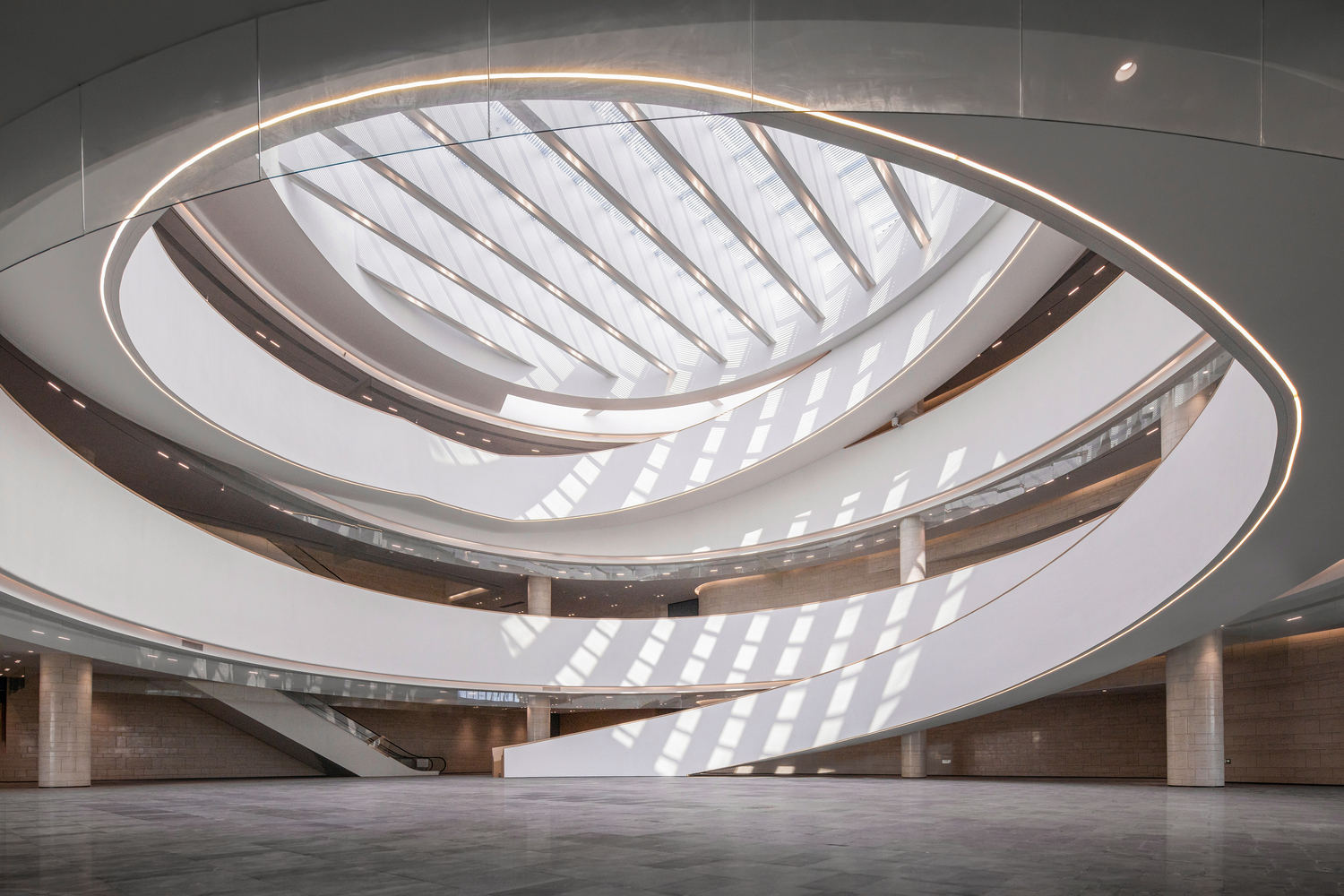
The Yangjiang Comprehensive Cultural Center adopts a strategy of functional integration and shared intensification. By concentrating seven independently operating institutions within one building around a shared atrium, it forms a composite cultural complex layout of "Seven Museums in One." This not only provides citizens with a rich spatial experience but also shortens circulation, saves land, reduces surface area and air conditioning energy consumption through centralized service management, minimizing the waste of public supporting resources and creating a new model for intensive construction of cultural complexes in small domestic cities.
1.功能复合与共享集约新模式
阳江市综合文化中心采用功能复合、共享集约的设计策略,通过将7个独立运营机构集中在文化中心建筑内,环绕共享中庭布置,形成 7 馆合 1 的复合型的文化综合体布局,既为市民带来了丰富的空间体验,又通过集中的服务管理缩短流线、节约用地、表面积与空调能耗,减少公共配套资源浪费,创造了国内小城市文化综合建筑集约建设的新模式。
© 徐勉
© 徐勉
2. An Open Platform to Stimulate Community Vitality
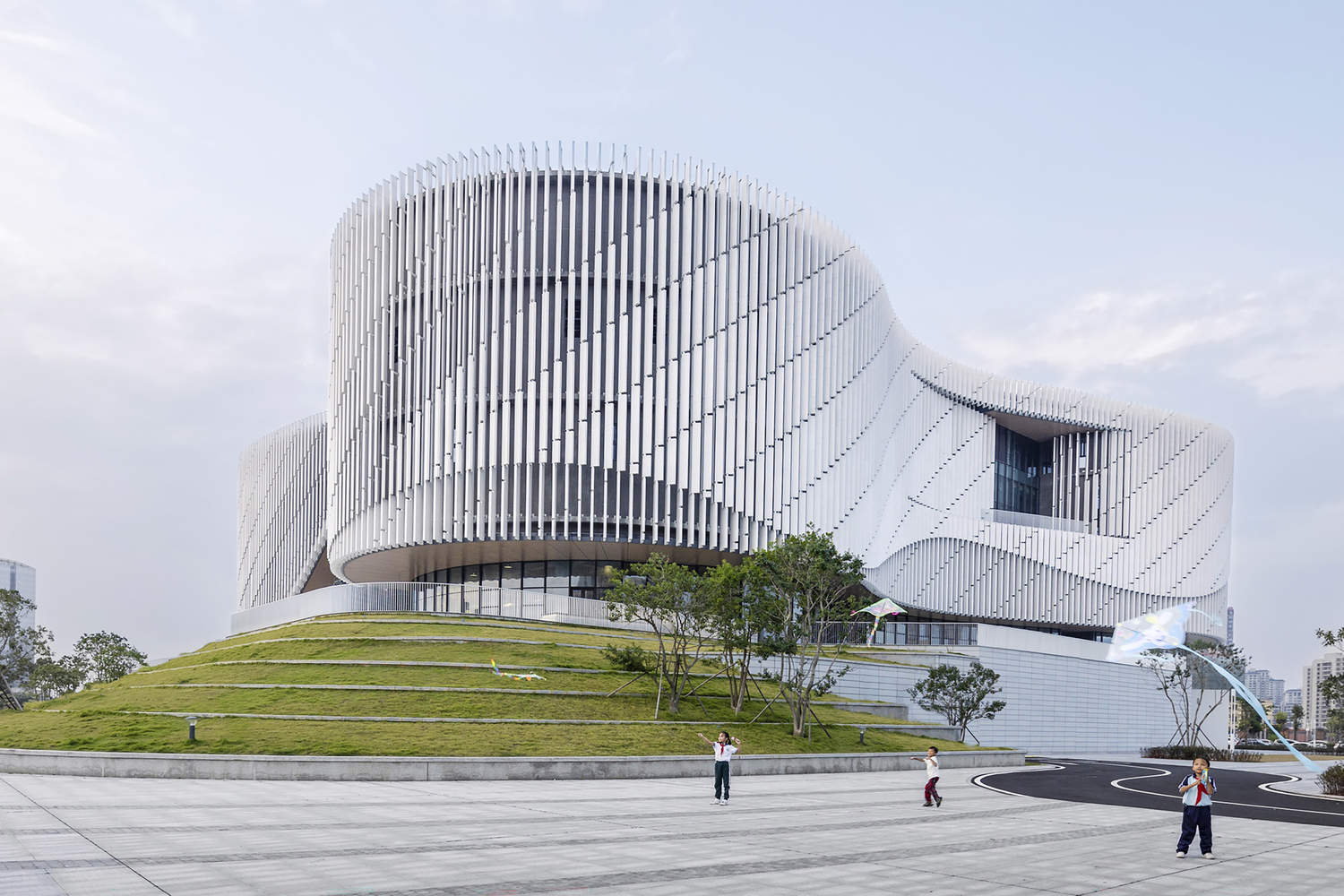
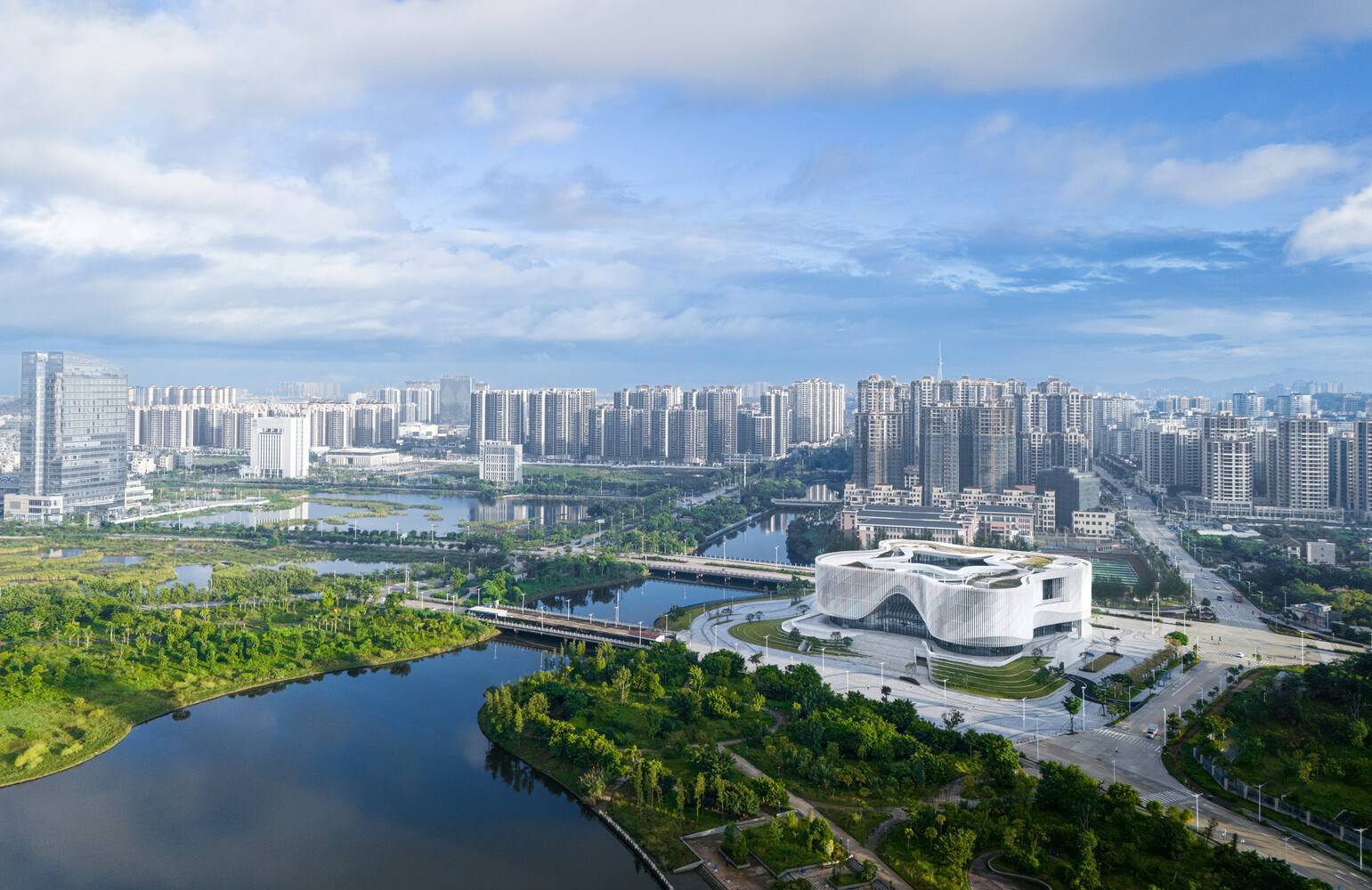
We hope the cultural center will not only serve as a landmark for the new district but also become a vibrant place that shares with the surrounding park and offers multiple experiences for citizens. The building podium extends towards Moyang Lake Park through green platforms, which feature gently sloping lawns of a pleasant scale. Functions such as cafes, book bars, and workers' cultural and sports activities are integrated into the podium. Citizens can freely enter, linger, and rest. Combined with the design of ornamental plants and stone seating steps on the platform, citizens can enjoy panoramic views of Moyang Lake and the river, and engage in various social activities on the platform, each finding their place without interference. The green platform accommodates diverse activities, becoming part of Moyang Lake Park, connecting people and activities in the cultural center and the park. This transforms the building from a closed traditional public cultural building into an activity space generally open to the community, stimulating vitality in the new urban area.
2.激发社区活力的开放平台
我们希望文化中心不仅被设计为新区的地标,也能成为与周边公园共享、为市民提供多重体验活力场所。建筑基座通过绿化平台的手法向漠阳湖公园延展打开,平台上设置尺度宜人的平缓草坡,建筑基座部分融合如咖啡、书吧、工人文体活动等功能。市民可以随意进入、停留、休息,结合平台上观赏植物与条石座阶的设计,市民不但可远观漠阳湖景和河流景色的全景视野,也可在平台上实现各种社交活动,各得其所又不干扰。绿化平台承载多样活动,成为漠阳湖公园的一部分,将文化中心和公园的人与活动连为一体,使建筑从封闭的传统文化公共建筑变成平时向社区开放的活动场所,激发新城区的社区活力。
© 徐勉
© 徐勉
3. A Passive Building Integrated with Parametric Design
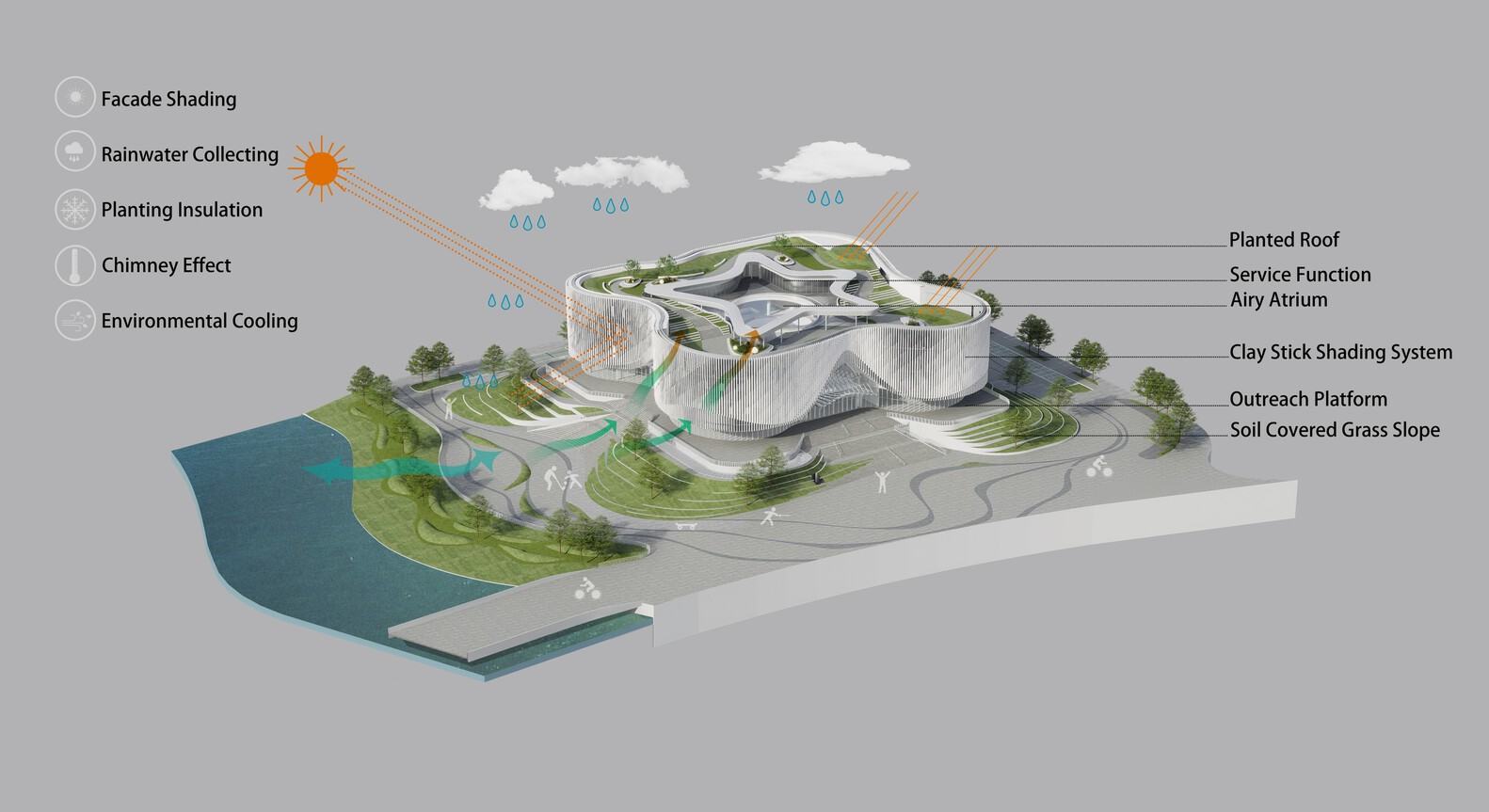
The design incorporates multiple passive building measures to reduce operational energy consumption, tailored to the characteristics of the subtropical coastal region with high solar radiation and a hot, humid climate, including:
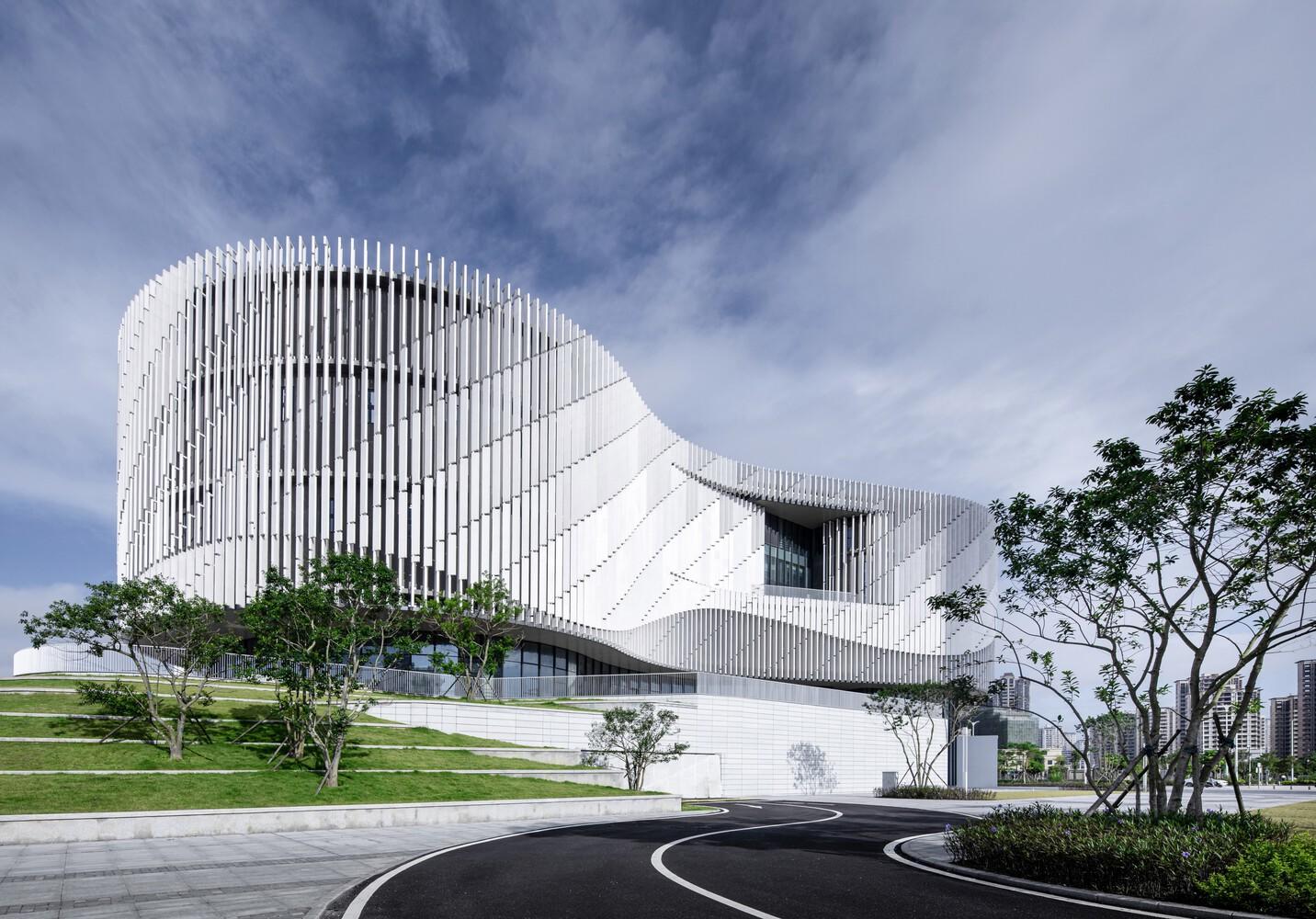
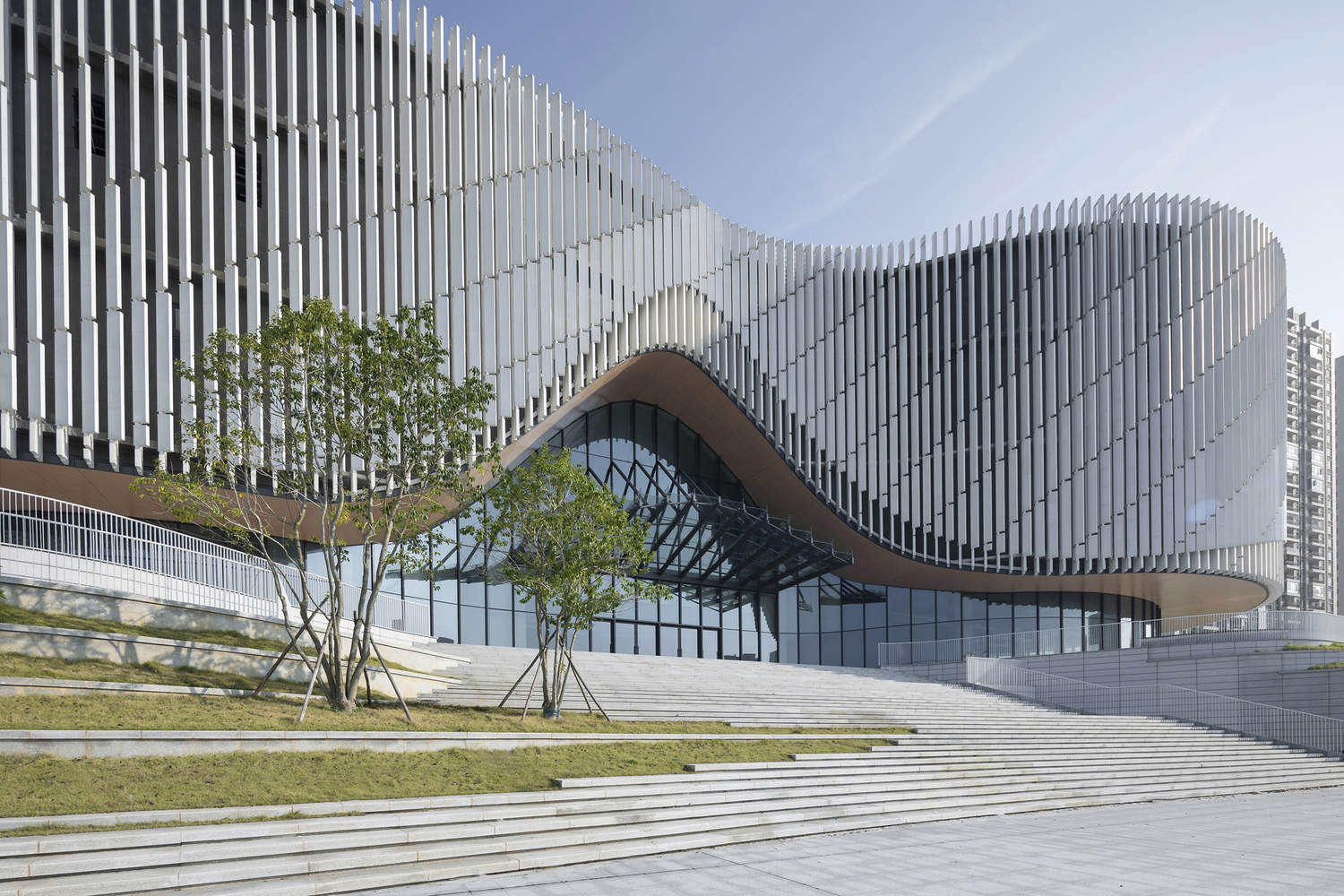
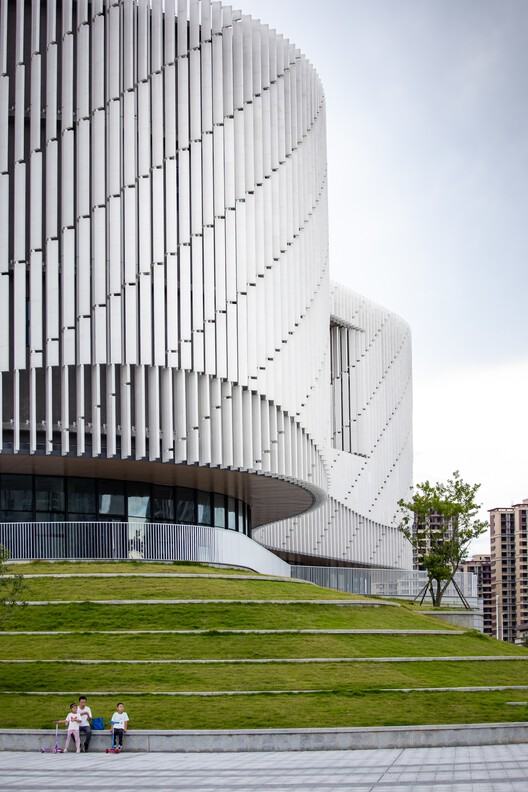
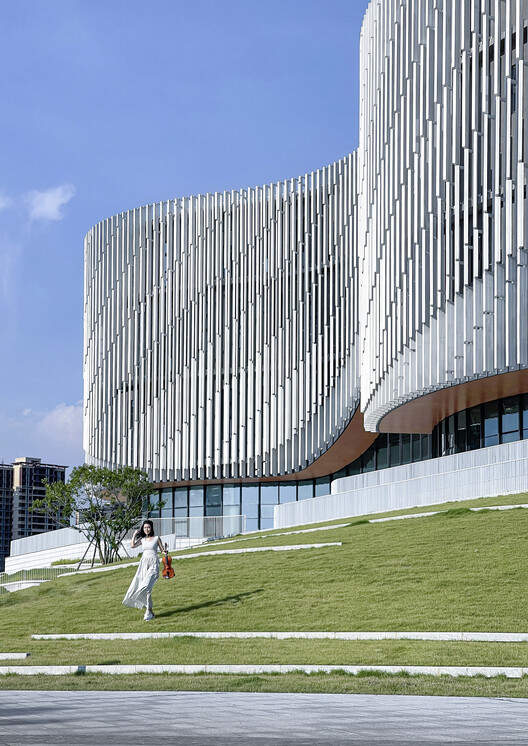
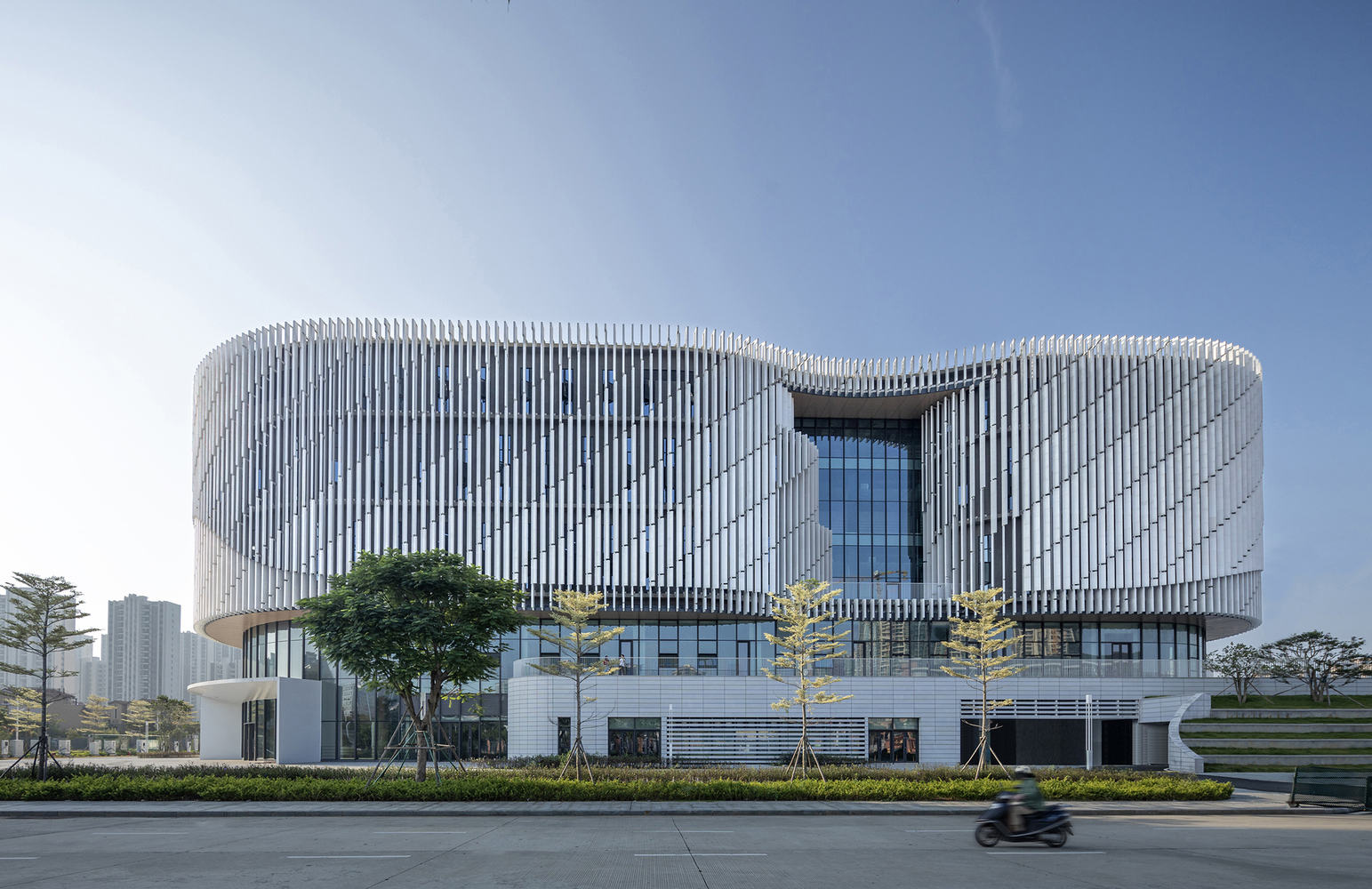
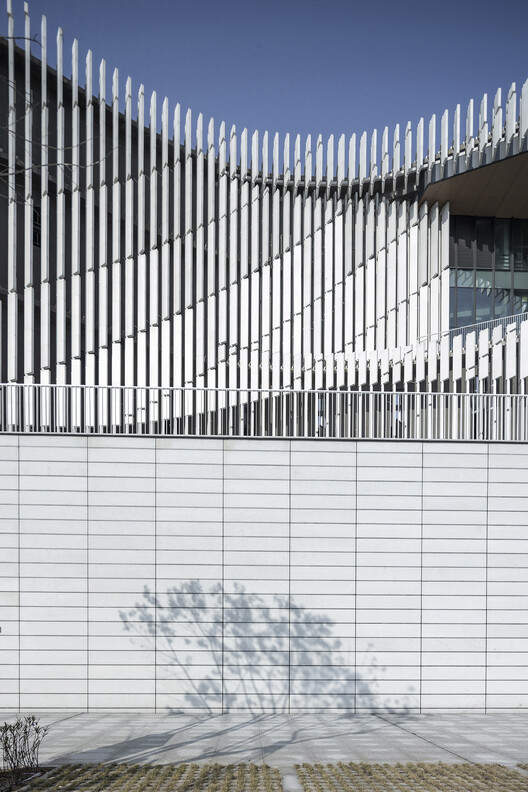
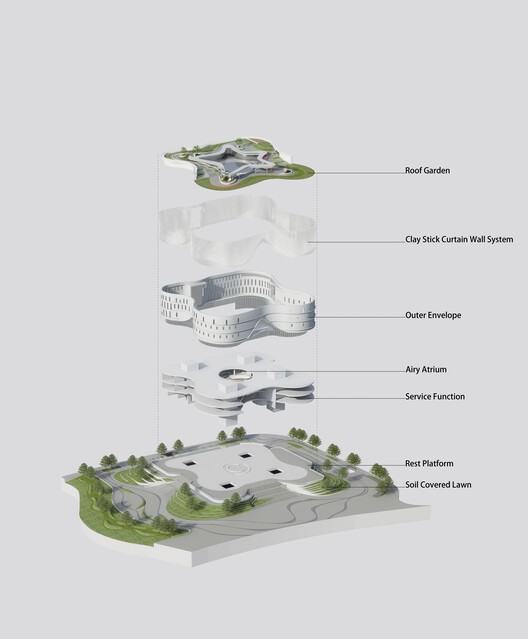
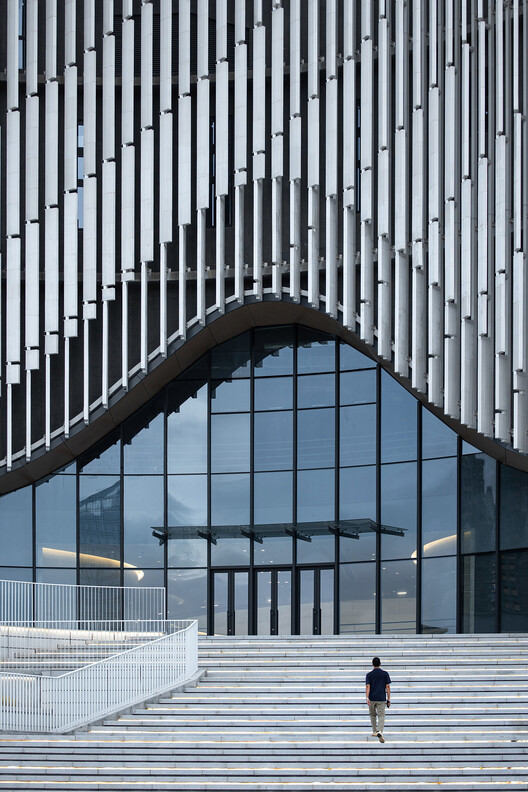
The vertical shading terracotta battens on the façade were a critical and challenging focus of the design. The lead design team developed a proprietary large-scale composite terracotta batten shading system. Combined with simulations of solar angle and radiation intensity on the building's various façades, a parametric positioning control system creates variations in the angle and height of the battens, achieving optimal shading, insulation, and daylighting effects in all directions.
3.融合参数化设计的被动式建筑
方案结合亚热带滨海地区高太阳辐射、炎热潮湿气候的特征,采用多项被动式建筑设计措施降低建筑运营能耗,包括:
立面的竖向遮阳陶棍是项目设计的重难点,主创团队设计了具有独创专利的大型复合陶棍遮阳系统,结合建筑各方向立面的阳光照射角度、辐射强度模拟计算,采用参数化的定位控制使陶棍在立面上形成不同角度、高度的变化,在各个方向实现最佳的遮阳、隔热和采光效果。
© 徐勉
Analysis Diagram
© 徐勉
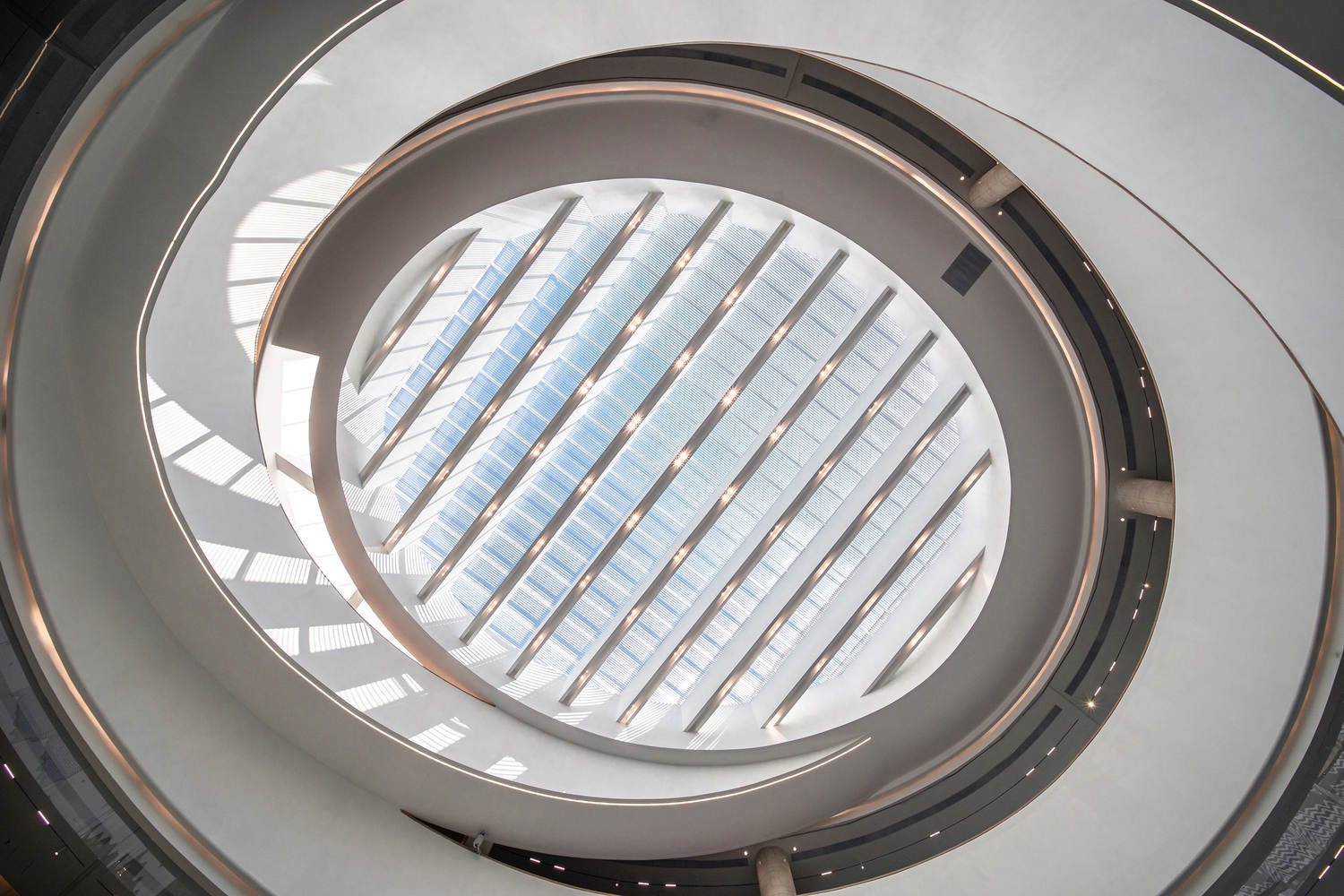
The building employs a passive layout that facilitates cooling through ventilation. In summer, the sea breeze from the south is cooled over the lake surface, bringing cool air to the building and lowering the temperature difference between the interior and exterior of the cultural center. The building features a ventilation atrium, main wind direction openings, and façade windows, allowing for natural ventilation during mild spring and autumn seasons, significantly reducing operational energy consumption. The earth-covered green podium, which also functions as a roof garden, serves as a bioretention area and is equipped with rainwater harvesting devices for landscape irrigation, achieving the ecological sustainability of a sponge city.
建筑采用有利于通风降温的被动式布局,夏季南向海风经过湖面降温,为建筑带来清凉的空气,降低文化馆内外环境温度;建筑设计有通风中庭、主导风向开口与立面开窗,春秋季过渡季节可采用自然通风,大幅降低运营能耗。基座覆土绿化既屋顶花园,除可作为生物滞留区域外,也设置雨水收集装置可用于景观植物灌溉,实现海绵城市的生态可持续性。
© 徐勉
© 徐勉
4. Regional Cultural Features Blending Mountains and Sea
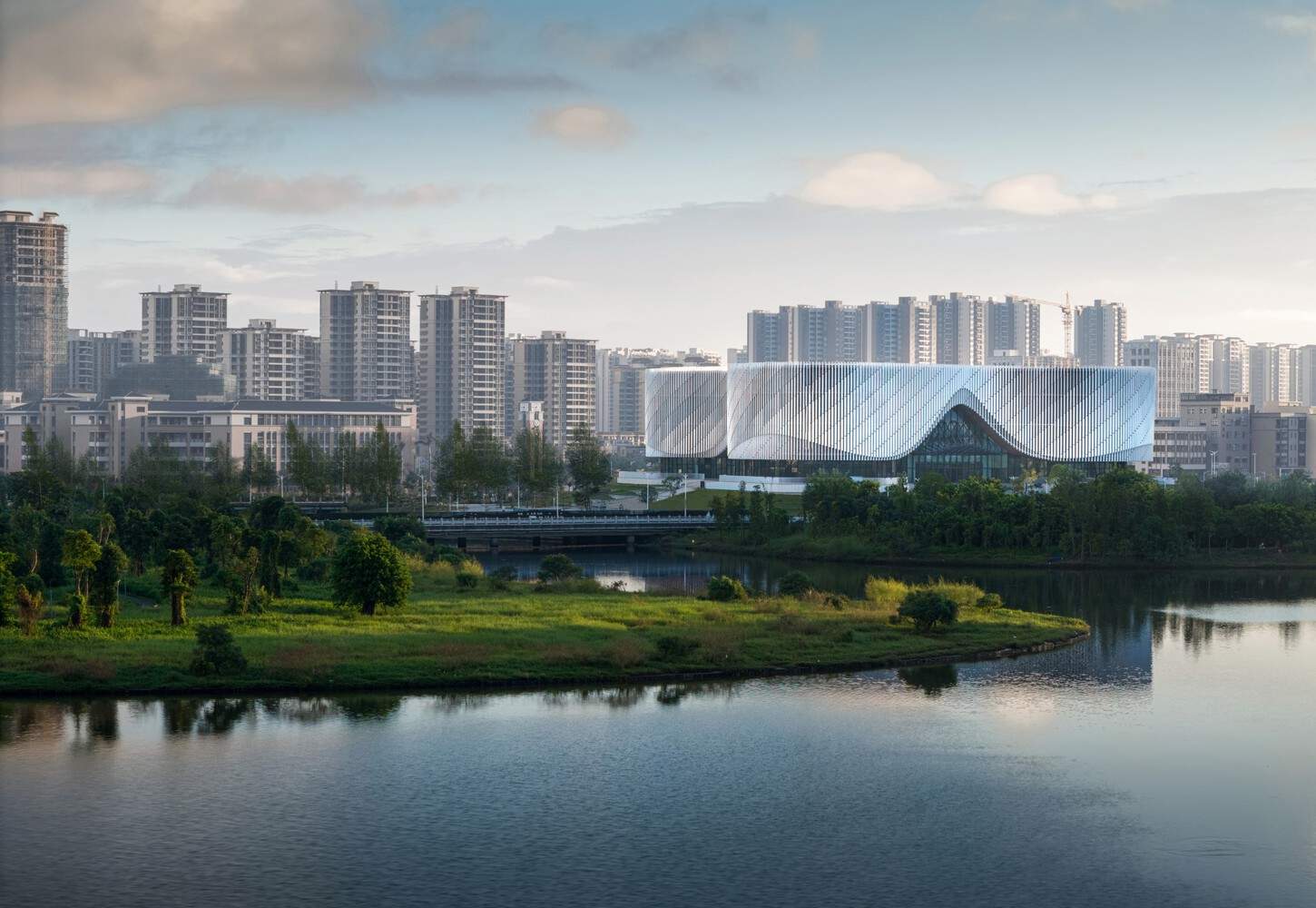
The integration of mountains and sea is Yangjiang City's most distinct geographical feature. The architectural form of the cultural center draws inspiration from Yangjiang's mountainous and maritime characteristics and culture. The design features a white main building mass above, evoking the image of the ocean, and a green platform below, abstractly representing mountainous terrain, complemented by flowing curved shapes symbolizing nature, thus creating the center's unique regional characteristics of mountains and sea.
4.山海相融的地域文化特色
山相融的环境是阳江市最显著的地理特征,文化中心建筑造型从阳江的山海城市特征与文化中汲取灵感,建筑设计了上部体量海洋意像的白色建筑主体和下部抽象山川元素的绿色平台,以及象征自然的流动曲线造型,形成了文化中心独特的山海地域特色。
© 徐勉
© 徐勉
The subtle planar form and contour control of the cultural center allow users, as they move around the building, to experience different forms and undulating contours depending on the viewing angle. Furthermore, the parametric texture of the façade battens creates rich and dynamic light and shadow variations under sunlight, resembling sails or waves moved by a gentle breeze from a distance, showcasing the regional characteristics and cultural confidence of this coastal city of Yangjiang.
文化中心微妙的平面外形与立面轮廓控制,令使用者环绕建筑时随着视角的变换,可体验到不同朝向各不相同的形体与高低起伏的轮廓变化。而参数化的立面陶棍肌理,在阳光的照射下带来丰富而充满动感的光影变化,远观彷如微风吹动的风帆与波浪,展现这阳江滨海城市的地域特色与文化自信。
© 徐勉
© 徐勉