融合地域文脉与可持续创新的建筑表达:本项目成功地将大阪“水都”的历史文脉——木与水的元素——进行了当代性的“重生”诠释。通过独特的膜结构屋顶和动态的“水幕”系统,建筑不仅呼应了地域文化,更将可持续发展目标(SDGs)融入了设计肌理。特别是大量采用大阪府当地采购的桧木,体现了对本土资源的尊重与低碳理念的实践,使建筑成为展示城市愿景和成长性的有力载体。
精妙的结构逻辑与包容性的空间组织:建筑在结构和空间布局上展现了高超的专业水准。椭圆形的有机重叠平面布局,创造了流畅无阻的动线,完美体现了极具包容性的设计哲学,确保所有访客都能获得平等的参观体验。支撑屋顶的DNA灵感木质螺旋柱,是结构美学与象征意义的完美结合。这种复杂曲面的实现,依托于先进的计算设计和球面几何学应用,解决了传统建造的难题,是工程技术与建筑美学融合的典范。
多维度的材料创新与光影体验:设计通过材料的选择和应用,极大地丰富了空间感受和能源效率。回收纸浆纱线编织物被用于过滤和柔化自然光,营造出中庭内静谧斑驳的光影氛围,这是对传统采光方式的创新。同时,悬挂的轻质钙钛矿太阳能电池横幅,预示了建筑能源自给的可能性和未来技术的集成。这种对本土木材、新型过滤材料以及前沿光伏技术的整合运用,标志着该项目在未来环境共生型建筑实践中的前瞻性。
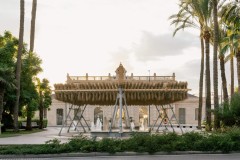
The pavilion is presented by Osaka Prefecture and Osaka City at the 2025 Japan World Expo in Osaka Kansai. With "REBORN" as its core theme, the pavilion aims to showcase the host city's vision by creating a next-generation environmental co-existence type building that contributes to achieving Sustainable Development Goals (SDGs) and a carbon-neutral society. Inspired by the history and culture of "Water City Osaka," which prospered based on wood and water, the pavilion reinterprets these elements to create a new architectural landmark that displays the charm and growth of Osaka to the world.
该展馆由大阪府与大阪市携手呈献于 2025 年日本大阪·关西世博会。展馆以“REBORN(重生)”为核心主题,旨在通过打造一座助力实现可持续发展目标(SDGs)与碳中和社会的下一代环境共生型建筑,彰显主办城市的愿景。受“水都大阪”以木与水为基而繁荣发展的历史与文化启发,展馆重新诠释这些元素,打造出一座全新的建筑地标,向世界展示大阪的魅力与成长。
© Tomoyuki Kusunose
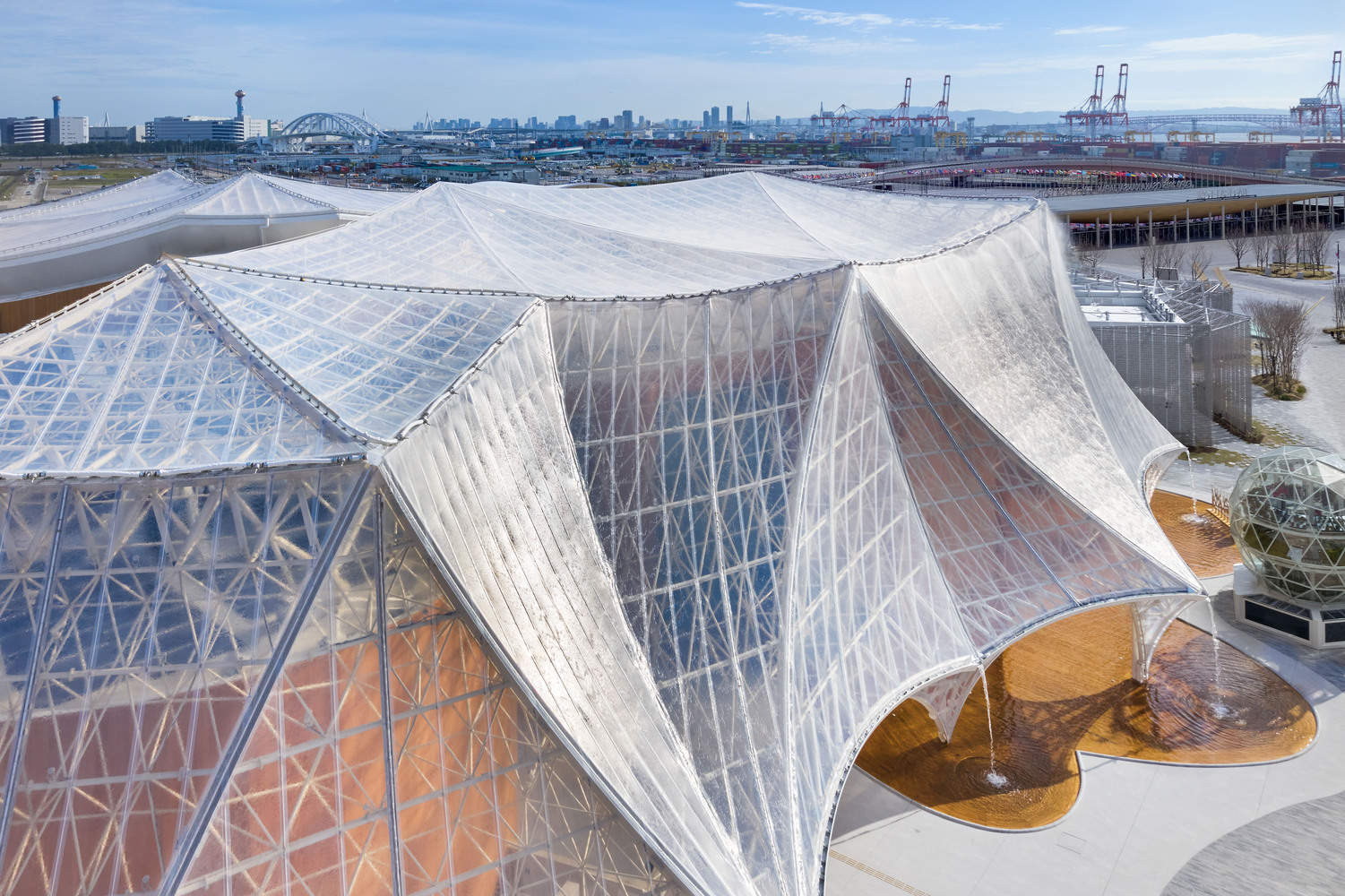
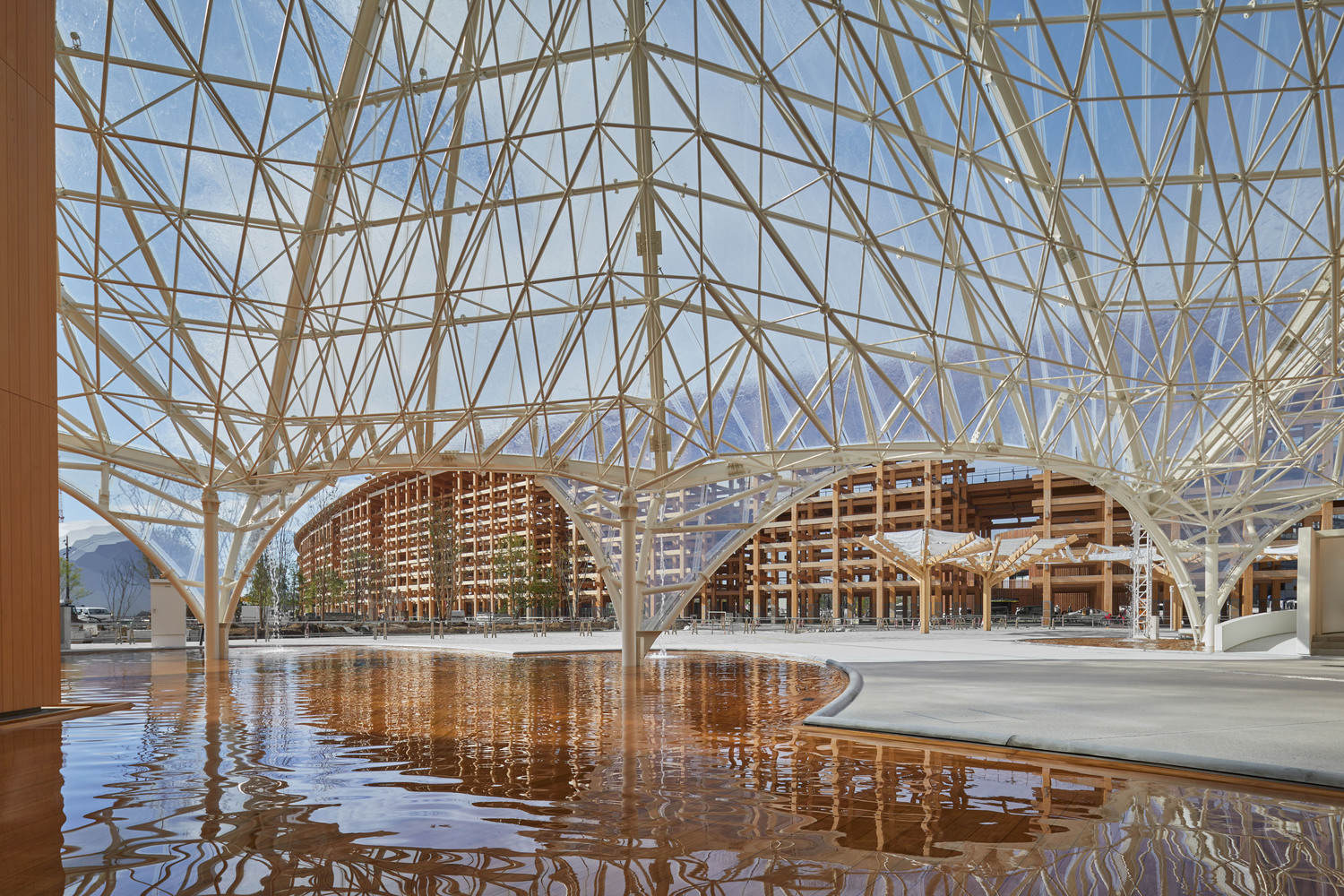
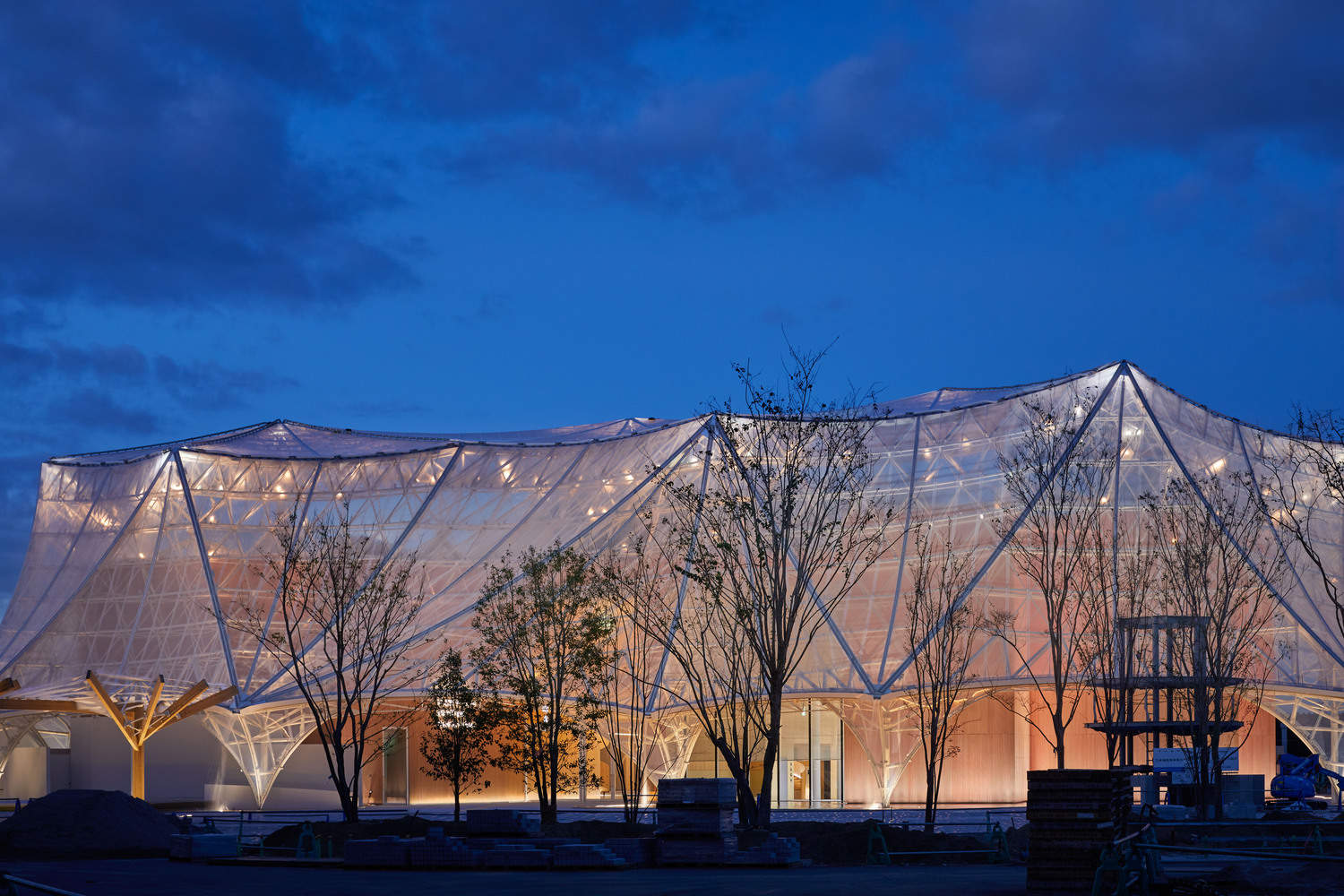
The pavilion features a distinctive membrane structure roof with uniquely shaped, non-identical sections, symbolizing the diversity and inclusivity of Osaka. The "Water Curtain" is formed by circulating water cascading from the roof into a pool below, which is then filtered and reused through a sustainable system. Both the interior and exterior decorations utilize cypress wood procured locally from Osaka Prefecture. The central atrium is bathed in soft, dappled light and shadow, creating a tranquil and pleasant spatial atmosphere where the warmth and fragrance of wood permeate, serving as a perfect symbol of relaxation and comfort.
这座展馆独具特色的膜结构屋顶,形态各异无一雷同,象征着大阪的多元包容。“水幕”由循环水从屋顶倾泻而下形成,水流落入下方的水池,经可持续系统过滤后循环再利用。展馆内外装修均采用大阪府当地采购的桧木。中央中庭沐浴在柔和的斑驳光影之中,营造出静谧宜人的空间氛围,木质的温润与芬芳弥漫其间,堪称放松与舒适的绝佳象征。
© Tomoyuki Kusunose
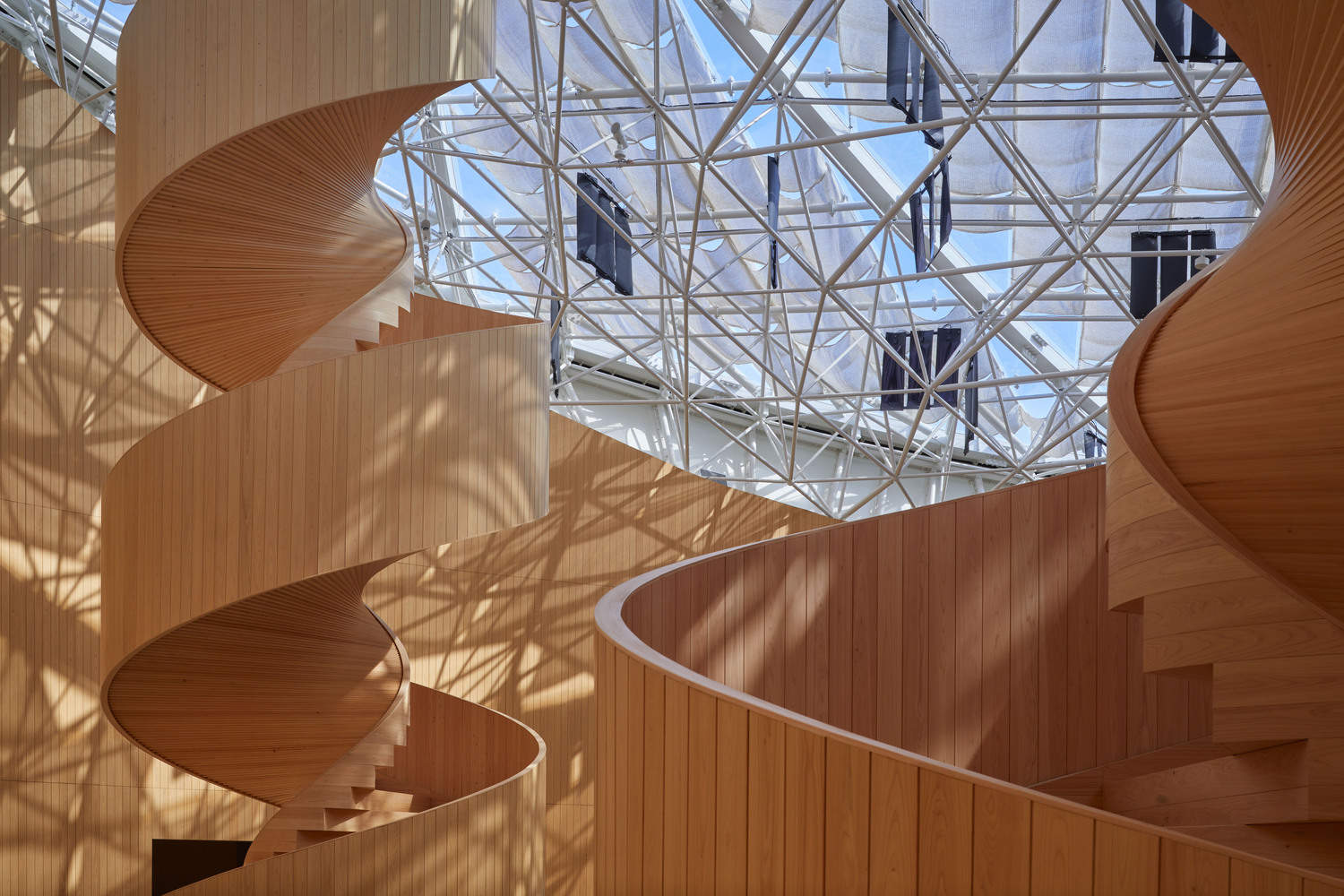
The atrium and exhibition spaces adopt an elliptical floor plan where the ellipses organically overlap. These elliptical areas are connected by gentle slopes, forming a smooth, barrier-free circulation path, ensuring that all visitors follow the same exhibition route—a highly inclusive spatial layout design. The wooden spiral column in the atrium, inspired by DNA, symbolically supports the variably shaped roof.
中庭与展览空间采用椭圆形平面布局,各椭圆有机重叠。这些椭圆区域通过缓坡彼此相连,形成一条流畅无阻的动线,确保所有访客都能沿同一展览路径参观 —— 此乃极具包容性的空间布局设计。中庭内那根灵感源自 DNA 的木质螺旋柱,象征性地支撑起形态各异的屋顶。
© Tomoyuki Kusunose
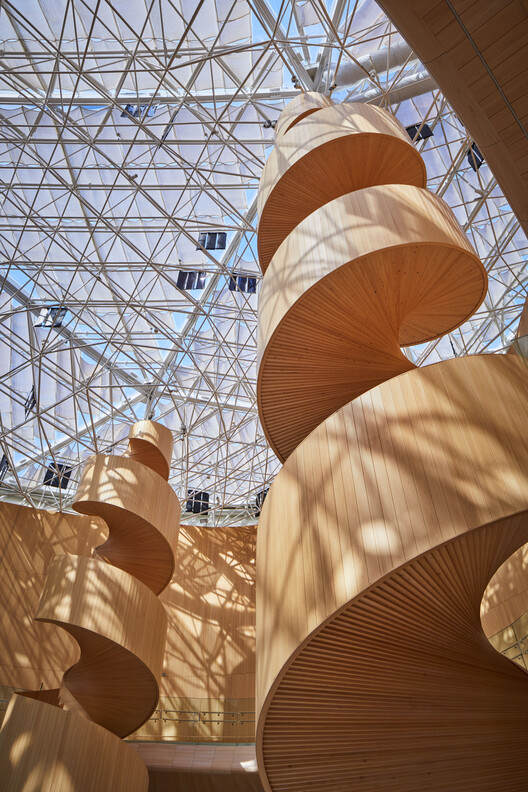
The wooden spiral column and all interior/exterior decorations utilize wood procured locally from Osaka Prefecture. To properly filter and softly diffuse the natural light from the roof, a new material was adopted—a textile-like fabric woven from yarn spun from recycled paper pulp. Furthermore, lightweight and flexible next-generation perovskite solar cells are suspended in banner form, showcasing a new way to utilize solar energy.
木质螺旋柱以及所有室内外装饰均采用大阪府当地采购的木材。为恰当过滤并柔和散射来自屋顶的自然光,我们采用了一种新型材料 —— 该材料由回收纸浆纺成的纱线编织而成,形似织物。此外,轻质柔韧的下一代钙钛矿太阳能电池以横幅形式悬挂,展现出太阳能利用的全新形式。
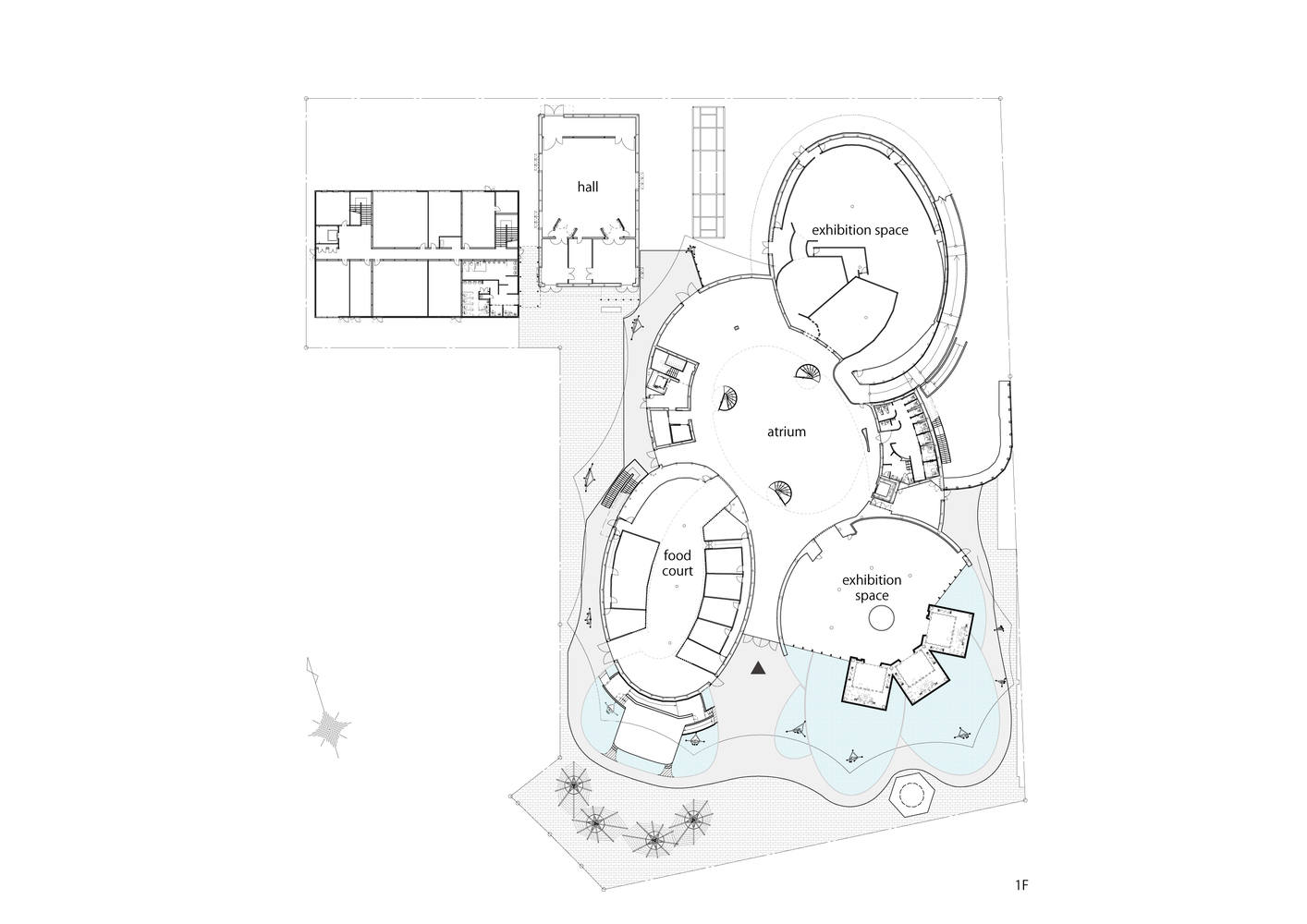
First Floor Plan
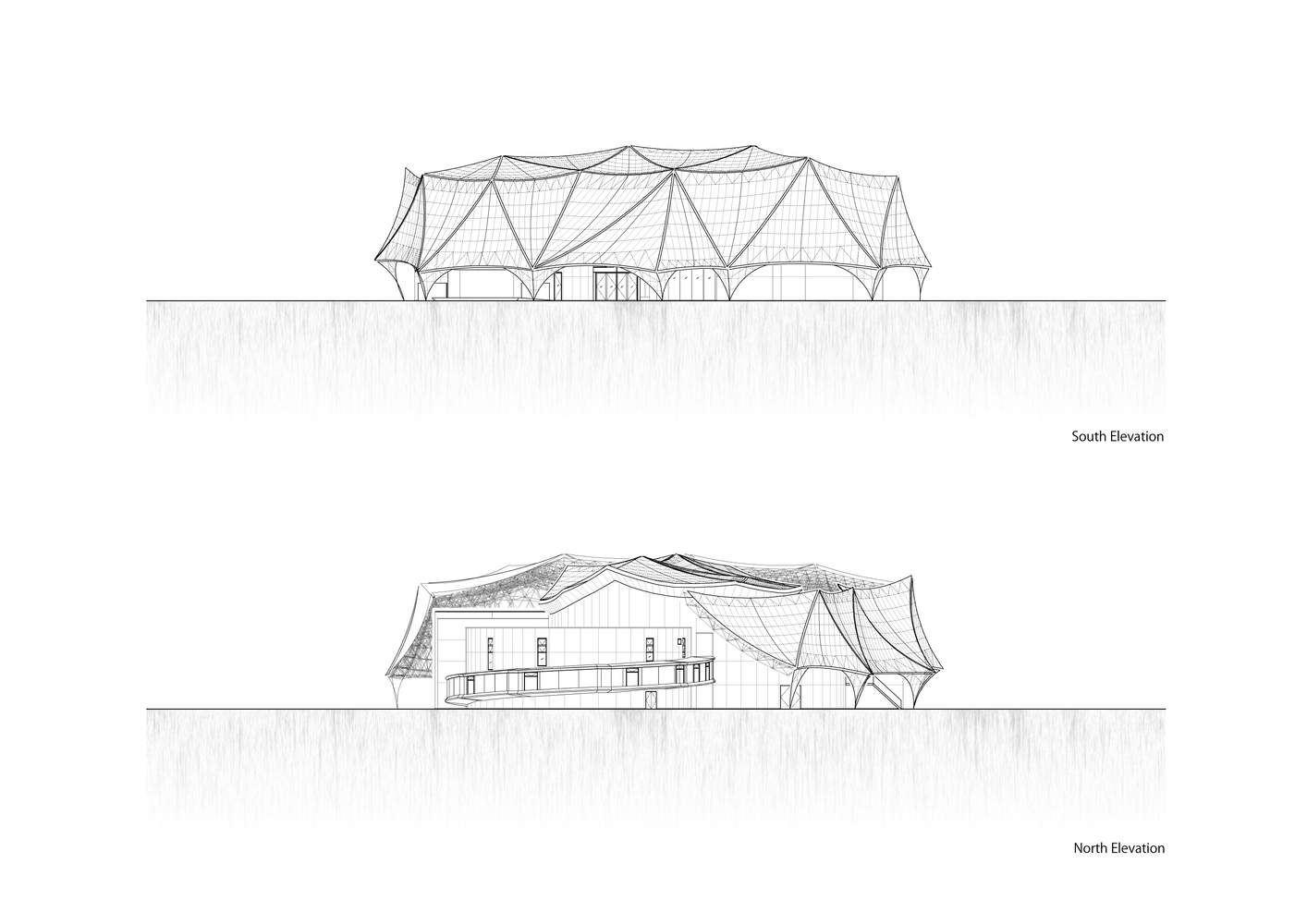
Elevation
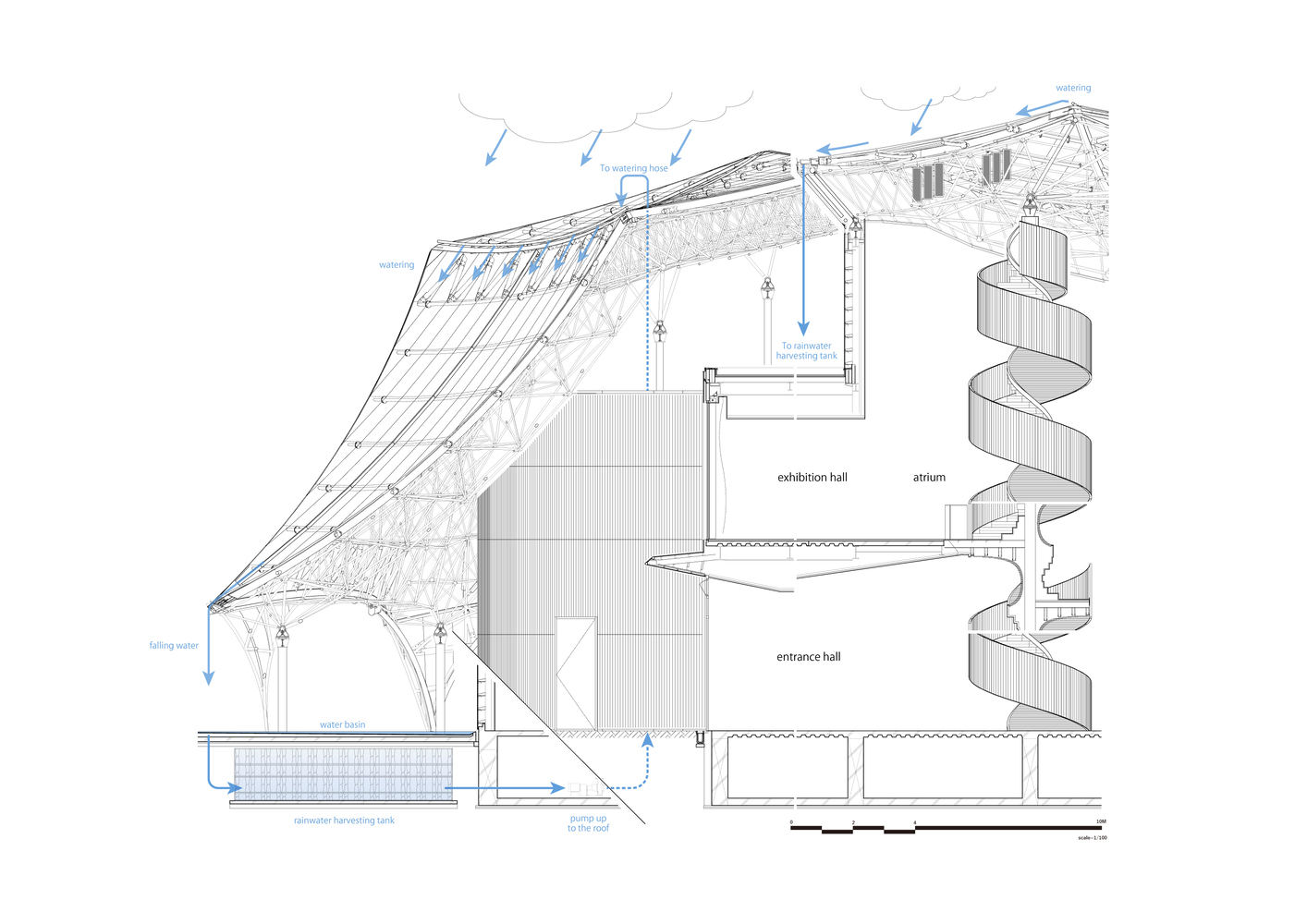
Detail Section
A new design method utilizing computational design was employed to achieve the complex shapes. Each curved surface of the membrane structure roof is composed of spherical segments cut from spheres of different radii. By utilizing spherical geometry, it became easier to fit the transparent membrane material and efficiently arrange the truss structure. The three-dimensional model we developed was used to simulate the effects of the "Water Curtain" and environmental conditions.
为实现复杂造型,我们采用了借助计算设计的全新设计方法。膜结构屋顶的每个曲面均由不同半径球体经裁切后得到的球面片段拼接而成。运用球面几何学,我们得以更便捷地贴合透明膜材,并高效布置桁架结构。我们开发的三维模型被用于模拟“水幕”效果及环境条件。
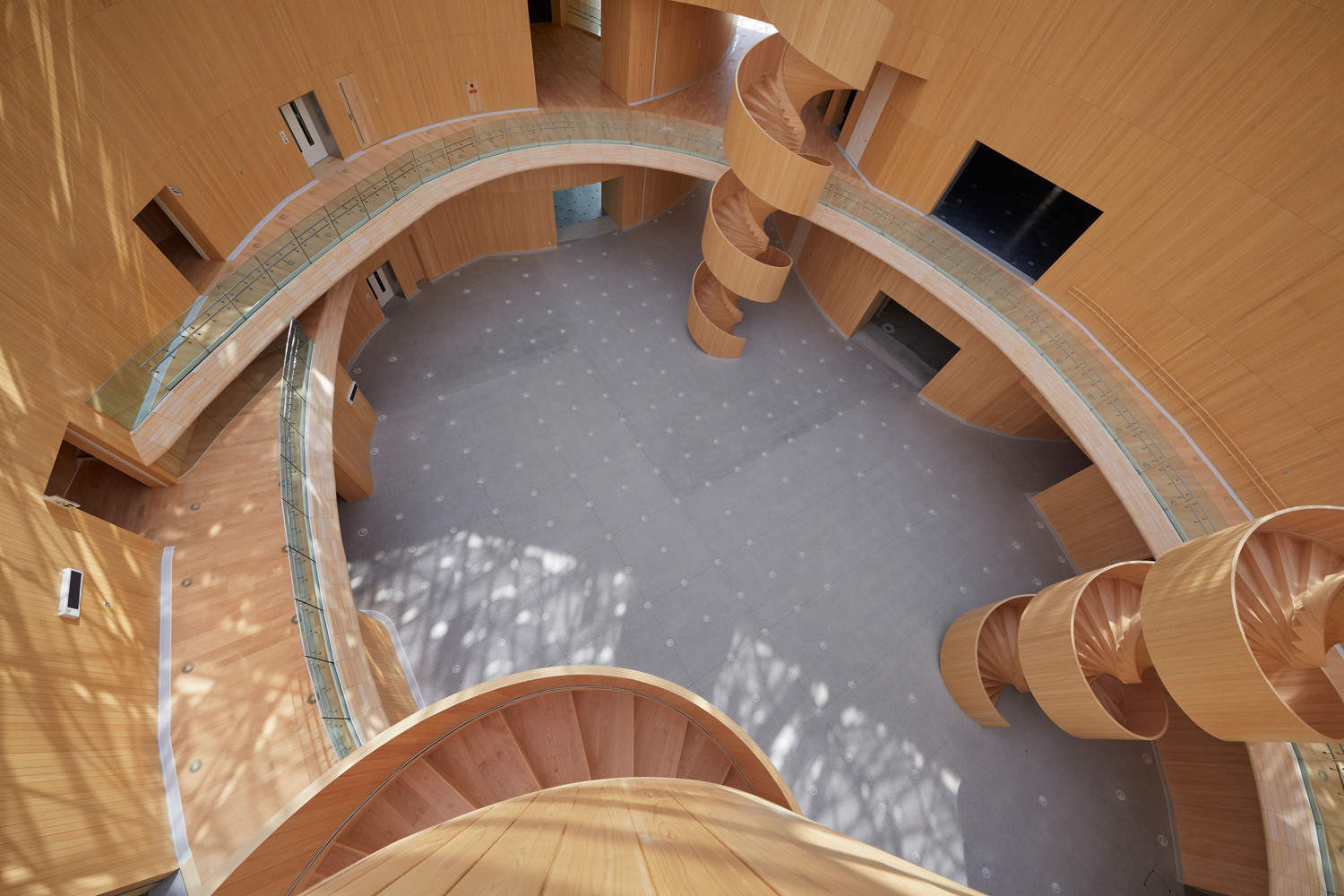
© Tomoyuki Kusunose
The wooden spiral columns supporting the membrane roof feature a double helix shape, inspired by the structure of DNA. One of the major challenges was realizing these complex curved surfaces using wood. To balance aesthetics and cost-effectiveness, we minimized the use of bent wood, primarily employing flat wooden components to achieve the double helix structure.
支撑膜结构屋顶的木质螺旋柱采用双螺旋造型,灵感源自 DNA 结构。其中一大挑战在于运用木材打造这些复杂的曲面。为兼顾美观与成本效益,我们尽量减少弯曲木材的使用,主要采用平面木质构件来实现双螺旋结构。
© Tomoyuki Kusunose
As a symbol of progress, the Osaka Medical Healthcare Pavilion perfectly embodies the theme of "REBORN," heralding a future where life, sustainability, and innovation converge.
大阪医疗保健馆作为进步的象征,完美诠释了“REBORN(重生)”这一主题,昭示着一个生命、可持续性与创新交相辉映的未来。
© Tomoyuki Kusunose