修旧如旧与主题线索的有机融合:该项目最大的亮点在于其“整体修旧如旧、局部微更新”的改造策略。建筑师成功地在保留原有街区百年历史风貌和丰富历史印迹的基础上,植入了以“陶”为主题的空间线索。这种处理方式既是对历史文脉的尊重和延续,避免了过度干预带来的割裂感,又通过主题元素的植入,明确了文化艺术中心的身份和参观体验路径,实现了历史保护与当代功能活化的有机统一。
多重历史建筑的差异化精准修复:项目涉及四栋年代、结构和形式各异的建筑,设计团队展现了高超的专业判断力。他们基于详细的测绘、结构检测和价值评估,为每栋建筑制定了差异化的修复策略——从 1 号楼恢复原始标语的清水砂浆面层,到 2 号楼的材料保留与内部功能微调,再到 3 号楼的结构加固与空间开放,以及 4 号楼对内部结构的集约化处理。这种“量身定制”的微更新方式,精准地平衡了历史真实性、结构安全性和未来使用需求,是高难度文保改造的典范。
轻介入的公共空间叙事系统:建筑师通过在建筑群之间植入一套由陶砖和钢架构成的“新流线系统”,巧妙地整合了原有的内院、露台和新增的屋顶空间。这套系统不仅清晰地界定了导向、会客、工作室等功能分区,更以轻盈、可替换的方式(如钢架加膜装置)激活了户外核心公共区域。这种手法既尊重了场地原有的场所精神,又以现代的、具有强烈“陶”主题视觉指向性的设计语言,完成了对沉寂街区的有效激活和视觉提升。
In the Foshan Guanyao Culture and Art Center (Guanyao Three Treasures) project, the architects attempted to preserve the original streetscape through an approach of overall restoration with minor localized updates, while inserting spatial clues themed around "pottery" as a tour experience path. This provides a spatial foundation for artists, curators, and operators, ultimately realizing the vision of using ceramic culture and art to drive related business development and revitalize the historic block.
在佛山官窑文化艺术中心(官窑三宝)项目中,建筑师尝试用整体修旧如旧,局部微更新改造的方式保留原街区的风貌,同时插入“陶”主题的空间线索作为参观体验路径,为艺术家、策展人和运营方提供空间基础,最终实现以陶瓷文化艺术带动相关业态发展以及激活历史街区的设想。
© 颜翘楚
© 柯剑波
Ceramic artist Li Jianshen selected this group of inconspicuous buildings on the north side of Yiyuan West Road in Guanyao Town, Nanhai District, Foshan, as the future Foshan Guanyao Culture and Art Center in early 2023. Every building and object on the site seemed to have been sealed for many years, awaiting activation.
陶艺家李见深在 2023 年初选定这个位于佛山南海区官窑镇的驿园西路北侧尚不太起眼的一组建筑作为未来官窑文化艺术中心的时候,这里的场地中的每个建筑和物件都像是被尘封多年静待开启。
© 柯剑波
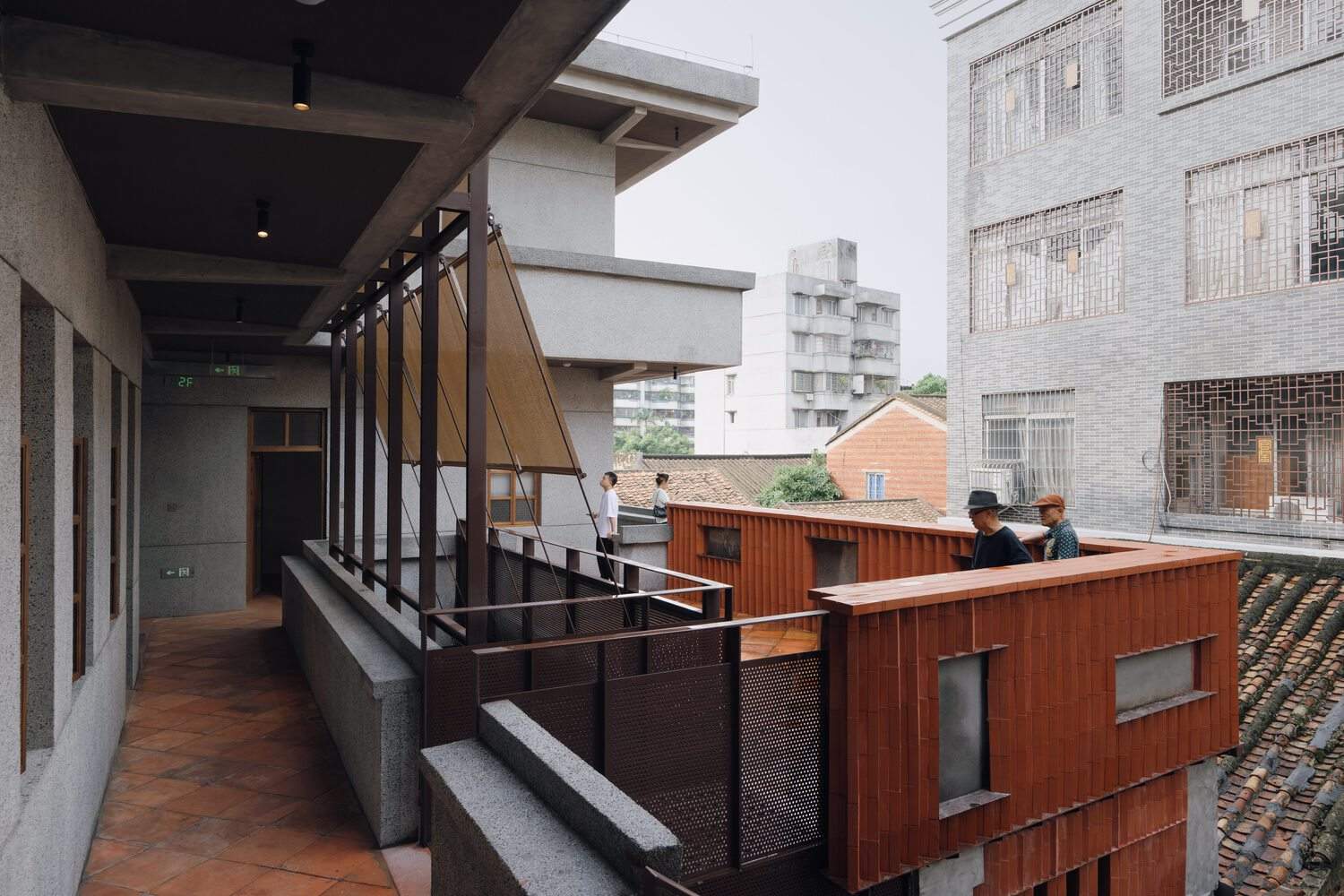
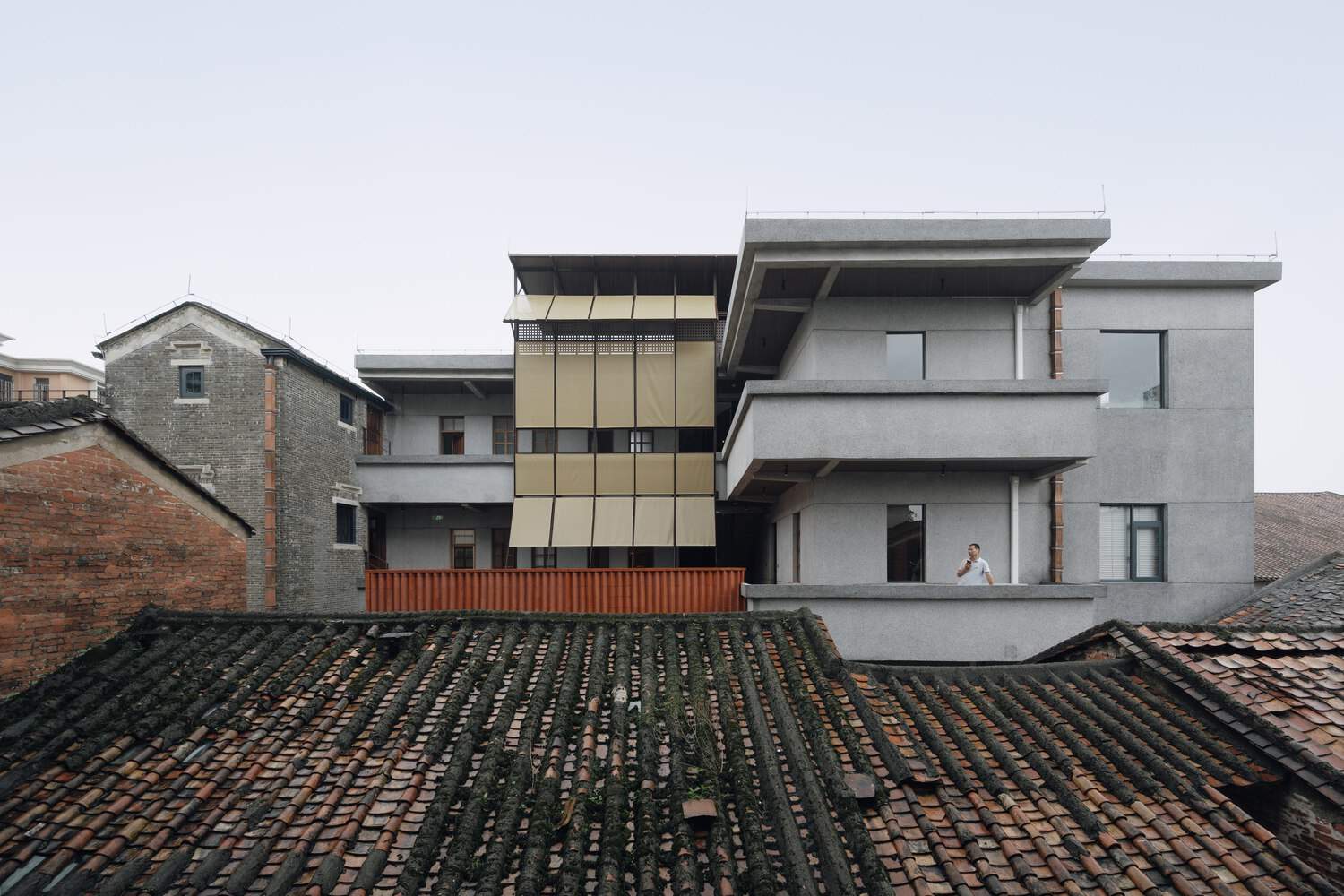
The complex has a total area of about 865 ㎡, composed of 4 individual buildings with varying construction dates and forms—Building 1, the former site of the Pearl River Column headquarters, built in the early 20th century, is a typical Republican-era building combining Western style with local culture; Building 2, constructed after the founding of New China, is a three-story building with an exterior corridor structure; Building 3 is a single-story small structure with a reinforced concrete frame added in recent years; and Building 4 is a single-story private residence with a brick-wood structure of unknown construction date. These four buildings enclose a narrow inner courtyard, which, together with the small terrace on the roof of Building 3, forms the core outdoor public space in the area.
该组建筑总面积约 865 ㎡,共由 4 幢单体组成,其建造年代和形式各异—— 1 号楼珠江纵队队部旧址建于 20 世纪初,是一幢典型的西方样式与本土文化结合的民国建筑;2 号楼建于解放后,是一幢外廊式砖混结构的三层建筑;3 号楼是一幢近年加建的混凝土框架结构的单层小型建筑;4 号楼则是建造年代不详的砖木结构的单层民宅。这 4 幢建筑共同围合出一个狭长的内院,其与 3 号楼屋顶的小露台共同构成了区域内的户外核心公共空间。
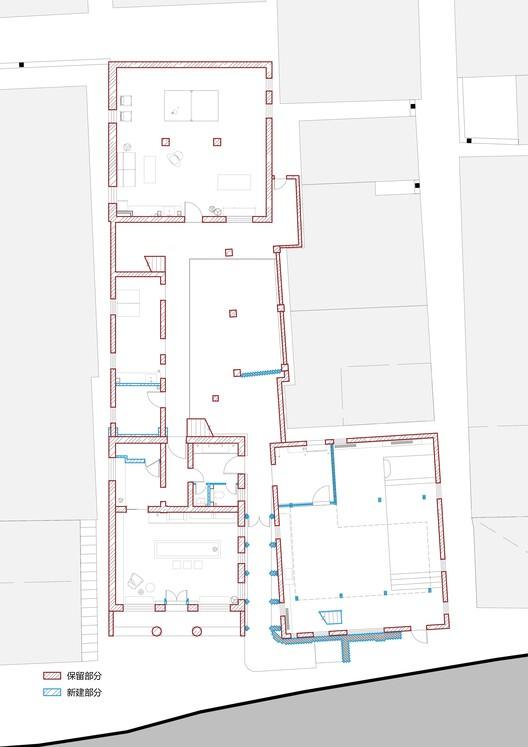
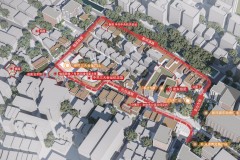
改造与保留平面图
The "Yiyuan West Road" at the entrance of the complex has been a prosperous post road for thousands of years, and the complex's construction history spanning hundreds of years has become an important characteristic of the area. It is like an open-air architectural museum, completely and continuously preserving architectural styles from different periods, overlaid with traces of life left by different uses in recent decades, including a police station and private residences. Any cross-section taken records a heavy hundred-year architectural history.
建筑群门口的“驿园西路”自千年前已是繁华的驿道,建筑群纵跨百年的建成历史也成为区域的重要特征。这里就像是一个露天的建筑博物馆,完整不间断的保留了各个时期的建筑样式,叠加近几十年不同使用功能——包括派出所、民宅留下的生活印际,随便切一刀的断面都记录着厚重的百年建筑史。
© 颜翘楚
© 柯剑波
Following detailed surveying and structural testing of each building, the design team formulated different restoration and renovation strategies for the existing structures based on historical style value assessment and potential future uses. Determining which historical period the exterior of the heritage building should be restored to was crucial: should it be restored to its original appearance upon completion based on historical data, or should traces generated during its use be preserved? In this project, the architects chose the latter in most areas, only repairing and adjusting parts where safety was compromised.
经过对每幢建筑详细的测绘以及结构检测,依据历史风貌价值评估和未来使用的可能性,设计团队针对现存各建筑制定了不同的修复与改造策略。其中历史建筑的外观要恢复到哪个历史时期非常重要。是查询历史资料恢复到其刚建成时的原始外观,还是保留其使用过程中产生的各种痕迹?在这个项目中,建筑师在大部分的区域选择了后者,仅对安全性出现问题的部位进行了修复和调整。
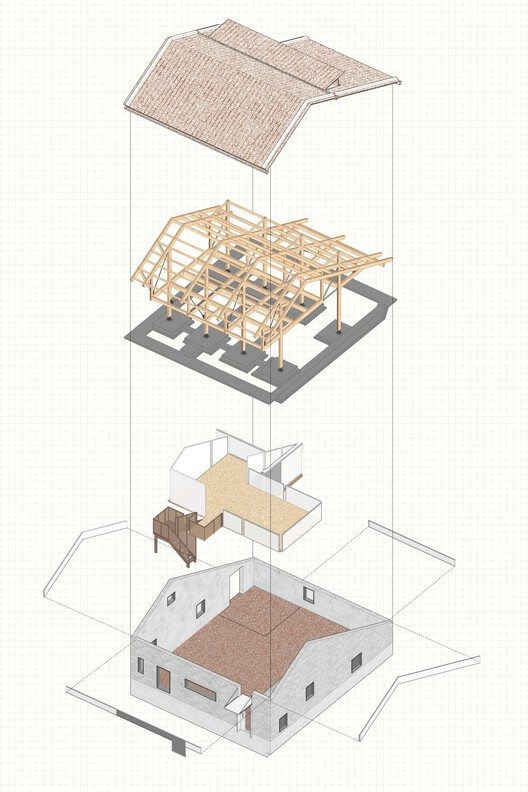
分析图
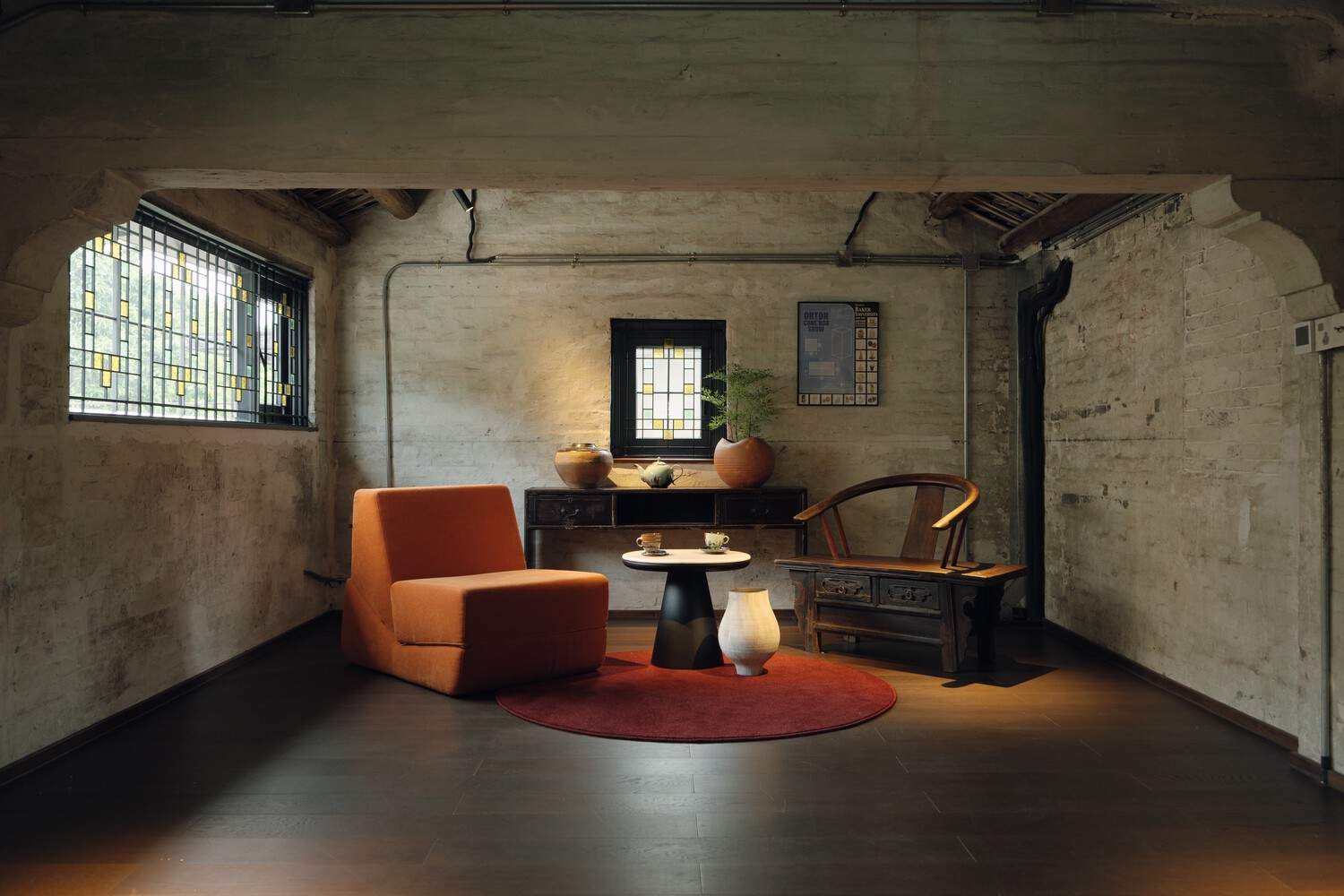
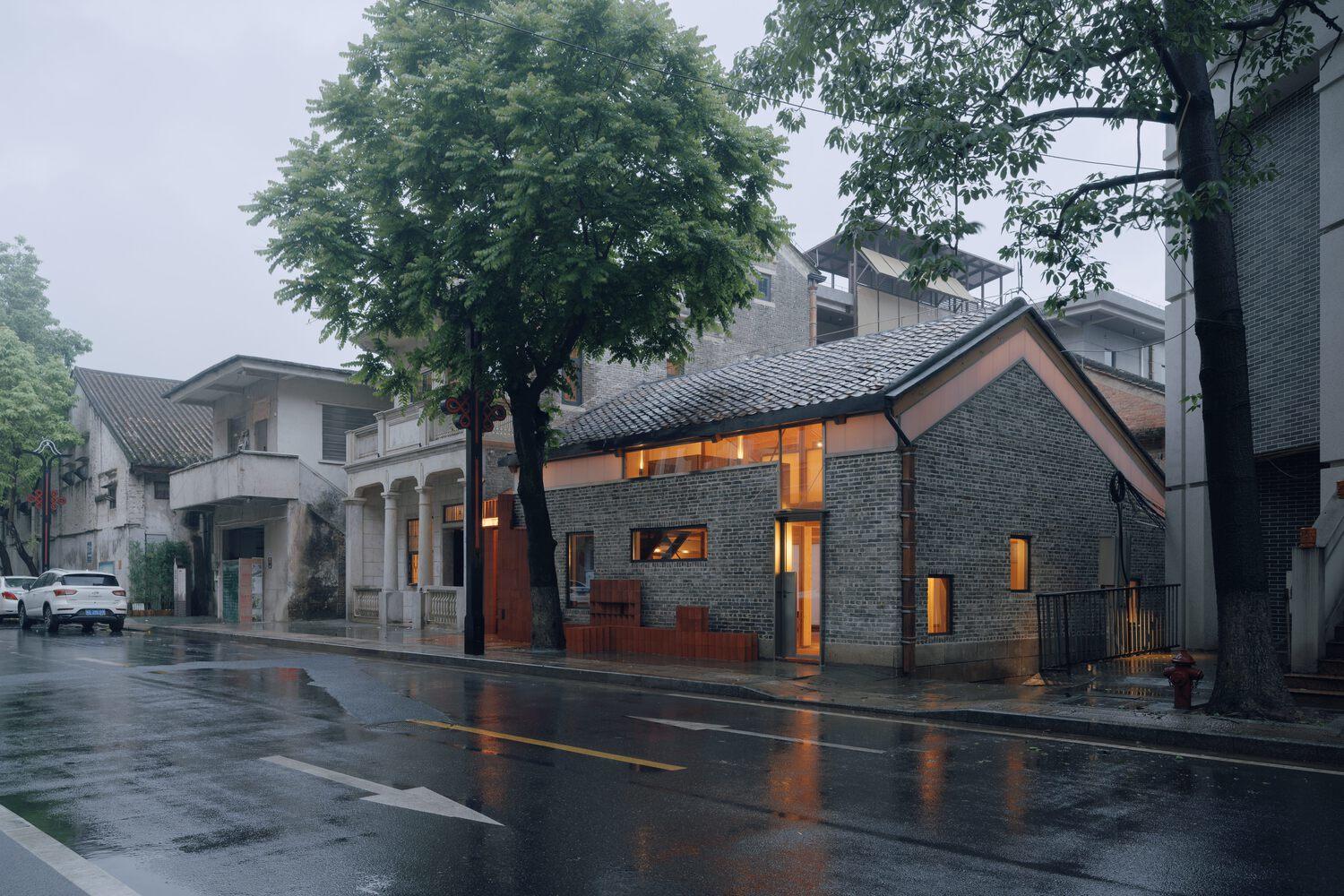
Building 1, the former site of the Pearl River Column headquarters, primarily underwent cleaning and restoration. The external deteriorated textured paint layer on the south facade was cleaned with a water gun, revealing the original cement mortar layer underneath along with faint slogans painted during various historical periods. Damaged parts of railings and window frames were meticulously surveyed and mold-made using existing parts to ensure consistency between repaired and preserved sections. Termite control and steel beam reinforcement were performed on the internal floor slabs and wooden beams, replacing rotted timber structures.
1 号楼珠江纵队队部旧址以清洗及修复为主。南立面建筑外层破坏风貌的真石漆面层被水枪清洗干净,露出内部的原始水泥砂浆面层及各历史时期涂刷的隐约可见的标语。栏杆、窗框破损处均进行了详细的测绘和实物开模,使修复部分与保留部分保持一致。内部楼板与木梁进行白蚁防治及钢梁加固,替换已经朽烂的木构。
© 柯剑波
Building 2 underwent exterior restoration and internal spatial adjustment. The original building was mainly brick-concrete structure, with some frame structure parts. Its internal layout had small spans, making it difficult to use as a public space. Therefore, the designers slightly adjusted the internal layout to meet the functional needs of artist residency and accommodation. The original exposed aggregate plaster material was retained on the exterior, with repairs made to locally damaged areas.
2 号楼进行了外观修复及内部空间调整。原建筑主要是砖混结构,局部为框架结构。其内部布局开间较小,较难作为公共空间使用。因此设计师微调了内部空间布局,使其满足艺术家驻访起居住宿的功能需求。建筑外部保留原始的水刷石材料,对局部破损处进行修复。
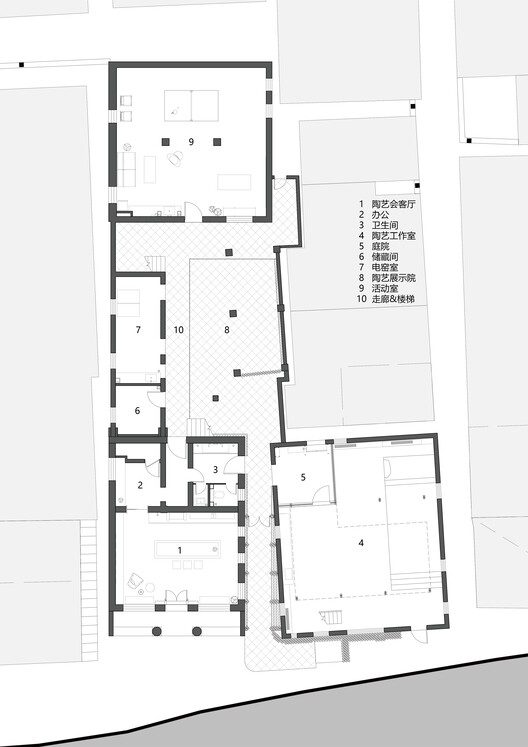
一层平面图
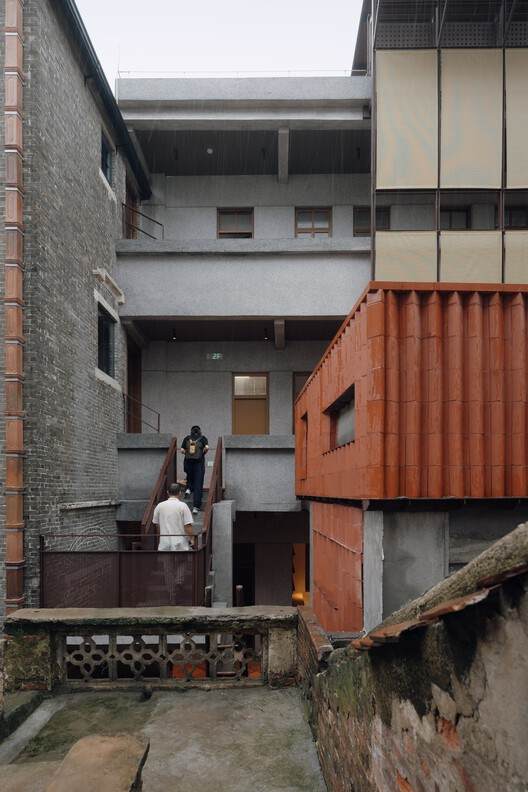
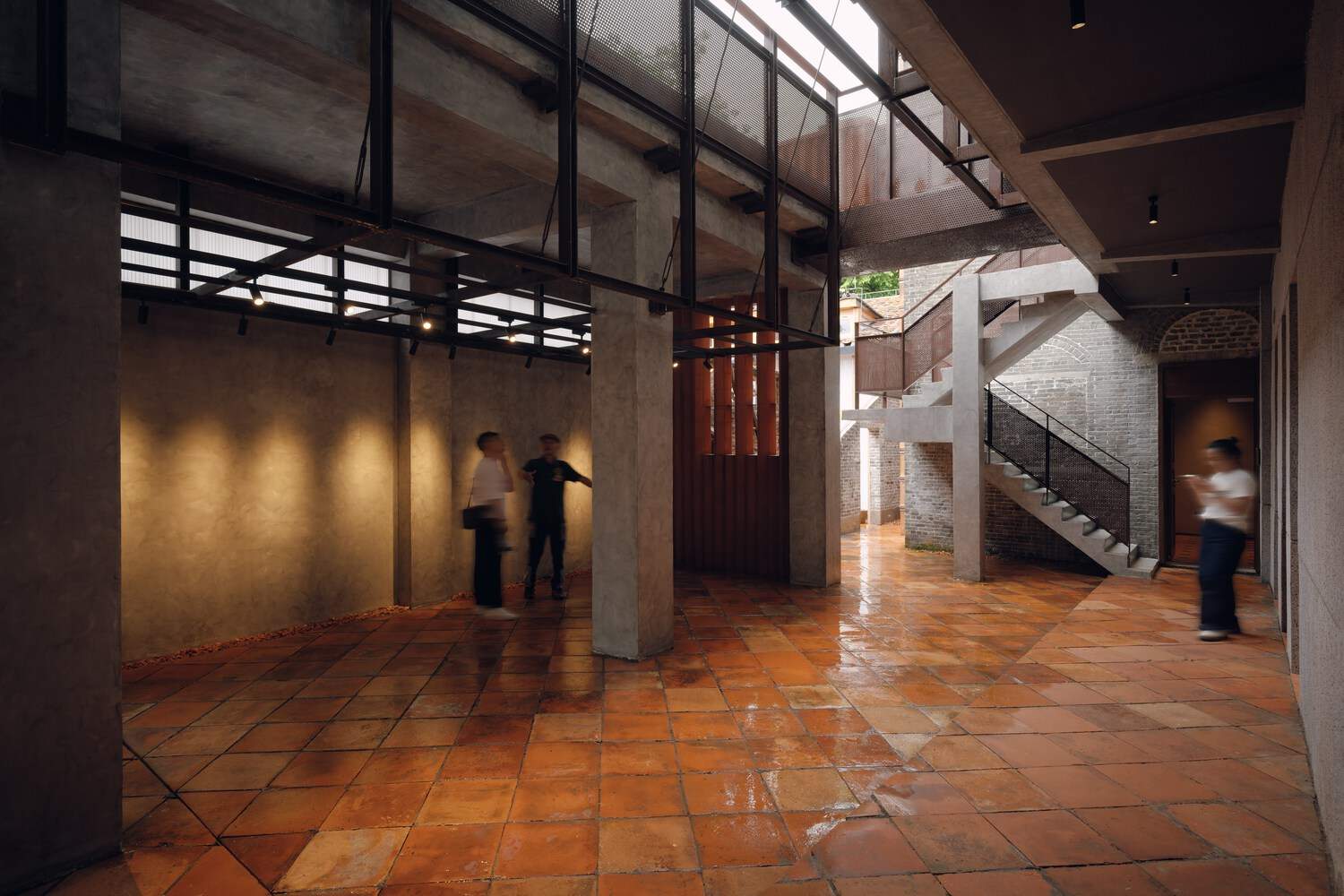
Building 3 had the doors and windows between the original frame columns removed, opening up the internal space to connect with the external courtyard. The original reinforced concrete beams, slabs, and columns were reinforced to allow the roof to bear more people and activities. The staircase, which acted as a visual counterpart to the courtyard, was preserved through the efforts of the designers and constructors, continuing to be a visual focal point for the entire area after reinforcement.
3 号楼拆除了原框架柱间的门窗,开放建筑内部空间,使其与外部院落相通。加固原钢筋混凝土结构梁板柱,使屋面能承载更多人群和活动。作为院落对景的楼梯通过设计师与施工方的努力被保留了下来,经过加固后继续成为整个区域的视觉焦点。
© 柯剑波
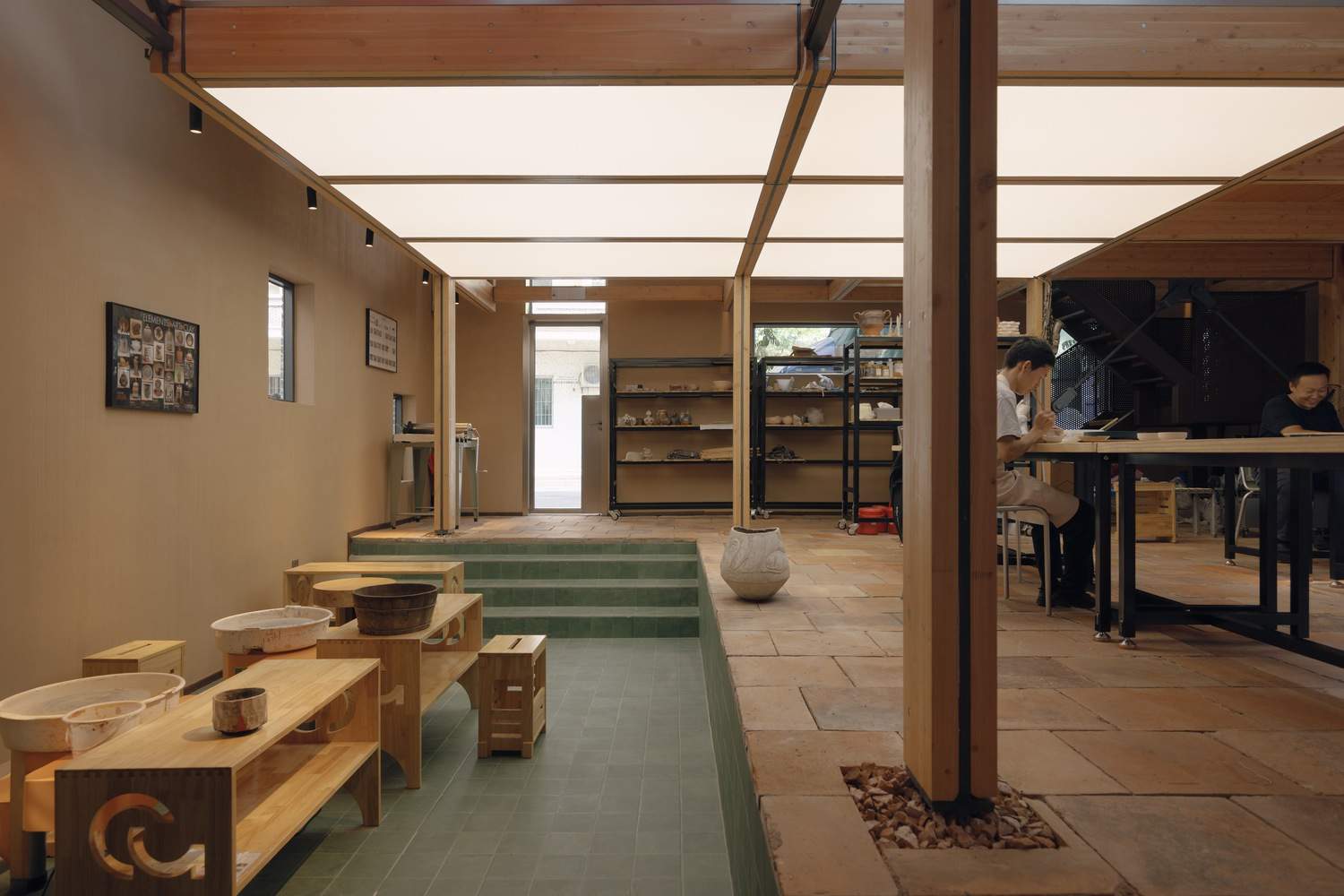
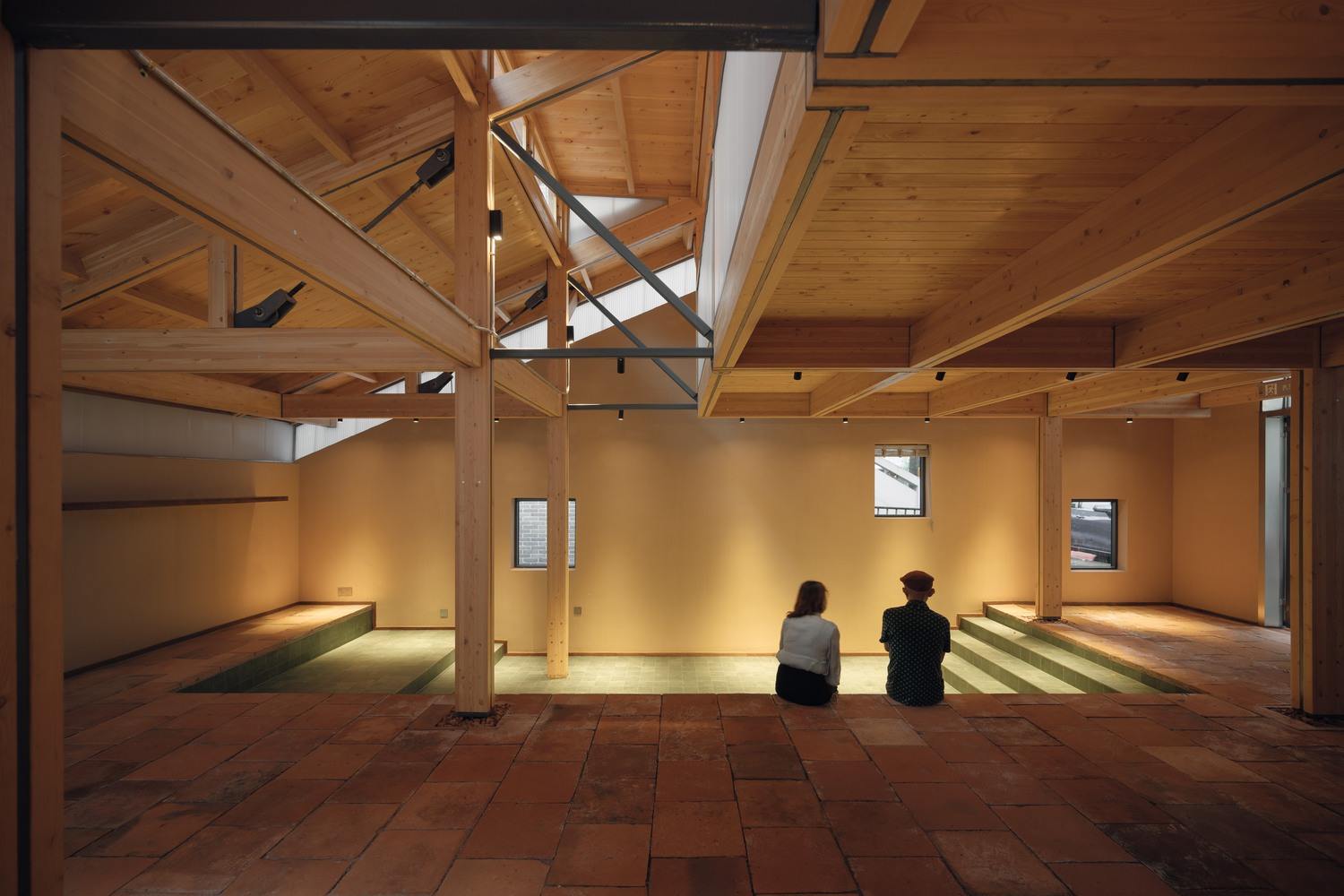
Building 4 retained its original exterior walls while the complex internal brick wall structure was dismantled and replaced by 8 steel-timber columns supporting the roof and the mezzanine. The original building was a row house shared by three households, and its internal space was heavily constrained by structural brick walls. Furthermore, there was a 600mm height difference between two of the three residential units.
4号楼在保留原外墙的基础上拆除原内部空间错综复杂的砖墙结构,替换为8根钢木柱撑起屋面及夹层。原建筑为三户并排的民宅,其内部空间受结构砖墙限制较大,同时三户住宅中的两户间还存在600mm的高差。
© 柯剑波
© 柯剑波
The site conditions before the renovation conflicted significantly with the defined function of a ceramic art studio. Therefore, structural components were maximally streamlined during the renovation to ensure the ground floor space was free, flexible, and appropriately scaled for artistic creation. The original site elevation differences were preserved, becoming a flexible and variable functional area within the studio.
改造前的现场条件与陶艺工作室的功能定义存在较大冲突,因此改造过程中结构构件被最大程度的集约化了,以保证底部空间自由灵活,尺度适宜艺术创作。原场地的高差关系则被保留下来,成为工作室中功能灵活可变的区域。
© 柯剑波
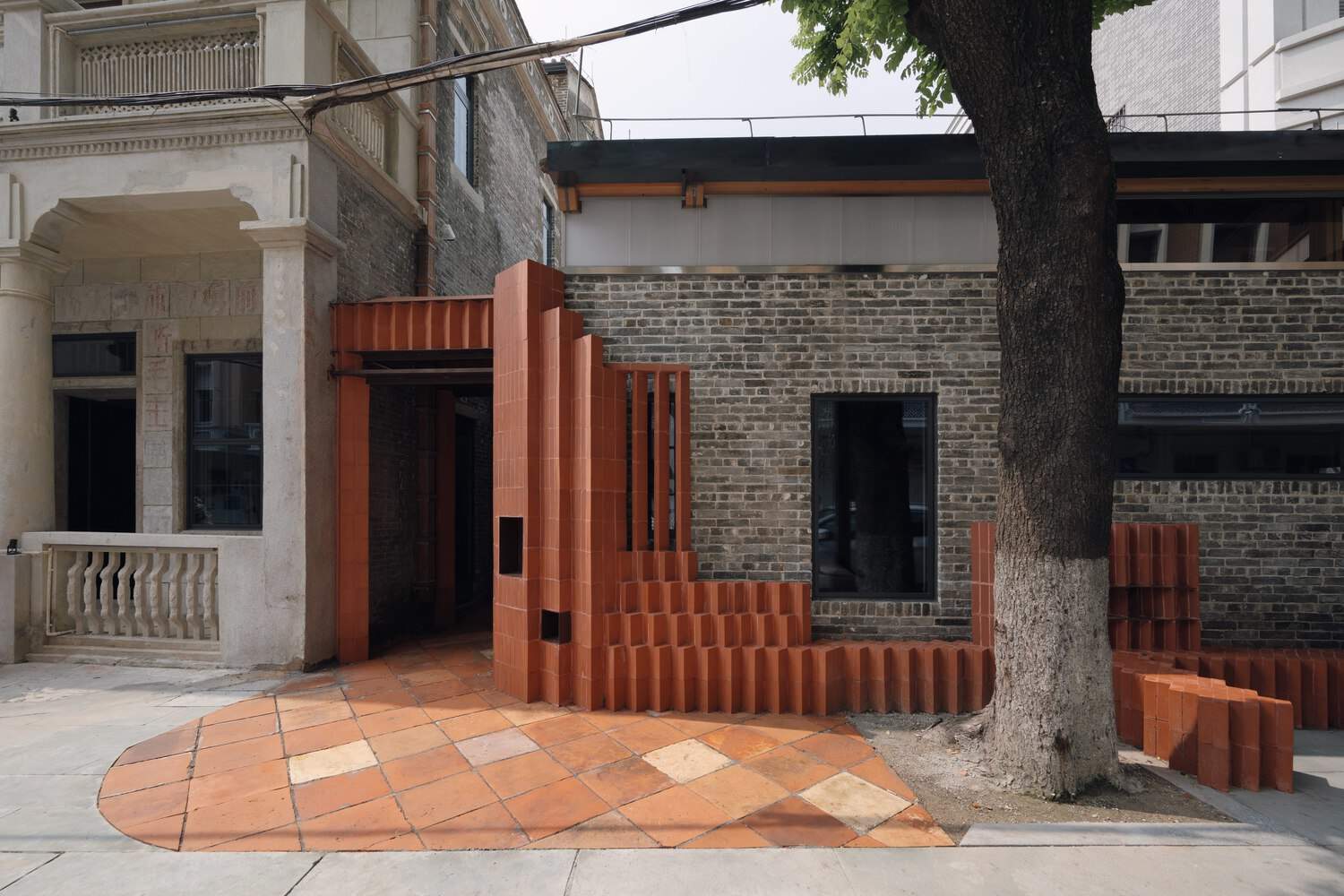
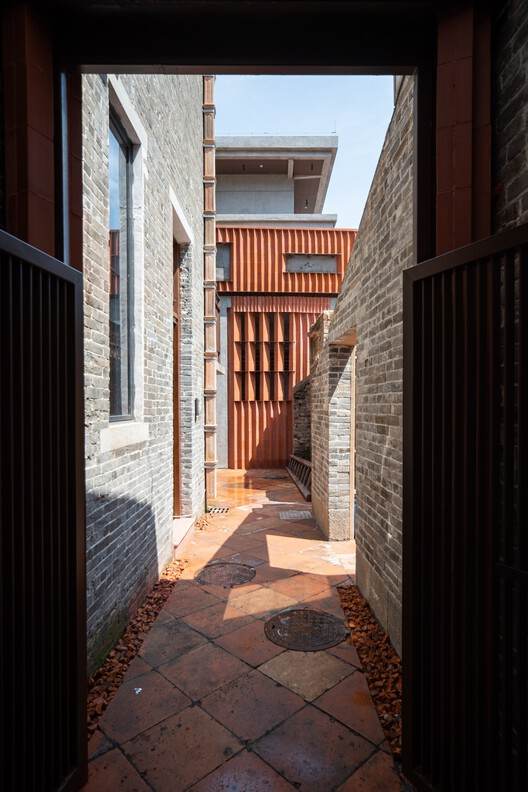
The two buildings facing the street are Building 1, the former site of the Pearl River Column headquarters serving as a reception area, and Building 4, the renovated private house serving as a studio. Entering the internal public courtyard requires passing through another entrance. Simultaneously, the public space system formed by the internal courtyard, the courtyard terrace, and the rooftop terrace needs to be hinted at along the street frontage. Therefore, the architects inserted a new circulation system, composed of ceramic bricks and steel frames, between the buildings. This system also becomes the visual system marking the revival of the "pottery" theme in Guanyao. This system guides visitors from the brick-built resting seating area at the entrance to the corridor area, and passing through the screen wall directly opposite the corridor reveals a partially hollowed-out brick wall.
沿街的两幢建筑分别是承担会客功能的 1 号楼珠江纵队队部旧址,以及承担工作室功能的 4 号楼改造民宅,进入内部公共院落需要打开另一个出入口。同时内部院落、院内露台以及屋顶露台共同形成的公共空间系统也需要在沿街面上有所提示。因此,建筑师在建筑群之间置入了一组陶砖加钢架共同构成的新的流线系统,同时也成为“陶”主题再次在官窑复兴的视觉系统。此系统从入口处的砖砌休息座椅区导向连廊区,穿过连廊正对的照壁则是一堵局部镂空的砖砌墙。
© 柯剑波
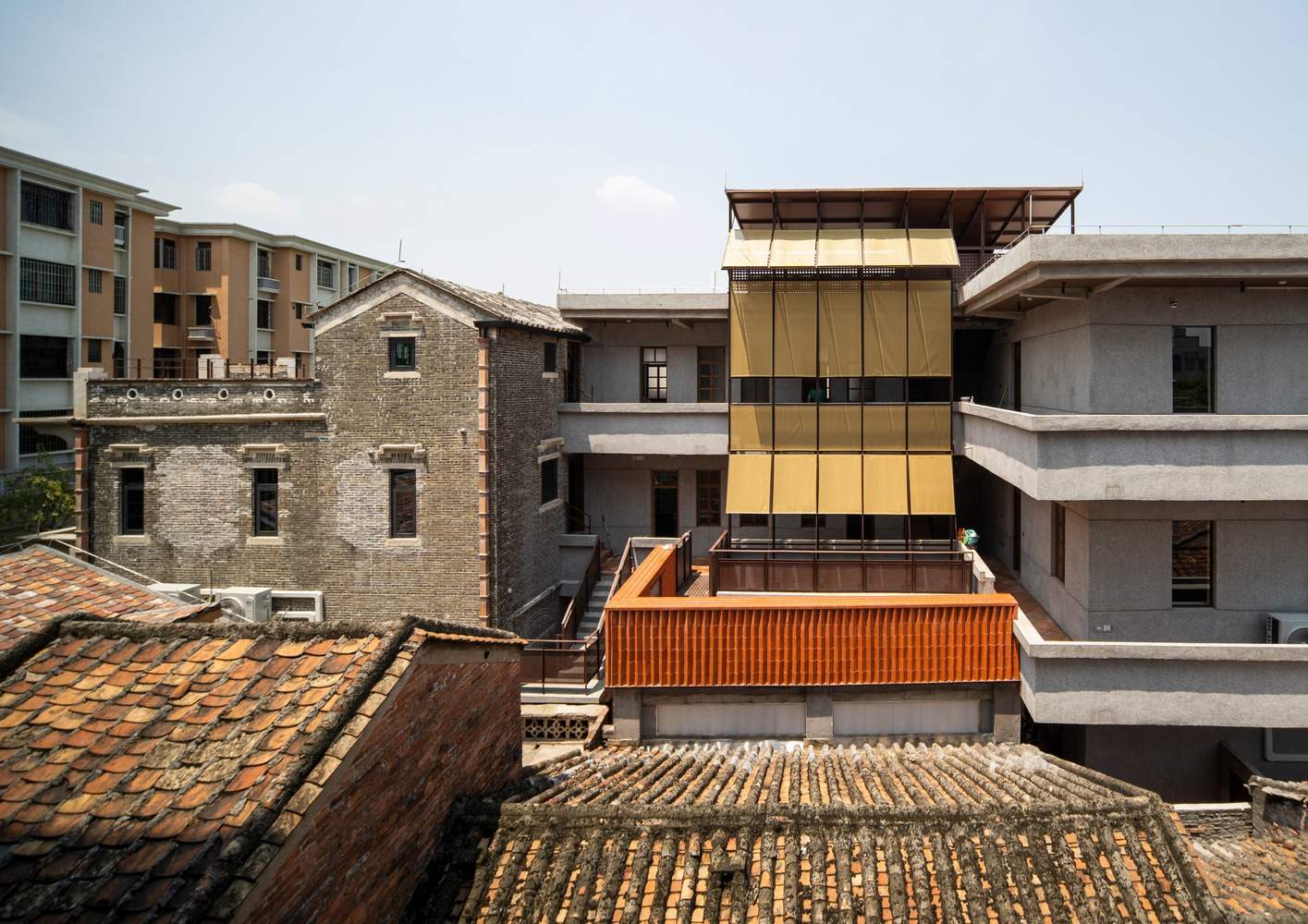
Behind and above the brick wall is the accessible terrace on the roof of Building 3 after renovation, where a visual installation of a steel frame and membrane is presented. The membrane can be replaced at any time with new exhibition content. The top of the steel frame extends to the roof of Building 2, becoming the canopy structure for the newly added rooftop terrace. This system of ceramic bricks and steel frames aims to reorganize the internal courtyard public space with minimal intervention, lightly disrupting the sense of place that the original site has formed over nearly a century, and introducing a subtle change on Yiyuan West Road to serve as a prompt for visitors entering the internal space.
砖砌墙的背后上方是 3号楼屋顶经改造的上人露台,一组钢架加膜的视觉装置在此呈现,膜可随时替换为新的展陈内容。钢架的顶端延伸至 2 号楼屋顶,成为新增屋顶露台的遮蔽屋架。这一组陶砖加钢架的系统希望尽可能的以轻介入的方式重新梳理建筑内院公共空间,较少的破坏原有场地在近百年来已经形成的场所精神,并且在驿园西路的街道上呈现出一点变化,使其成为观众进入内部空间的提示。