大地景观的诗意整合:该项目最精髓之处在于MAD建筑事务所将大型体育设施与自然地貌进行了革命性的融合。通过覆土设计,建筑主体“消隐”于大地之下,形成了火山群和镜湖般的壮丽景观,成功地弱化了传统体育场馆的宏大体量感和竞争性符号。这种处理方式不仅使建筑成为景观本身,更创造了一个开放、共享的城市公共空间,实现了功能性建筑与市民日常生活的无缝叠合,体现了深厚的地域文脉关怀和可持续设计理念。
结构与形式的内在表达:设计巧妙地利用了混凝土结构作为主要的表现手法,裸露的木纹清水混凝土墙面不仅承担了结构功能,更成为了建筑美学的重要载体,摒弃了繁复的外部装饰。体育场的“光冕”风雨罩,以其轻盈的钢结构和半透明膜材,如同云朵般悬浮于大地之上,与下方的厚重结构形成张力对比,实现了形式的艺术性与结构功能的完美统一。特别是最大跨度近95米的屋顶设计,保证了视野的通透开阔,体现了高超的结构工程智慧。
人本尺度的场所营造:项目深刻关注了用户体验与场所精神的建立。建筑的坡道、绿化立面被设计成人行步道和市民休憩攀爬的新场所,打破了体育场馆的封闭性。同时,室内标识系统(如渐变绿色的座椅分区)与地面镶嵌的标识设计,均紧扣“大地景观”主题,创造了连续、有机的空间叙事。覆土结构带来的温度稳定性和雨水管理能力,也体现了对生态适应性和资源节约的高度重视,使建筑真正回归到服务于人的尺度。
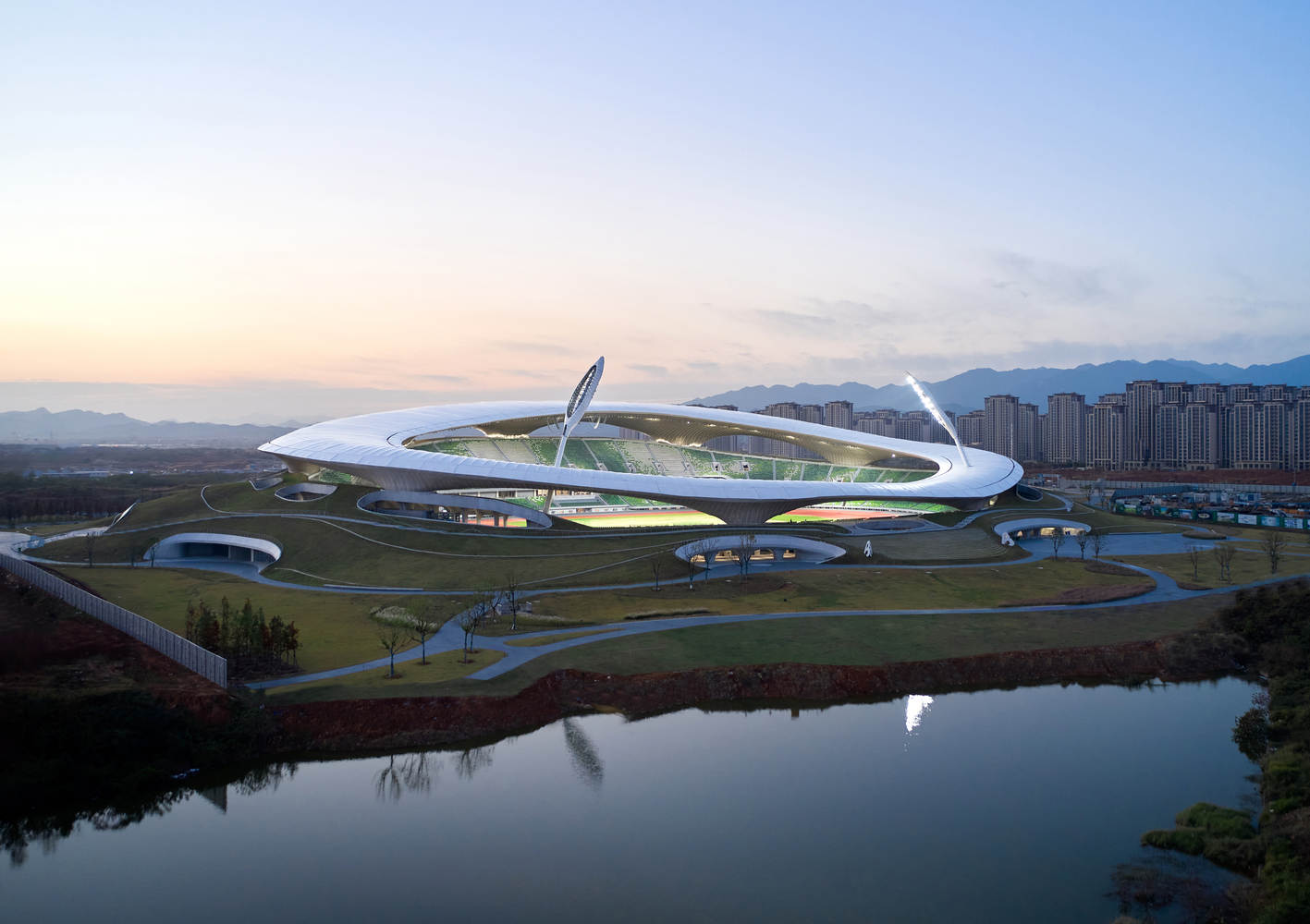
In 2018, MAD Architects, led by Ma Yansong, unveiled the design for the Quzhou Sports Park. In 2021, the "Vanishing Stadium," a key component of the sports park capable of accommodating 30,000 people, was the first section to be completed and opened to the public.
2018 年,由马岩松领导的 MAD 建筑事务所公布衢州体育公园设计。2021 年,作为体育公园重要组成部分、可容纳三万人的“消失的体育场”率先建成并投入使用。
© CreatAR Images
© CreatAR Images
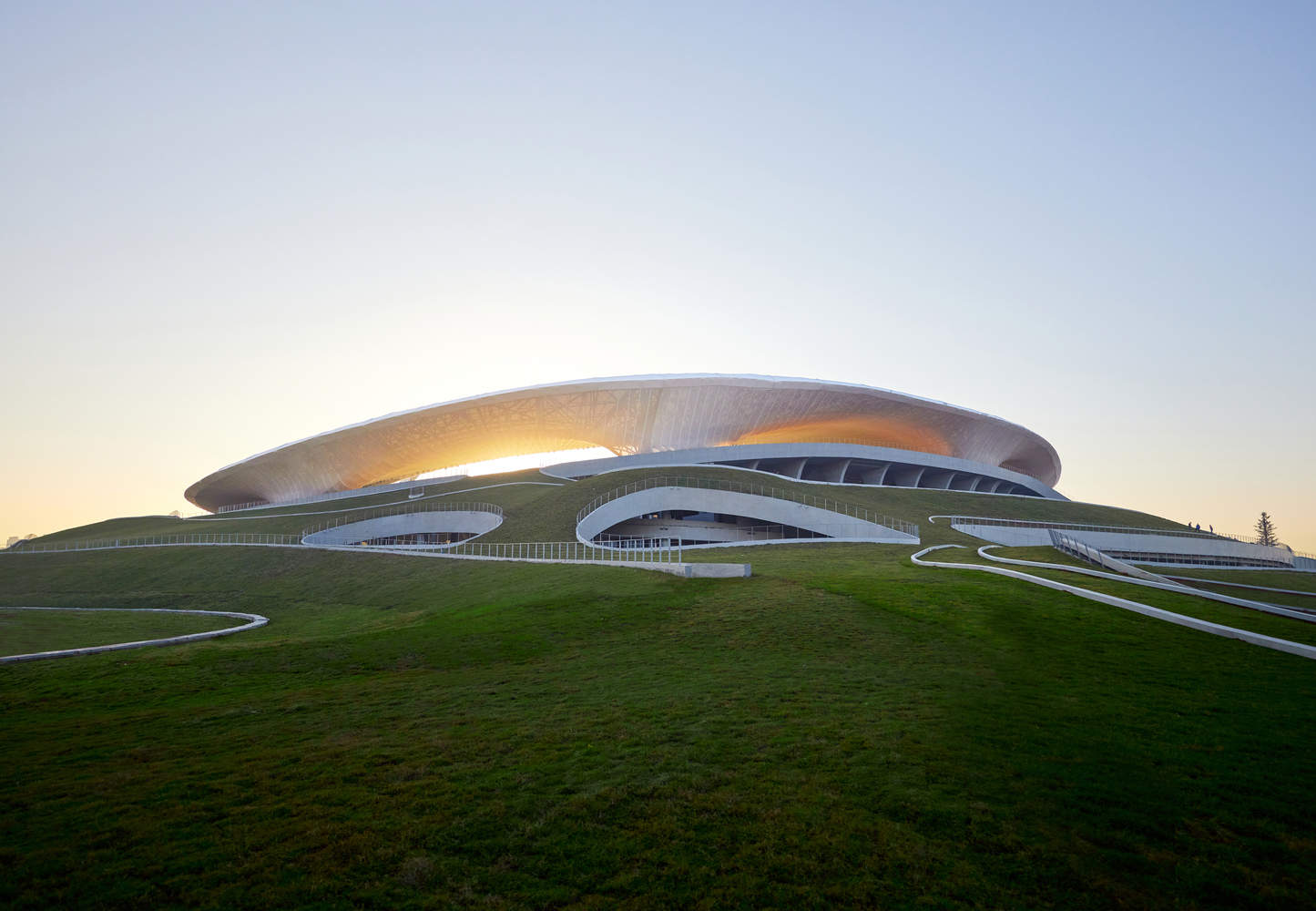
MAD believes that the attributes of urban public space and sports architecture should be superimposed, bringing both competitive sports and the daily exercise of the public to the same plane. Firstly, the site is an urban public space connected to nature, open, shared, and belonging to the citizens. The competition and power implicitly conveyed by the "arena" itself can be "vanished" into the land art landscape through the building's form and construction techniques.
MAD 认为,城市公共空间和体育建筑属性如叠合,应把体育竞技和百姓生活的日常运动带到同一界面。首先,场地是与自然相接、开放、共享、属于市民的城市公共空间。而“竞技场”本身隐喻的竞争和力量,则可通过建筑自身和建造技艺“消隐”于大地景观。
© 奥观建筑视觉
© 奥观建筑视觉
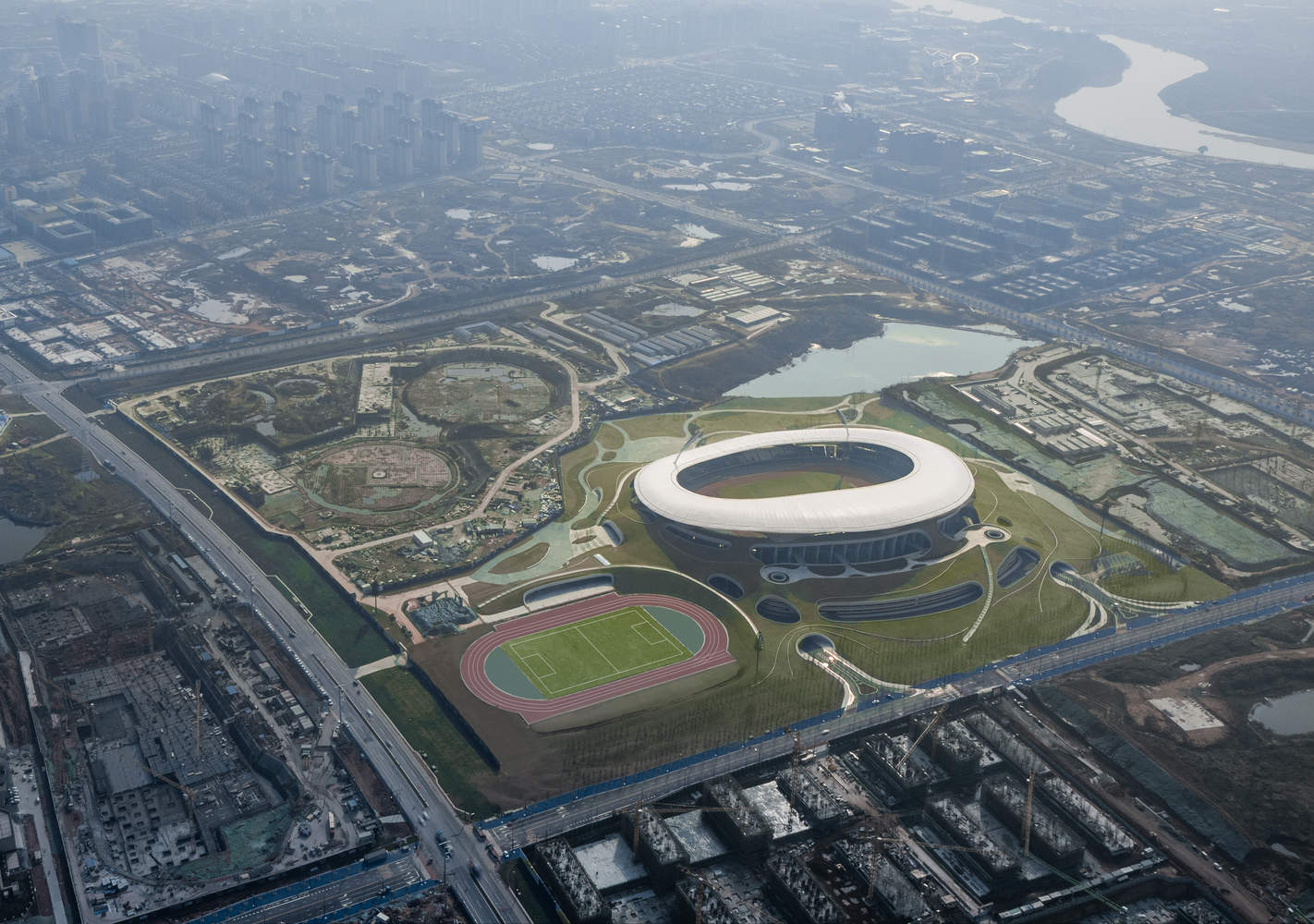
MAD's design integrates the functions of sports venues with the natural landscape, creating a land art landscape resembling a group of volcanoes and a mirror lake in the city center. The buildings in the park abandon the traditional way of highlighting structural power in stadiums, transforming it into a more intrinsic and subtle beauty. The interior and exterior of the buildings connect with nature everywhere, allowing people inside to be immersed in nature and feel the spiritual pursuit driven by the artistic conception of heaven and earth. When fully completed, the Quzhou Sports Park will be the world's largest complex of earth-sheltered buildings.
MAD 的设计将体育场馆功能与自然地景相结合,在城市中心营造了形似火山群、镜湖的大地艺术景观。公园中的建筑打破传统体育场凸显结构力量的方式,而将其转化为一种更内在、含蓄的美。建筑内外处处与自然相接,身处其中的人们沉浸于自然之中,感受天地意境驱动的精神追求。整体建成后,衢州体育公园将成为世界上最大的覆土建筑群。
© CreatAR Images
© 存在建筑-建筑摄影
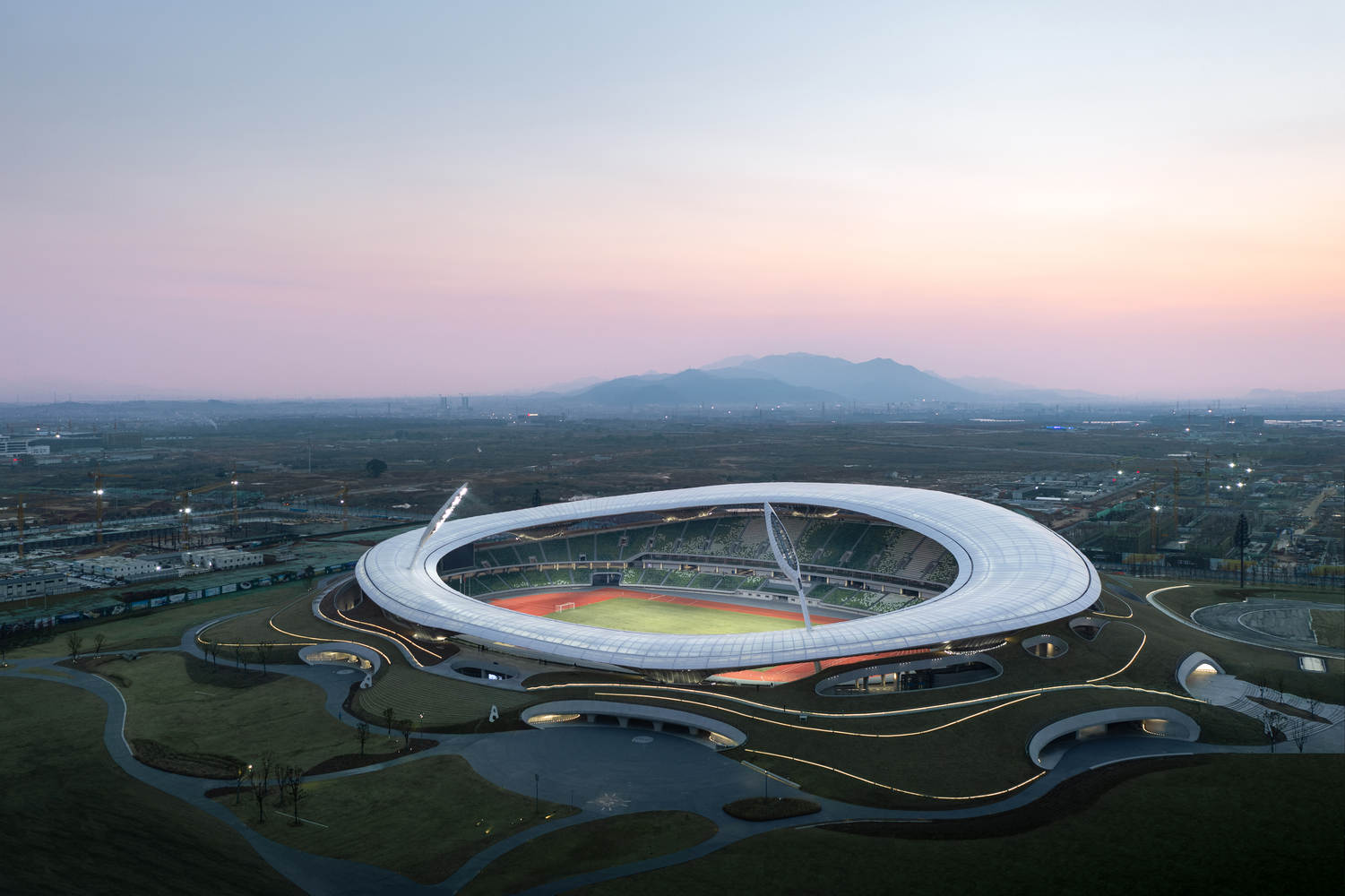
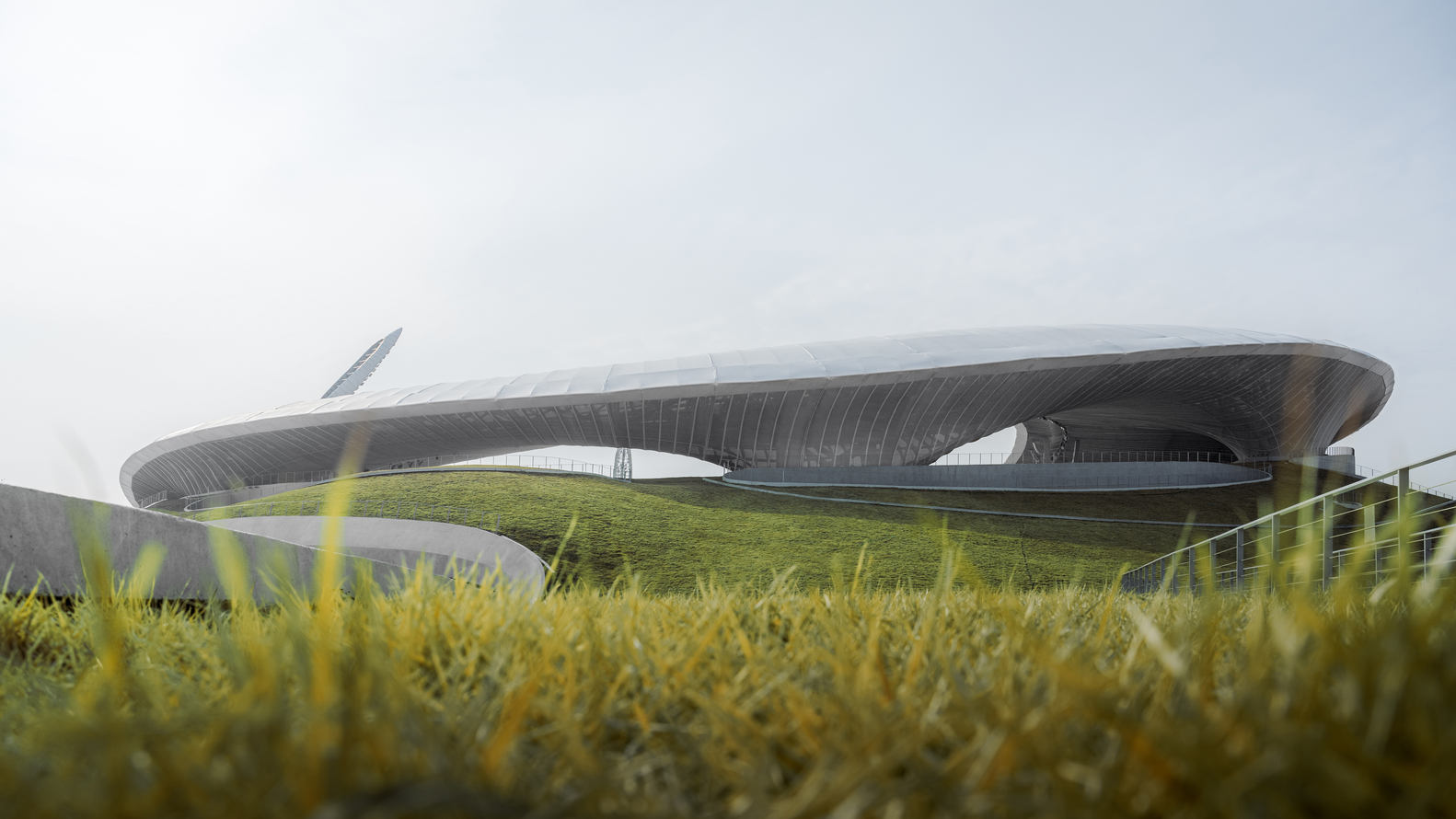
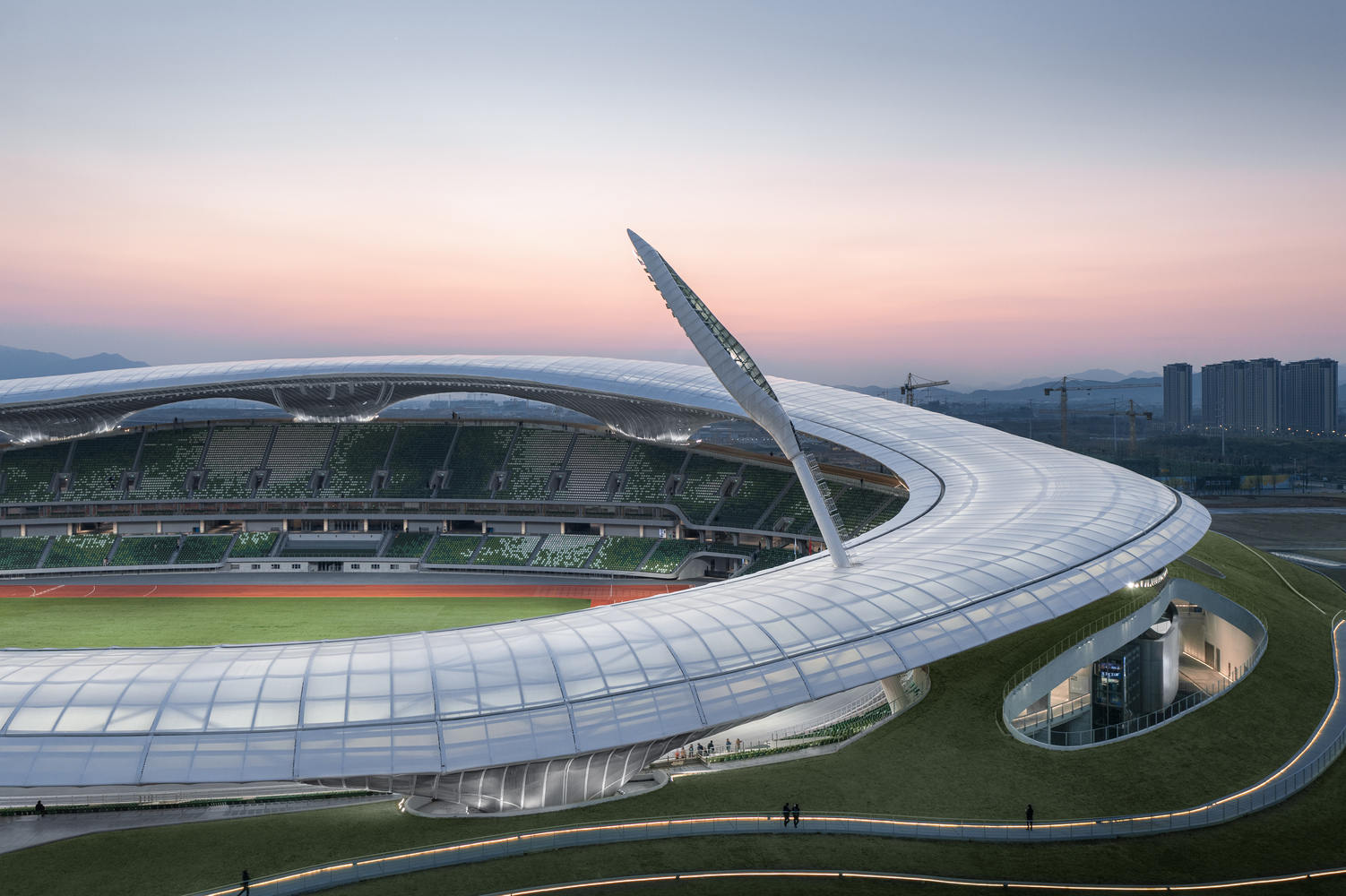
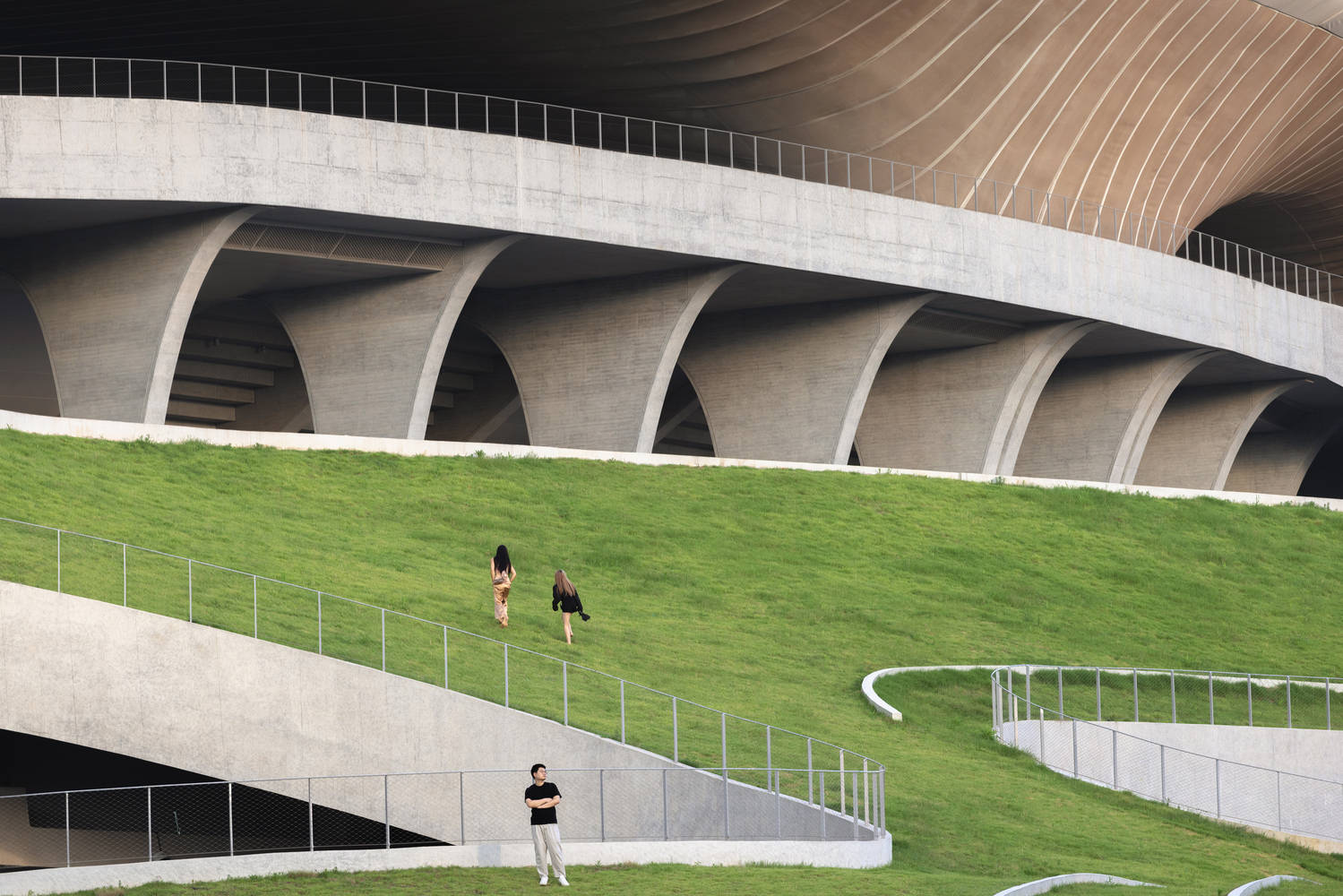
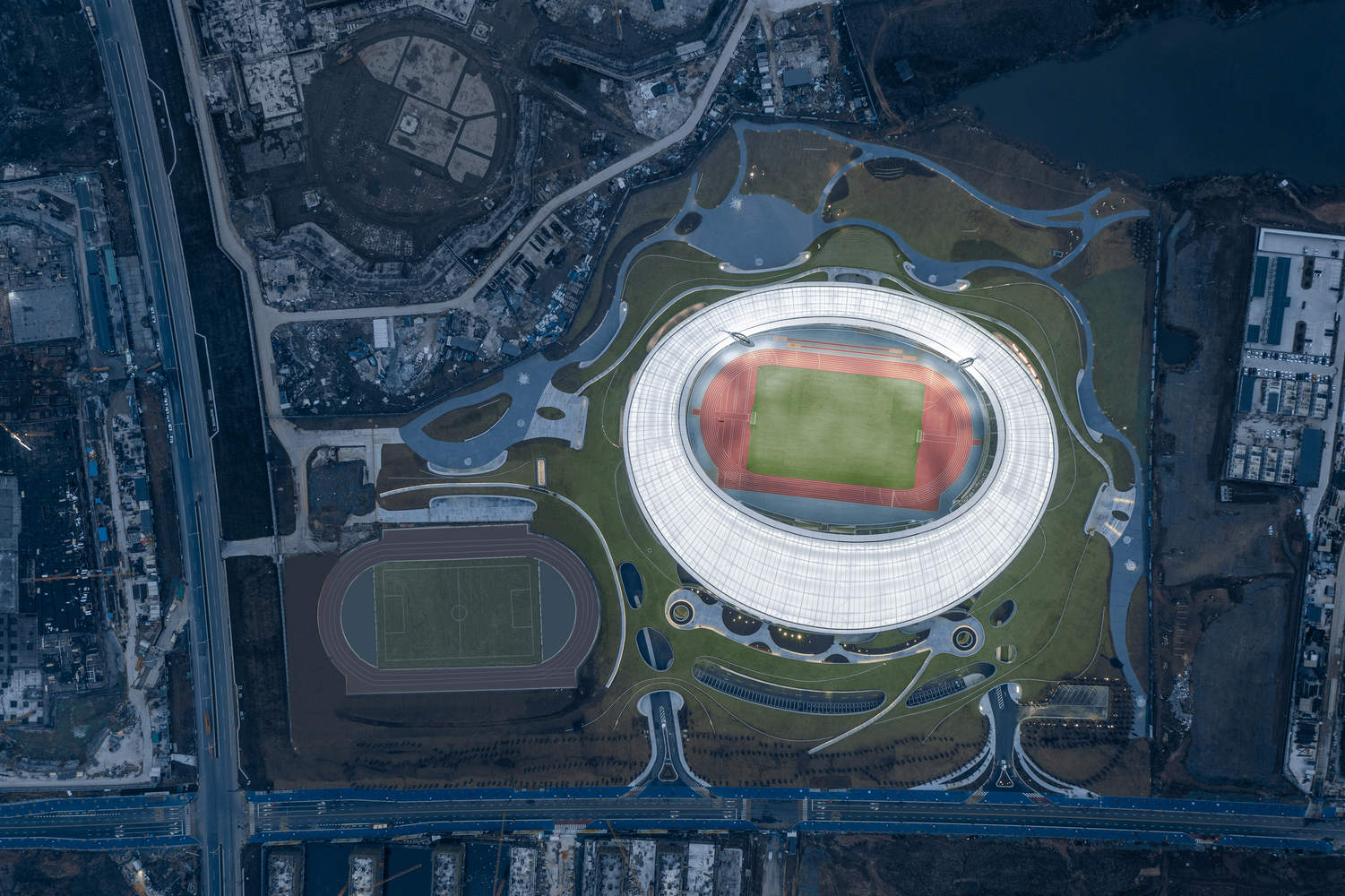
The 30,000-seat stadium, shaped like a meteorite crater, lies low on the ground, concealing the massive grandstand structure, causing the building's volume to disappear. Its facade is covered with vegetation, becoming the landscape itself. White lines carve out new curves, part of which actually functions as pedestrian walkways. The slope of the facade perfectly serves as a new area for citizens to exercise, climb, and ascend; the lawn at the gentle slope can also be a resting place for people after exercise.
形似陨石坑的三万人体育场匍匐在大地上,巨大看台结构被隐藏,建筑体量消失。立面被绿植所覆盖,成为景观本身。白色线条雕刻出新的曲线,其中一部分实际承载着人行步道功能。立面坡度恰好成为市民运动、攀爬、登高的新场所;缓坡处的草坪也可以是人们运动之余休憩的地方。
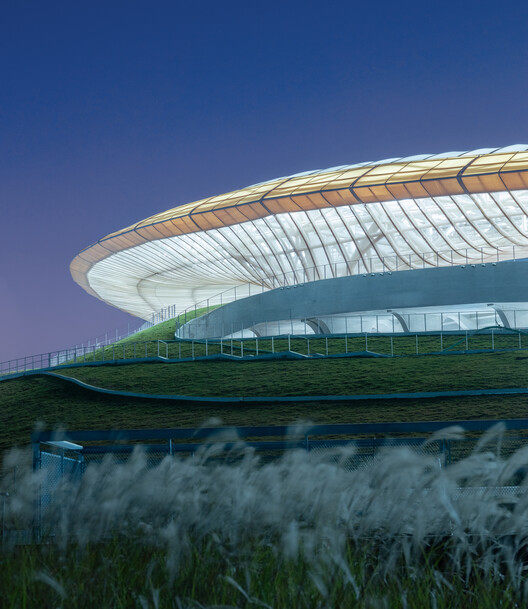
© 奥观建筑视觉
Sixty groups of concrete column walls support the entire stadium. The exposed wood-grain fair-faced concrete walls renounce both internal and external decorative layers, serving as both structure and the building itself. Free-form hyperbolic concrete shapes the stadium's entrances and exits; the main north and south entrances are formed by an orderly superposition of concentric arches, with a maximum span of nearly 40 meters.
60 组混凝土柱墙支撑起了整个体育场。裸露的木纹清水混凝土片墙摒弃了内外装饰层,既是结构,又是建筑本身。异形双曲面混凝土塑造了场馆的出入口,其中南北主要出入口由一圈一圈的拱形叠加秩序排列而成,最大跨度近 40 米。
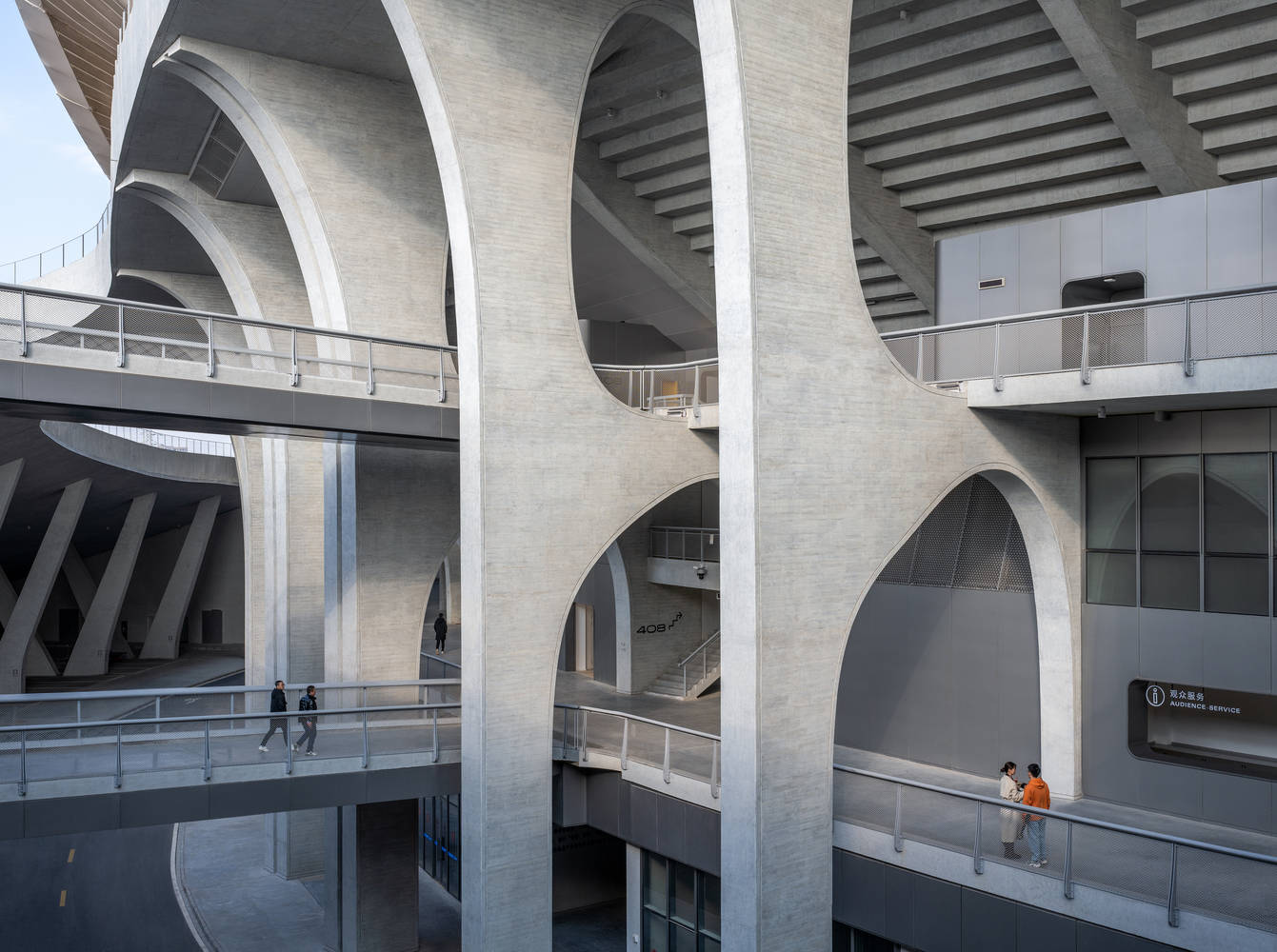
© CreatAR Images
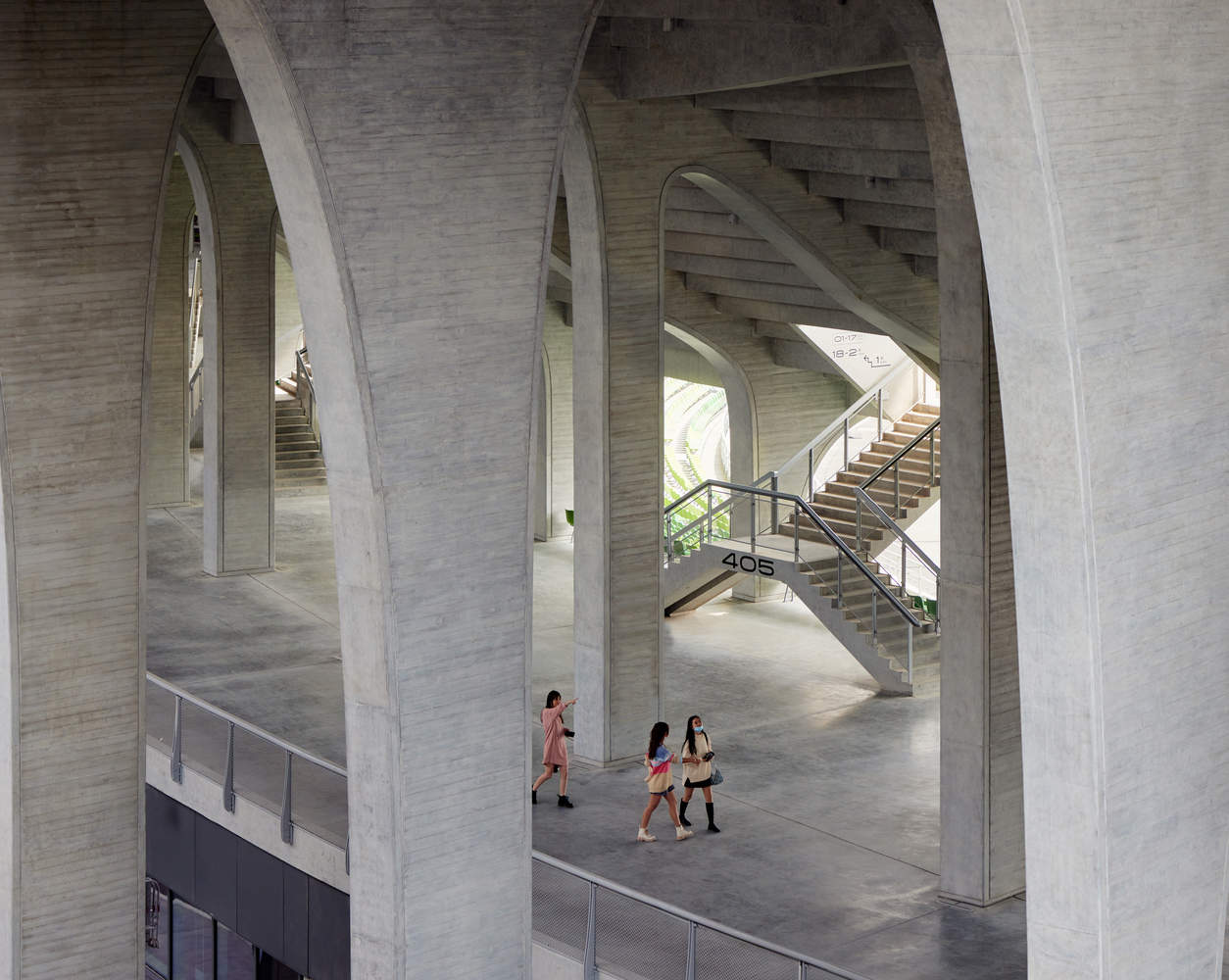
© 奥观建筑视觉
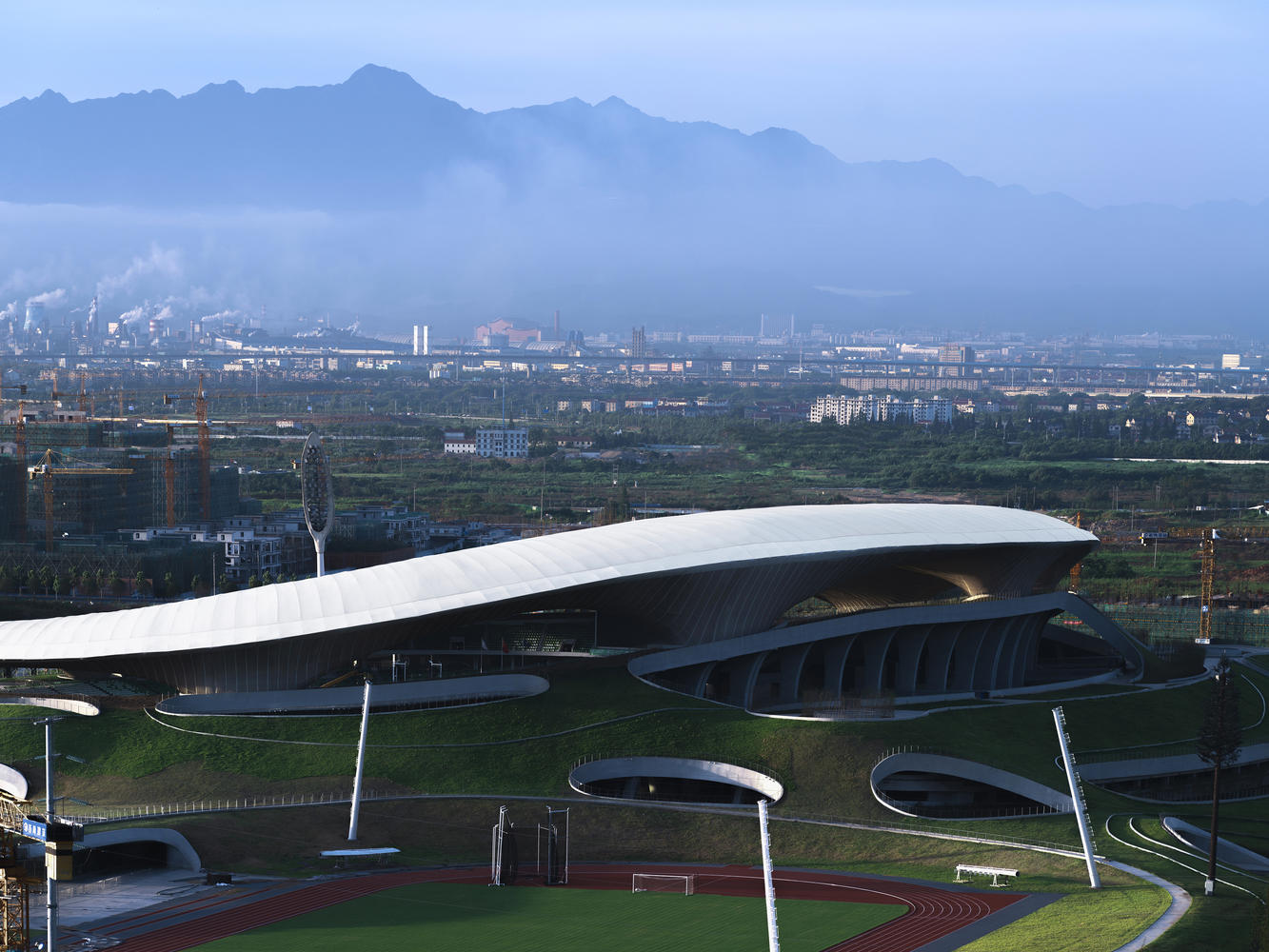
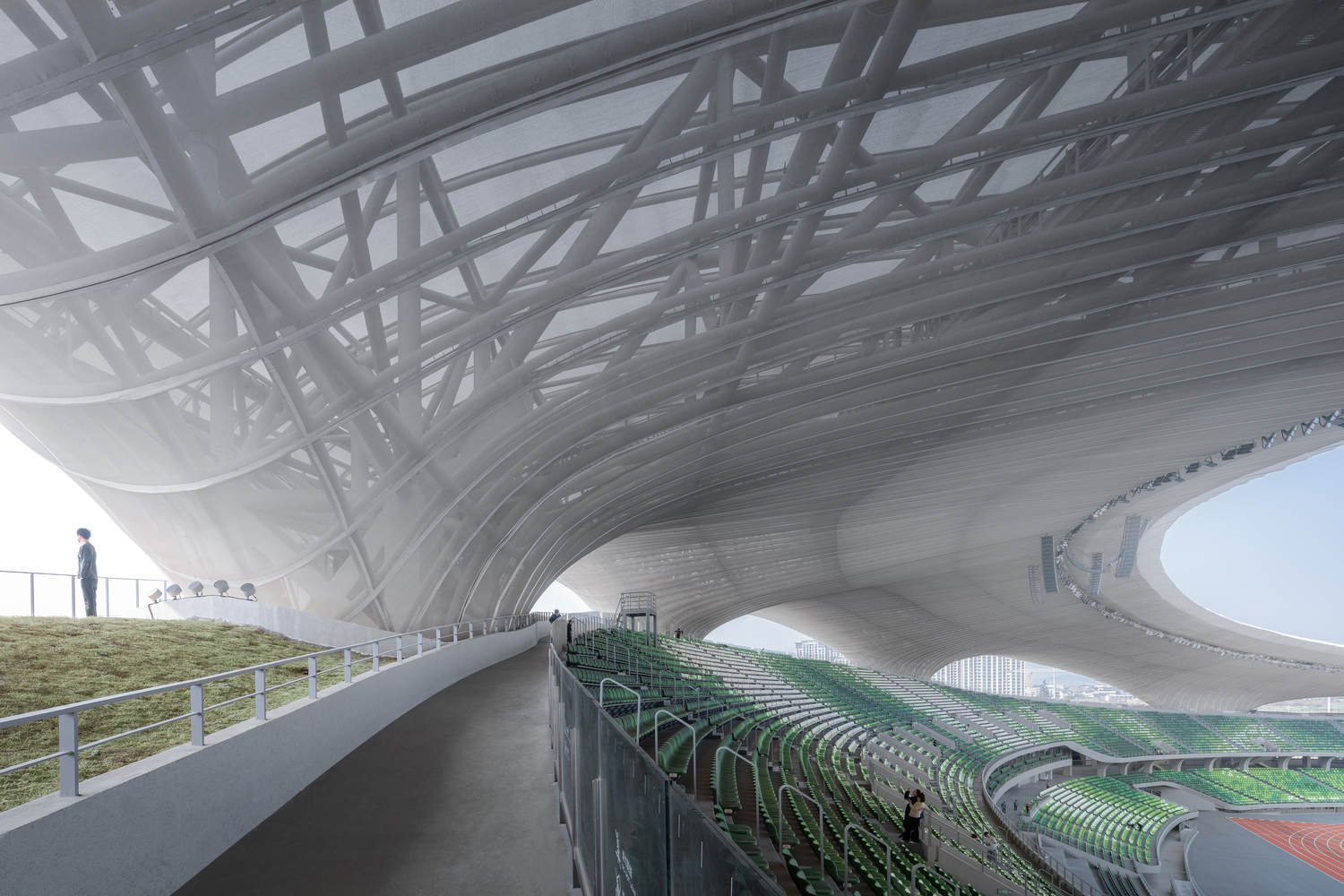
Above the concrete structure is a "halo" canopy supported by a steel structure. The canopy is supported by only 9 points on the grandstands, with the maximum span between these points reaching 95 meters, allowing sightlines to pass through the stadium interior, making the space appear more transparent and open. Unlike the design of traditional rain shelters, translucent membrane material envelops the steel space truss structure, making the canopy look like clouds floating above the land. The integration of artistic expression empowered by form and function is realized here. The upper surface of the stadium canopy uses a translucent PTFE membrane structure, while the lower surface uses a microporous PTFE, a design choice and material selection that enhances the canopy's noise reduction performance.
混凝土结构之上是由钢结构支撑的“光冕”风雨罩。风雨罩仅由 9 个落点支撑于看台之上,落点之间的最大跨度达到 95 米,让视线可贯穿体育场内外,空间显得更加通透开阔。区别于传统雨棚的设计手法,透光的膜材料包裹在钢结构悬挑空间桁架之外,让风雨罩如云朵飘动在大地之上。形态赋能的艺术性与功能的融合在这里得到实现。体育场罩棚的上表面采用半透光的 PTFE 膜结构,下表面采用了带有微孔的 PTFE,这样的构造设计和材料选择增强了罩棚的降噪性能。
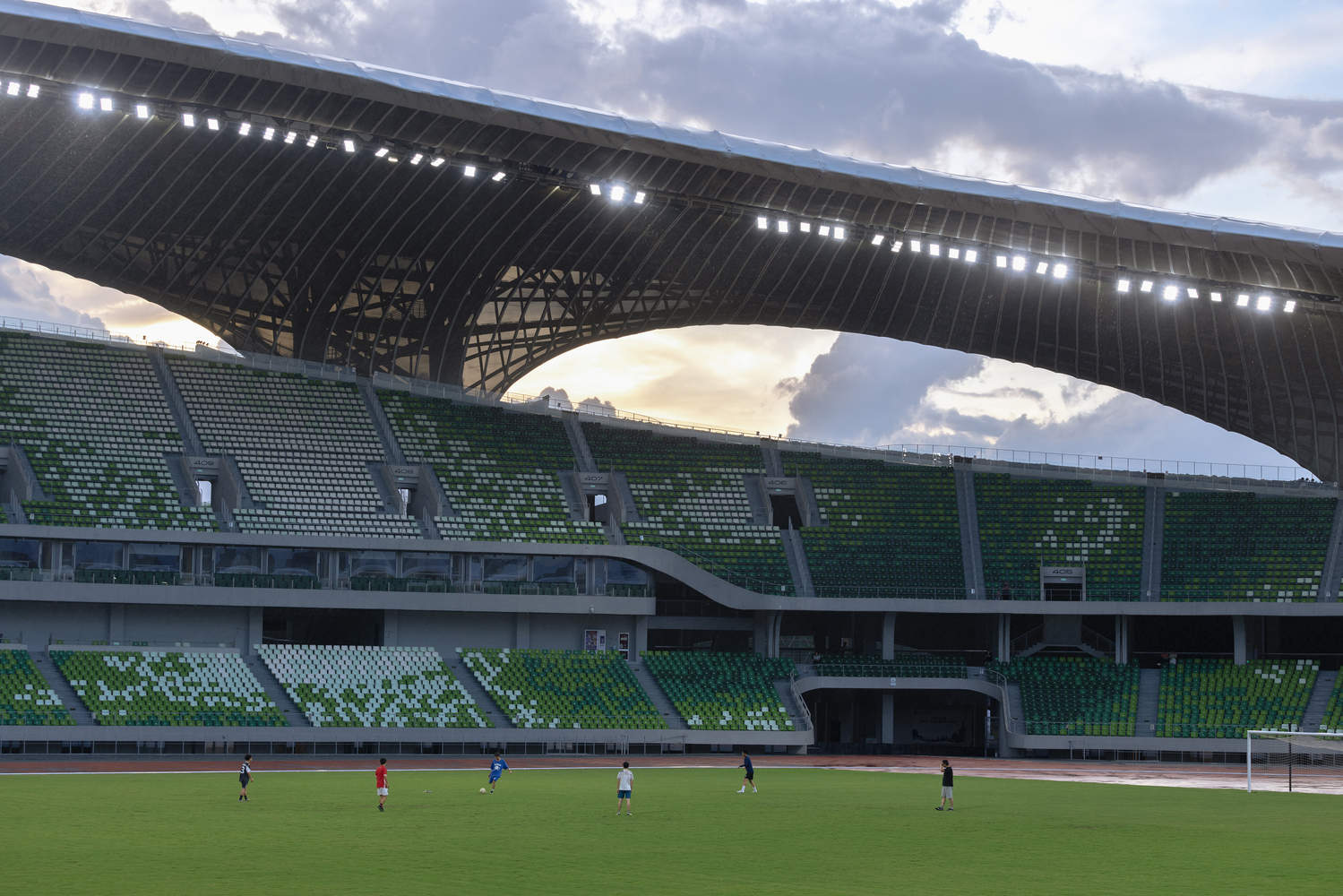
© 存在建筑-建筑摄影
© CreatAR Images
Apart from the stands and the inner field, all other functional spaces of the stadium are located underground beneath the earth-sheltered landscape. MAD and the landscape designers specifically chose grass species for Quzhou that are suitable for multiple seasons, require low maintenance, and are water-saving. Thanks to the planting layer covering the surface, temperature fluctuations within the indoor spaces of the building are reduced. Moreover, the earth covering facilitates the integrated design with the sponge city landscape, absorbing, storing, seeping, and purifying water during rainfall, and releasing and utilizing stored water when needed, offering good resilience in adapting to environmental changes and responding to natural disasters caused by rainwater. The concrete materials used in the stadium are all locally produced, minimizing the transportation of external steel and other decorative materials during construction.
除看台及内场外,体育场其他功能空间均位于覆土景观地面之下。MAD 和景观设计师特意为衢州选择了更匹配当地的适合多季节、低维护和节水的草种。得益于表层覆盖的种植层,建筑室内空间的温度波动减小。同时,覆土也有利于建筑与海绵城市的景观一体化设计,下雨时吸水、蓄水、渗水、净水,需要时将蓄存的水释放并加以利用,在适应环境变化和应对雨水带来的自然灾害等方面具有良好的弹性。体育场使用的混凝土材料均为本地生产,最大程度减少了施工过程中外地钢材和其他装饰材料的运输。
© CreatAR Images
The stadium's signage system was co-designed by MAD and Nendo, led by Kenya Hara. Instead of traditional linear zoning for seating areas, the design adheres closely to the overall concept of "earth landscape," using "sunlight filtering through tree leaves" as its theme, organically divided by five layers of gradually varying colors. Thirty thousand green seats of different shades are uniformly arranged across the saddle-shaped stands, creating a fresh and continuous visual effect. The outdoor signage system does not use freestanding signs or billboards; instead, stone and metal signs are embedded into the ground, integrating with the stadium itself and echoing the concept of the "Vanishing Stadium."
体育场的标识系统由 MAD 与原研哉团队共同设计。看台区座椅没有采取传统的直线区域划分,而是紧扣“大地景观”的整体设计概念,以“从树叶空隙照进来的阳光”为主题,通过五种渐变层次的颜色进行有机划分。三万个深浅不一的绿色座位均匀地布置在马鞍形的看台之上,创造出清新而连续的视觉效果。户外标识系统并不使用立牌或看板,而是将石材和金属标识以镶嵌的方式嵌入地面,与体育场本身融为一体,呼应了 “消失的体育场”的概念。
© 存在建筑-建筑摄影
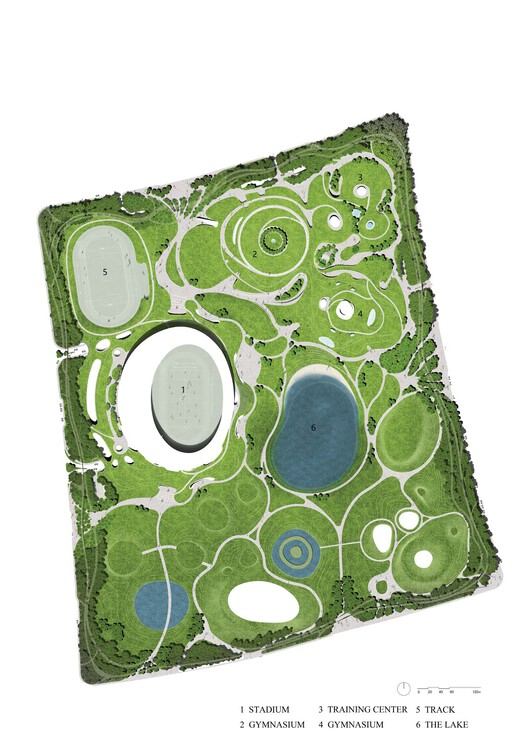
The Quzhou Sports Park covers an area of about 700,000 square meters, with a total construction area of about 340,000 square meters for Phase I and Phase II, including a stadium for 30,000 people, a gymnasium for 10,000 people, a natatorium, a comprehensive public sports hall, outdoor sports fields, a science and technology museum, a youth palace, a hotel, and commercial facilities. The gymnasium, natatorium, and comprehensive public sports hall (the "Three Halls") are adjacent to each other on the northeast side of the park and are all located underground beneath the earth cover. Above ground is the undulating "mountain body," with interwoven white pedestrian walkways winding along the surface of the terrain. As people walk through, their views open or narrow, scenery changes with every step, and they interact with the environment unintentionally. Large skylights at the "mountain top" and "mountain base" introduce natural light into the interior space, achieving energy savings while deepening the connection between the indoor and outdoor environments. In October 2021, the opening ceremony of the 4th Zhejiang Provincial Games was held in the Quzhou Stadium, marking the official opening of the stadium.
衢州体育公园占地约 70 万平方米,一期二期总建筑面积约 34 万平方米,包含可容纳三万人的体育场、万人体育馆、游泳馆、全民体育综合馆、室外运动场地、科技馆、青少年宫、酒店、商业等。万人体育馆、游泳馆、全民体育综合馆(三馆)相邻,位于公园的东北侧,均位于地面覆土之下。地面之上是起伏的“山体”,交错相通的白色人行步道沿山体表面蜿蜒。人们行走其中,视线或开阔或狭窄,步移景异,在不经意间与环境互动对话。“山顶”与“山脚”处的大型天窗将自然光线引入空间内部,实现节能的同时加深了内外环境之间的联系。2021 年 10 月,浙江省第四届体育大会开幕式在衢州体育场举行,标志着体育场正式投入使用。
场地平面图
© CreatAR Images